
In the 21st century, yoga is no longer considered glamorized stretching or only for young women. Instead, for many people, it has become part of their lifestyle, and for some, even a way of life.
The origins of yoga are shrouded in mystery, but the modern style of yoga, with its standard poses (asanas), can be nailed down to the 20th century when the book “Light on Yoga” was published. The book and the subsequent yoga craze that we’re still witnessing today are why the yoga industry is growing at an incredible pace. With yoga gaining popularity, we also see more and more innovations in this space, particularly with mobile apps.
Let’s look at the latest trends in the yoga industry, the best yoga app, and the future of yoga innovations.
What’s the buzz about yoga in 2026, and how has the landscape evolved since the post-pandemic boom?
Unlike the uncertainty of the early 2020s, the yoga industry today is thriving, with the number of global practitioners surpassing 300 million.
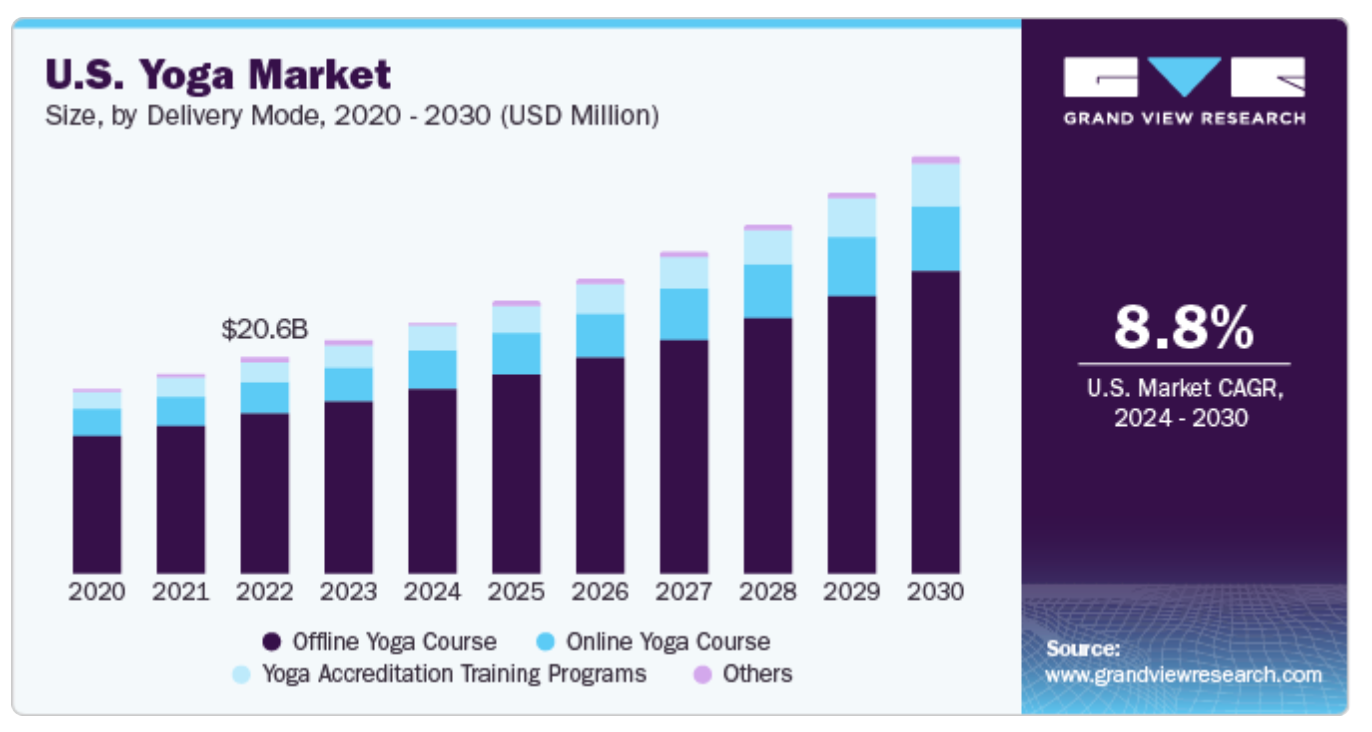
While the pandemic initially forced a sudden digital shift, recent data confirms that the habit has stuck. Online yoga isn't just a temporary backup anymore; it's become a primary practice for over 120 million people. Market statistics show that the "pandemic dip" is ancient history - the global yoga market is now valued at over $100 billion and is projected to nearly double by 2030.
According to Google Search Trends, yoga searches reached their peak in 2025.
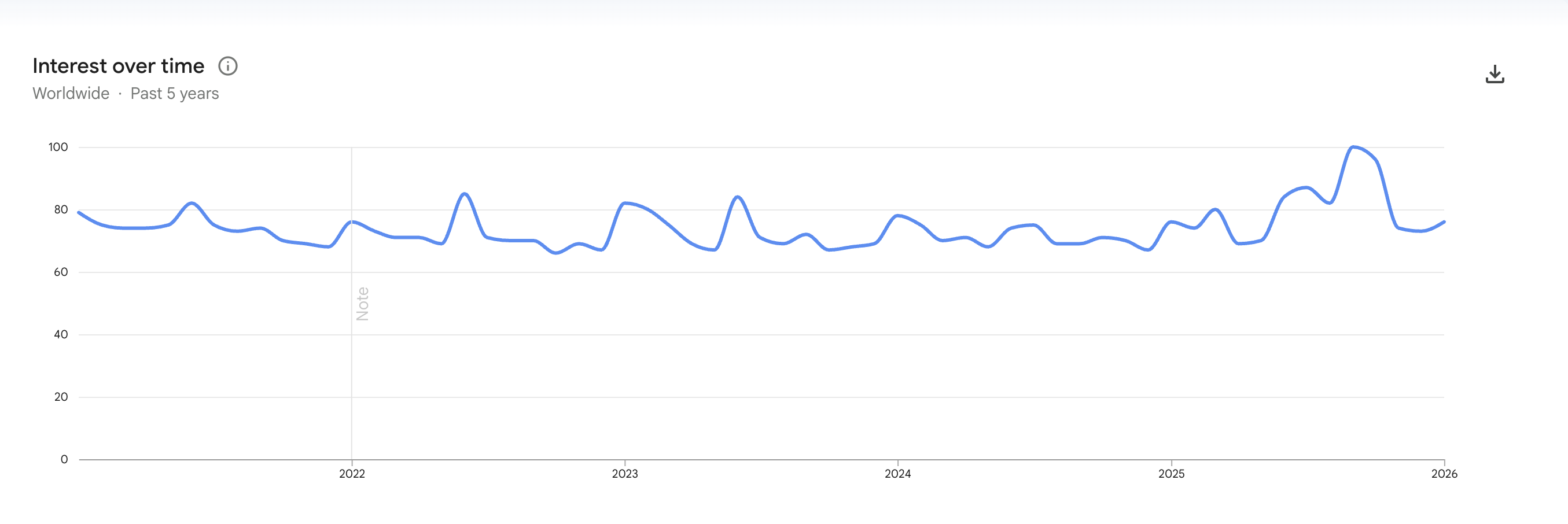
The year 2025 represents a "convergence point" where several long-term trends matured simultaneously:
Technological Maturity: 2025 saw the mainstream adoption of AI-driven yoga. Apps now provide real-time posture correction and hyper-personalized programs, making the practice more effective for home users than ever before.
Corporate Integration: Over 70% of Fortune 500 companies incorporated dedicated yoga and meditation programs into their employee wellness strategies by 2025 to combat record-high levels of workplace burnout.
Medical Validation: Yoga is no longer just "spiritual stretching." In 2025, healthcare institutions and doctors began strategically prescribing Yoga Therapy for chronic conditions like diabetes, arthritis, and PTSD.
The Gen Z "Wellness Glow-Up": Younger generations (Gen Z and Millennials) redefined wellness in 2025, prioritizing mental and emotional health over physical aesthetics, leading to a massive spike in yoga and mindfulness app subscriptions.
Core Drivers of Yoga's Popularity
Yoga has maintained its lead in the wellness movement due to its extreme adaptability.
| Driver | Description |
|---|---|
| Mental Health | 86% of practitioners report significant stress reduction; it is the #1 tool for managing modern anxiety. |
| Hybrid Accessibility | Over 120 million people now rely on virtual classes, allowing yoga to fit into busy schedules via “micro-sessions” (5–15 minutes). |
| Inclusivity | Trends like Chair Yoga (+51% growth) and adaptive practices have made yoga accessible to seniors and people with physical limitations. |
| Eco-Consciousness | The rise of sustainable retreats and biodegradable gear aligns with the global shift toward environmental mindfulness. |
Speaking of apps, it’s time to look at the seven best yoga apps available for Android and iOS.
7 of the Best Yoga Apps for Beginners and Aspiring Yogis in 2026
Down Dog
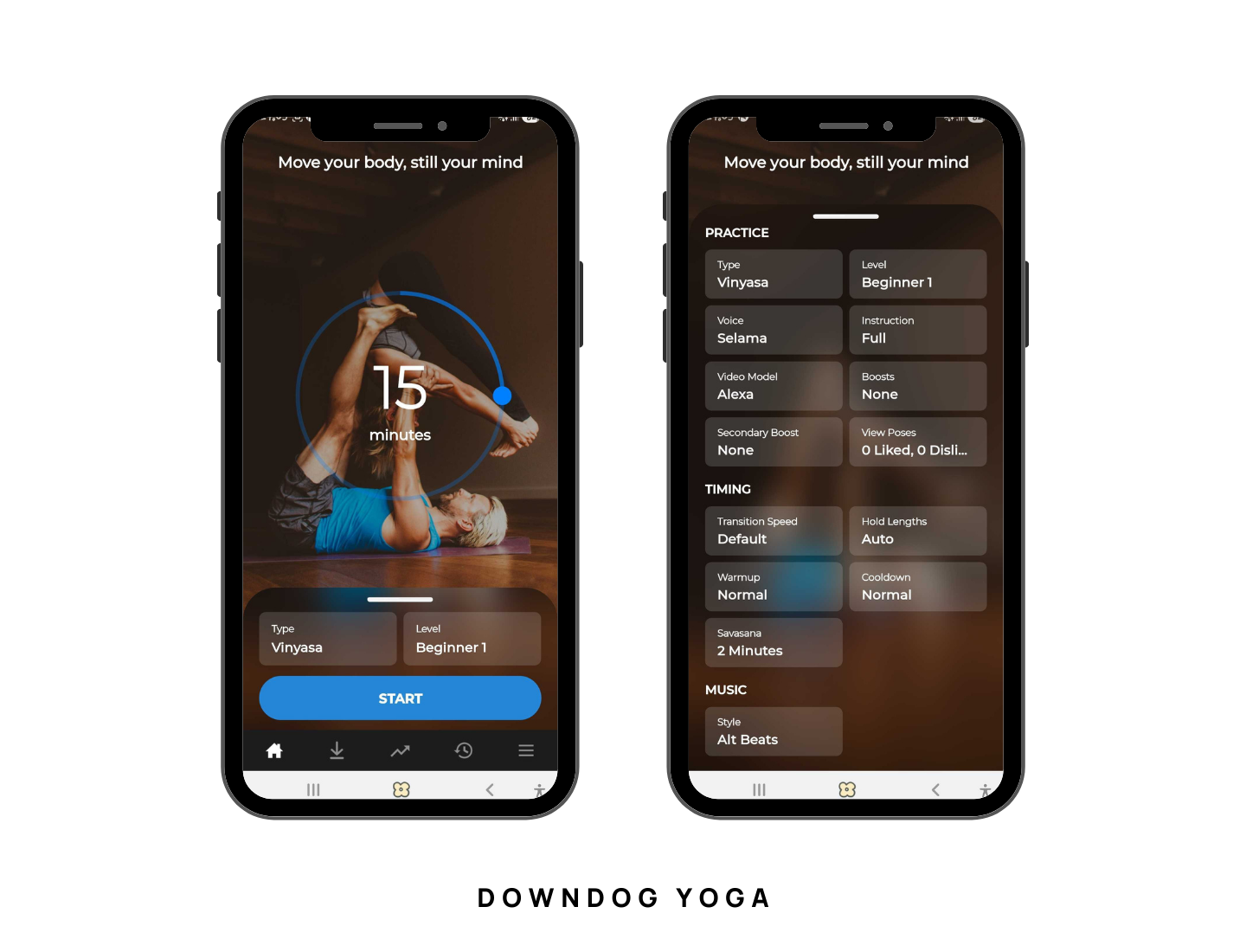
Down Dog develops apps for yoga, prenatal yoga, HIIT, barre (ballet-inspired fitness), and meditation. Their yoga app is highly popular, boasting a 4.9 rating for both Android and iOS apps. One of the app’s standout features is multiple levels of customization. For example, you can customize the routine to keep sessions fresh, change the instructor’s voice, and choose from a selection of mood music.
Yoga-Go Pilates & Yoga Workout
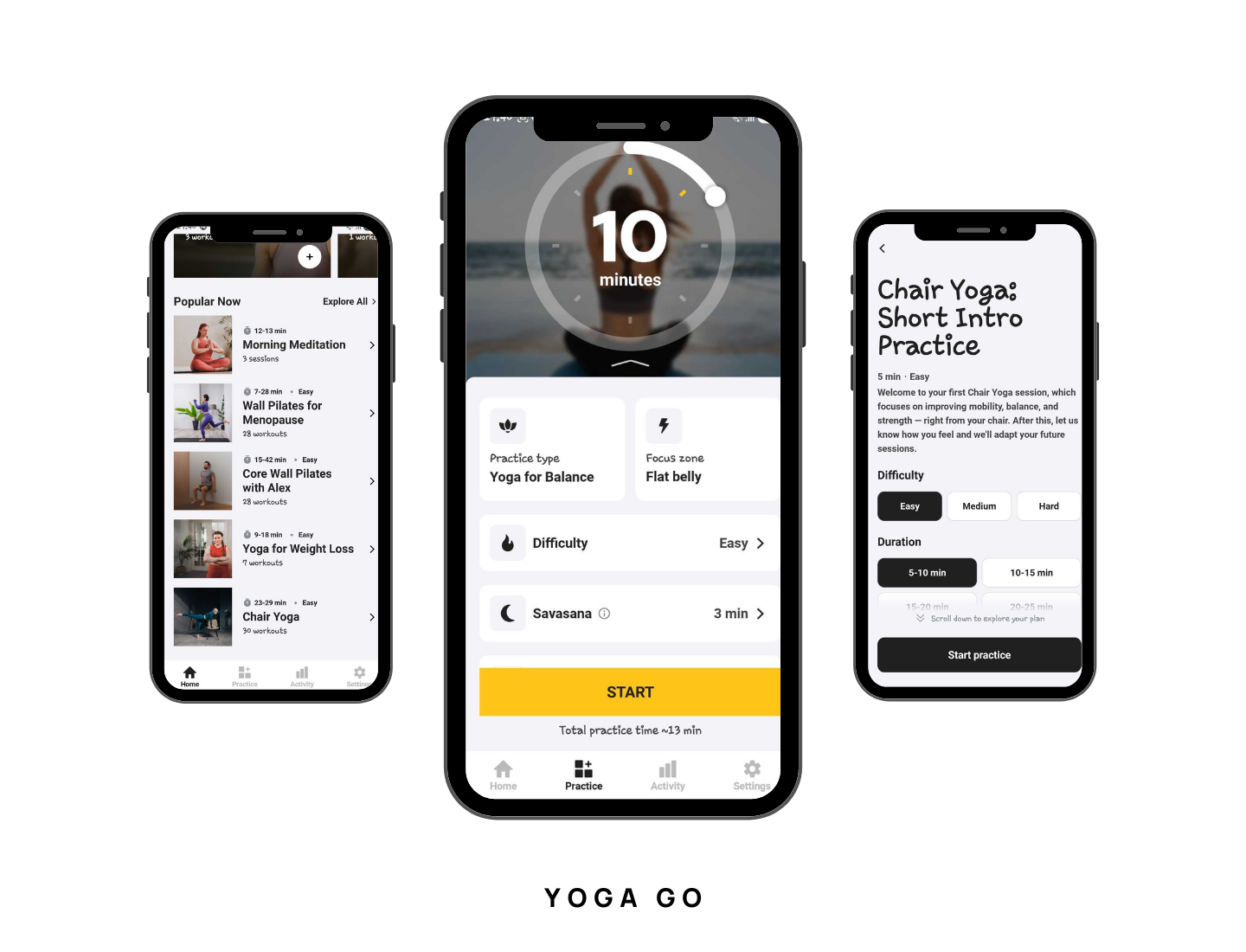
The Yoga - Go app has a 4.9 rating for Android and a 4.8 rating for iOS. This app offers classes adapted to the needs of people of any age: this includes yoga with a chair and yoga near the wall, somatic yoga on the mat. Considered one of the best yoga apps for beginners, Yoga - Go is one of perfect free solution for yoga newbies and consistently makes “best yoga apps'' lists on the web.
Skill Yoga
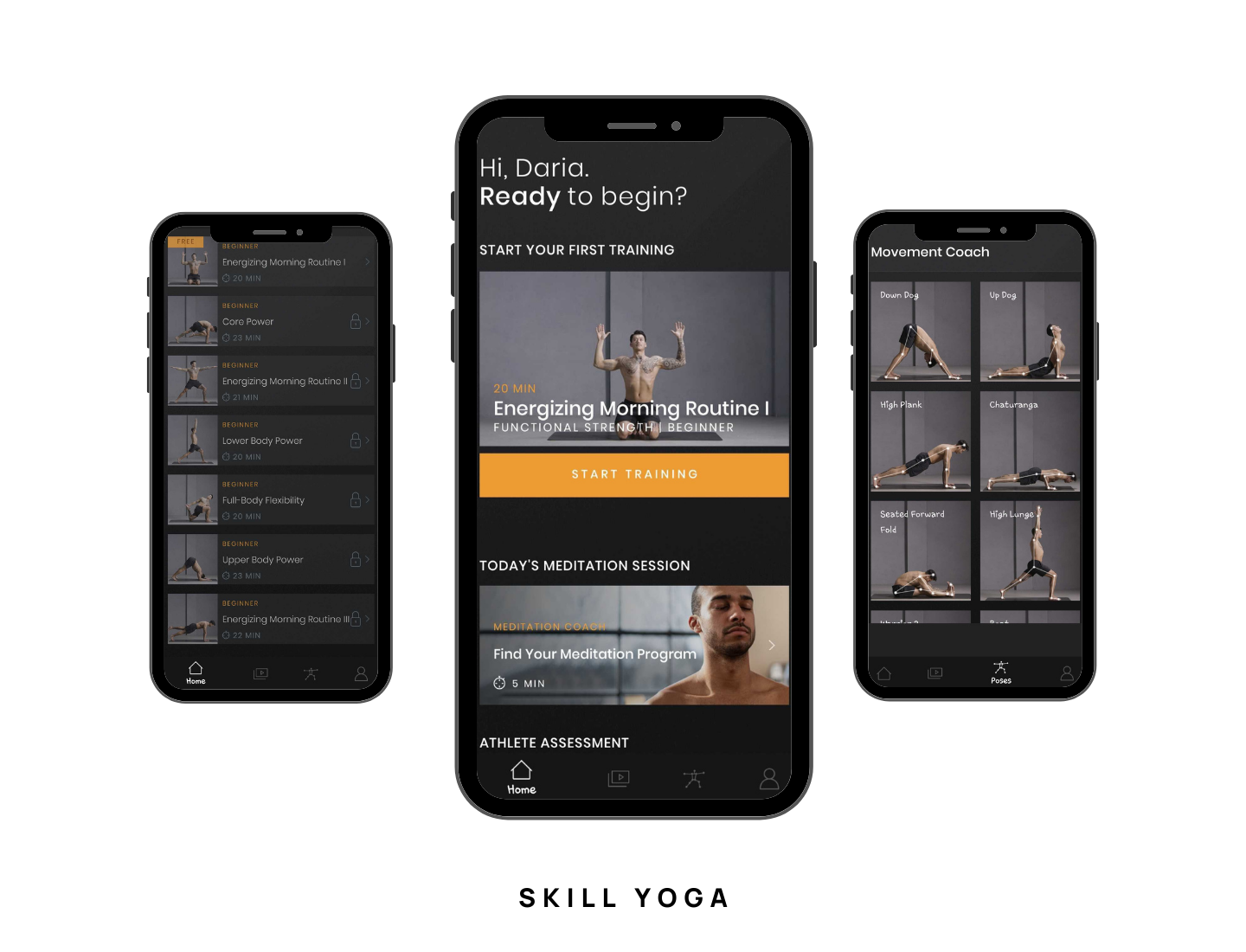
The Skill Yoga app’s standout features are the custom classes and routines for better mobility. You can choose from large categorized library: 4 video-based weekly lessons, 25 on-demand yoga classes, 30 meditations and breathwork sessions (20-30 minutes long lessons), including yoga hybrid classes like Functional Yoga, Yoga for Weight Loss, among others. Skill Yoga has a high 5.0 rating for Android and 4.8 rate for iOS.
Daily Yoga: Yoga for Fitness
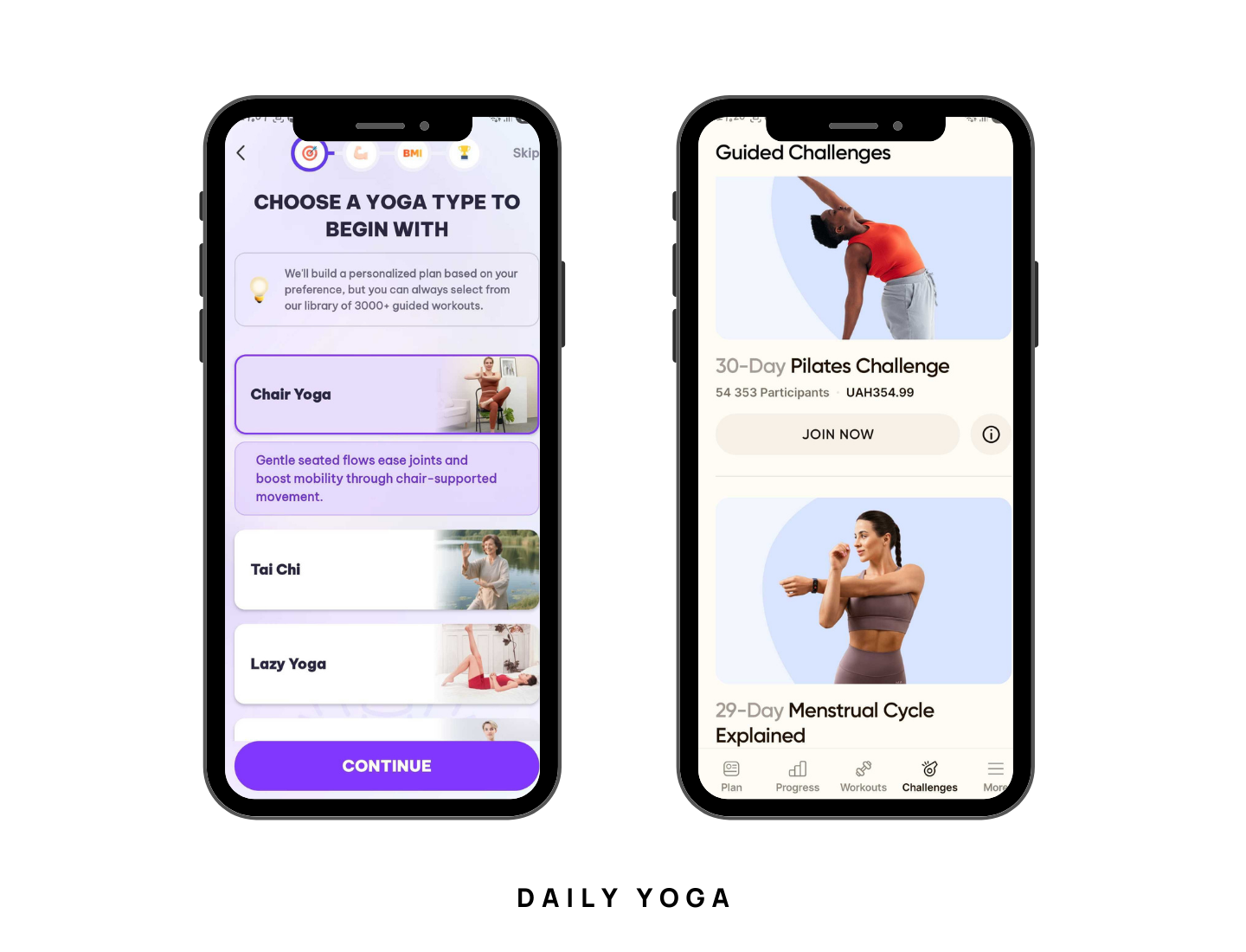
Daily Yoga is one of the best free yoga apps for beginners and advanced users. App presenting Lazy Yoga, Tai Chi, Classic Yoga and Somatic Yoga. It features six routines ranging from 20-60 minutes that are easy to follow, thanks to voice and video instructions. Daily Yoga has a respectable 4.7 rating for IOS and a 4.4 rating for Android and proudly show Editor's Choice 2026 by Google Play bage on their store page.
LazyFit: Chair Yoga & Pilates
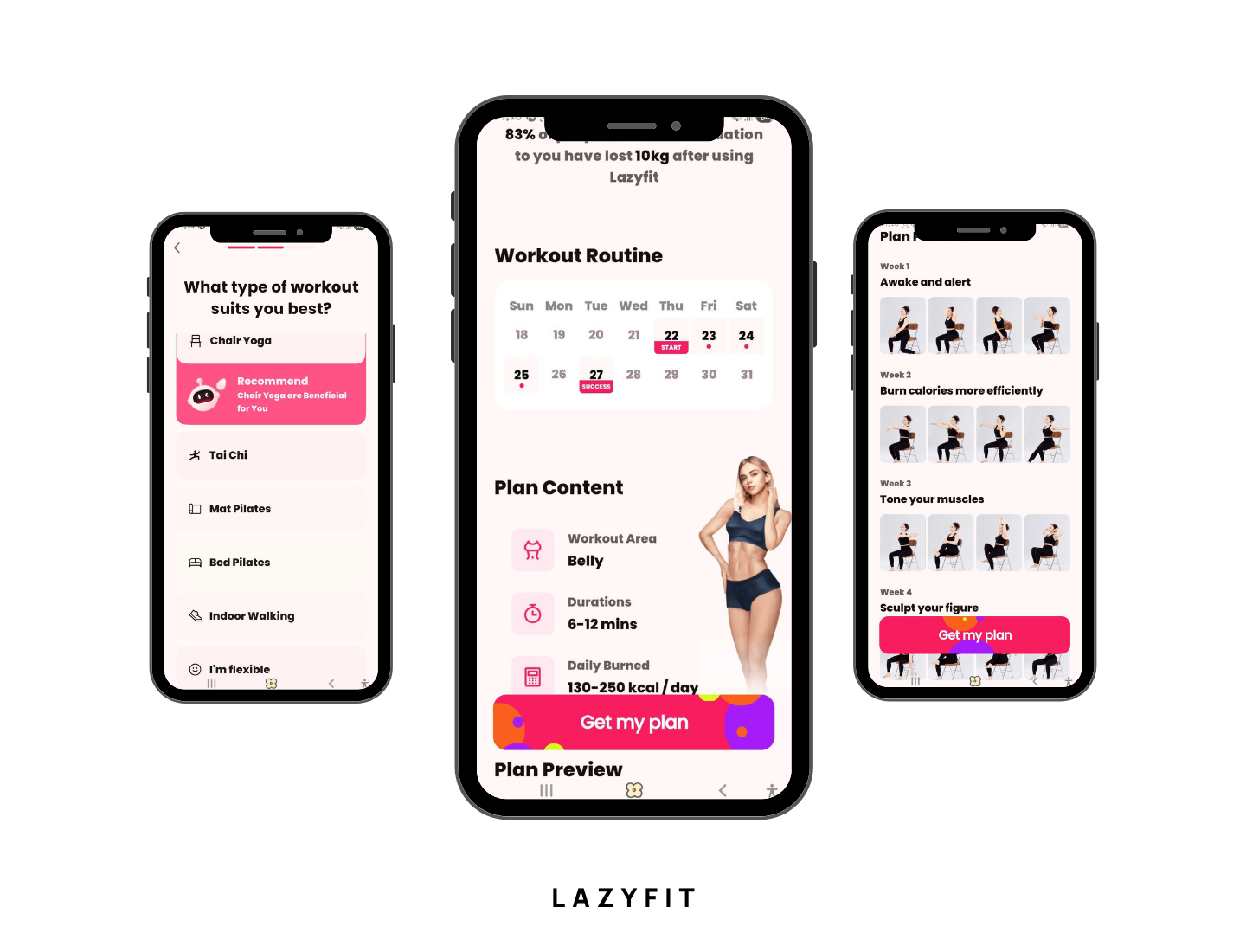
LazyFit, one of the popular fitness app for anyone with limited mobility, available on iOS (4.7 rating) and on Android (4.5). App designed to help with burning calories and making amazing curves at home in chill athmosphere.
Asana Rebel
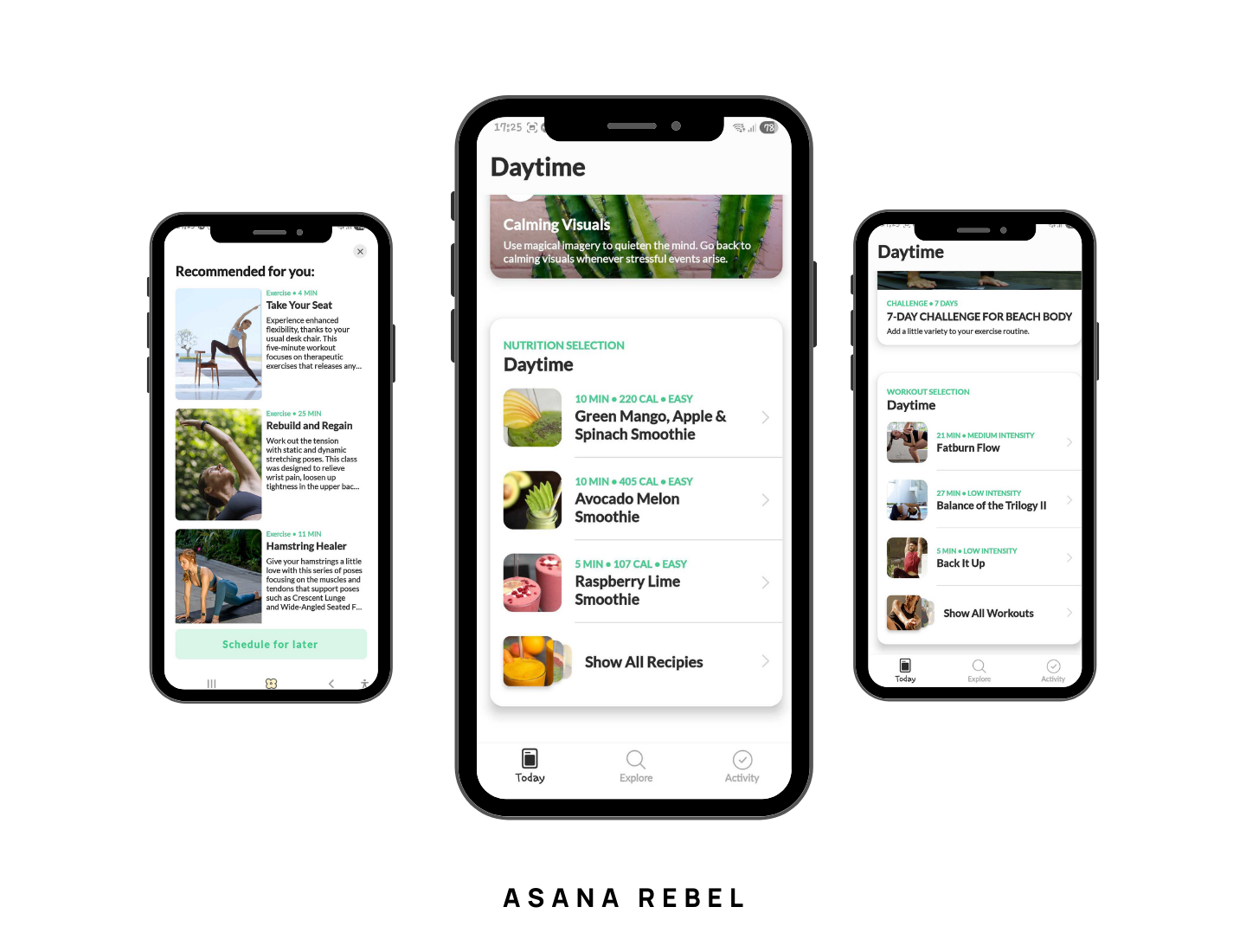
Asana Rebel provides over 100 expert yoga workouts targeting weight loss, strength, flexibility, balance, and relaxation — all available anytime on mobile. Dynamic updates, previews, and habit-building features receive strong review praise. This 4.0-star app (80K+ Android reviews) suits tech-savvy fitness enthusiasts perfectly.
BetterMe
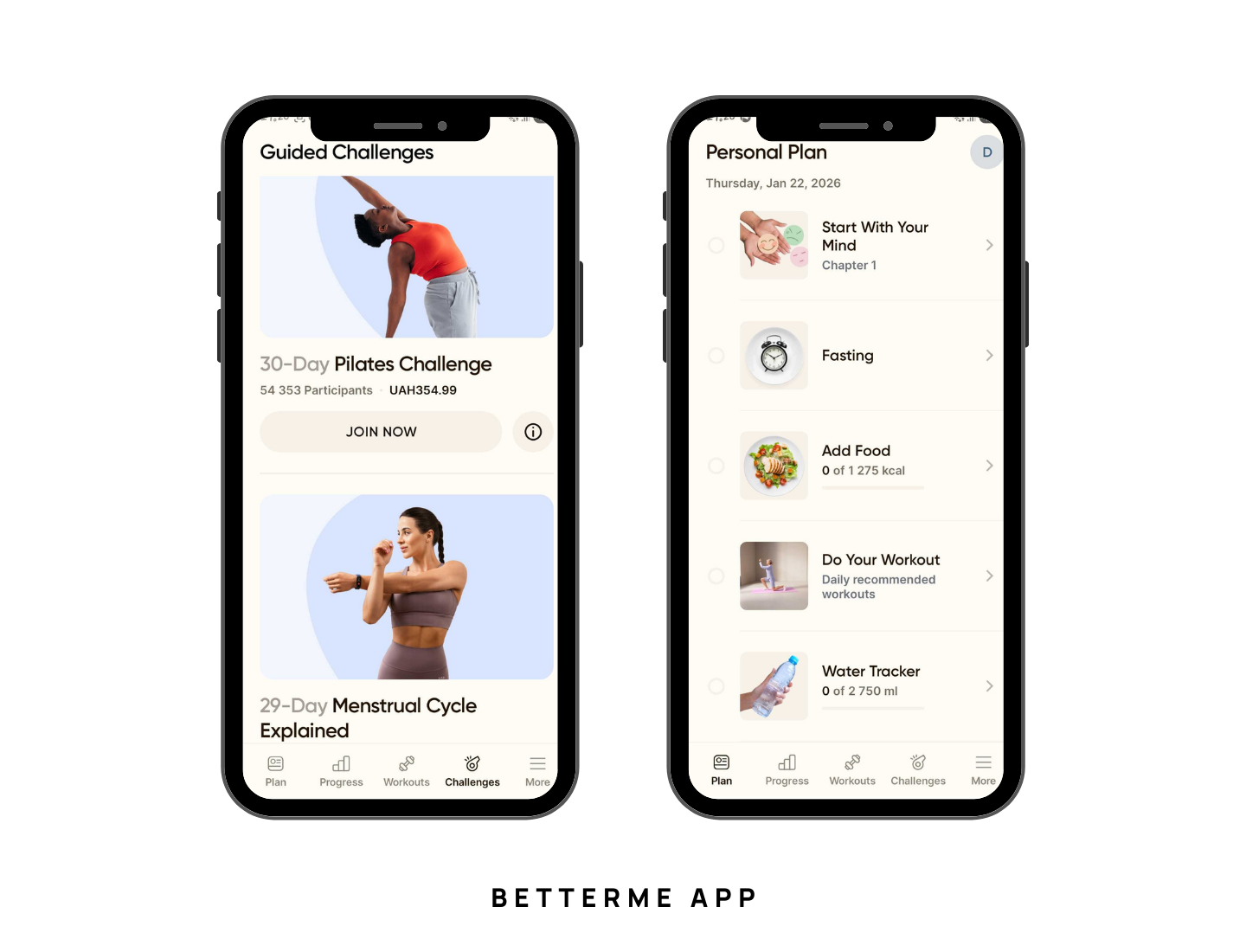
BetterMe is a popular fitness app offering personalized workout plans (Pilates, yoga, calisthenics), meal ideas, habit trackers, and mindset tips. It suits beginners and those wanting short at-home sessions. The app scores high: 4.7 on App Store and 4.5 on Google Play.
What it Takes to Design the Best Yoga App [+The Future of Yoga Innovation]
What does it take to design the best yoga app in 2026? It requires more than just a library of high-quality videos. To stand out, an app must emulate the feeling of a live studio while leveraging technology to provide an experience that is safer, more personal, and deeply integrated into a user’s lifestyle.
Essential Pillars of Modern Yoga App Design
Designing a top-tier app means balancing a minimalist aesthetic with powerful, data-driven features.
- Hyper-Personalized Onboarding: The best apps use initial assessments to gather data on a user’s age, flexibility, and specific goals—whether that is stress relief, mobility, or strength.
- Intuitive UI/UX: A clean, calming interface reduces the "cognitive load" for users who are likely coming to the app to de-stress.
- Hybrid Content Ecosystem: To drive long-term loyalty, apps should offer a mix of on-demand sessions for busy schedules and live-streamed classes for those seeking community engagement.
- Progress Visualization: Tracking metrics like session streaks, total "mindful minutes," and physical milestones keeps users motivated and engaged.
The Future of Yoga Innovation: 2026 and Beyond
The yoga experience is currently undergoing a massive shift driven by AI and bio-syncing technologies.
- AI-Native Computer Vision: Modern apps are moving beyond simple playback. They now use your device’s camera to recognize body landmarks, providing real-time, hands-free feedback on your alignment and posture.
- Bio-Syncing & Predictive Readiness: By integrating with wearables like smartwatches and rings, apps can monitor heart rate variability (HRV) and stress levels. If the app detects high physiological stress, it might automatically suggest a restorative Yin session instead of a vigorous Power Vinyasa.
- Immersive XR Environments: Extended reality (XR) allows practitioners to escape their living rooms. Users can now practice in virtual, calming environments—from pink-cloud sunsets to mountain peaks—deepening their emotional immersion in the practice.
- Voice & Gesture Control: To maintain the "flow," 2026 apps prioritize voice commands. This allows you to pause, skip, or change the music without ever having to touch your phone with sweaty hands.
By combining these elements, developers can create a "studio in a pocket" that feels less like a piece of software and more like a supportive, intelligent personal coach.
If you are interested in Yoga app development - contact us