
Introduction
SafeRacks (part of Eagle Industrial Group) sells garage storage solutions and professional installation services across the United States. Their network includes more than 50 independent installers who bring the product directly to customers' homes. The company built a strong reputation for quality storage systems.
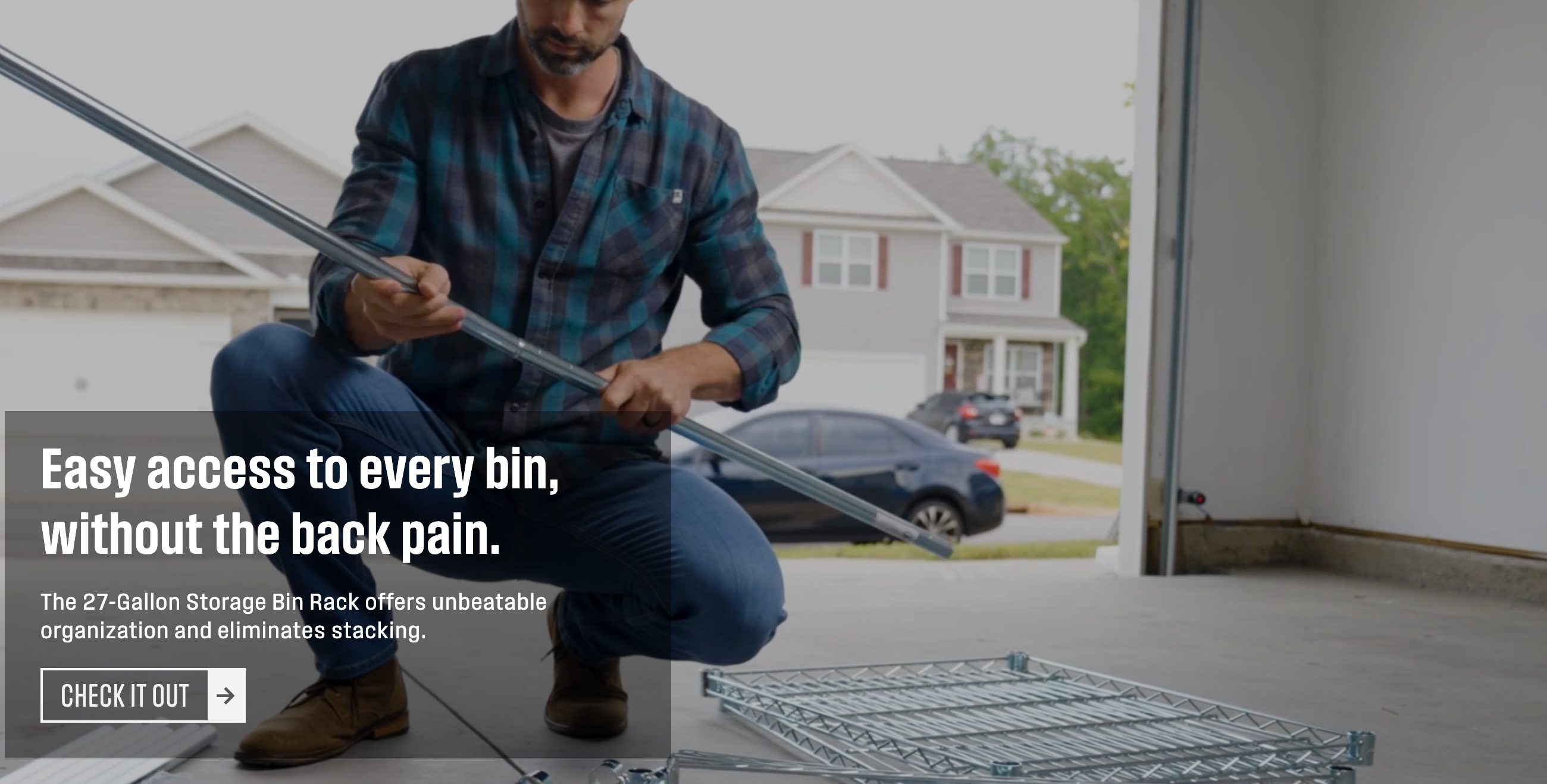
Their product was strong. Their operations had room to grow.
Scheduling required manual coordination across multiple systems. The installer portal was unreliable and frustrating to use. The cancellation rate sat at 20%. SafeRacks knew these issues would limit their ability to scale.
They wanted to become the most customer-friendly installation company in the garage storage industry. That meant improving the experience for customers booking appointments and for installers completing jobs.
Instead of jumping into development, SafeRacks chose to invest in proper discovery first. They partnered with Brocoders to map their current processes, gather requirements from all stakeholders, and design the future platform. The result: a validated prototype, polished design, and clear estimation for the operational system that will power their growth.
This is the story of how SafeRacks prepared to modernize their field operations.
Why SafeRacks decided to modernize
SafeRacks operates in a competitive market. Dozens of companies sell garage storage systems. Many of them offer installation. Price differences between providers are often small. The companies that win are the ones that deliver a better experience.
SafeRacks understood this. They knew their storage products were solid. But they also knew their operations created friction that customers and installers felt daily.
The scheduling bottleneck
Every appointment required manual work. A customer service rep had to check the customer's ZIP code, find an available installer in that area, verify the installer's schedule, confirm they could handle the specific product type, and coordinate a time that worked for everyone. This process took 20 minutes per appointment.
Customer service reps spent their days on the phone confirming jobs instead of helping customers with questions or resolving issues. The scheduling system and the installer calendars lived in separate places. Rescheduling meant updating multiple tools manually, which created room for errors and miscommunication.
Installer frustrations
SafeRacks interviewed their installers to understand what was working and what needed improvement. The feedback was clear.
The installer portal was clunky and unreliable. It stalled frequently, forcing installers to close and reopen the app multiple times during a single job. Changes to appointments did not always sync to their calendars. Inventory ordering used units that made no sense. Installers wanted to help customers add products during installation, but the system made that difficult.
One installer described the portal as "quite unreliable" and noted they were "constantly wasting time" dealing with technical issues. Another pointed to scheduling as the only feature that worked reasonably well, while everything else felt outdated.
The decision to modernize
SafeRacks could have continued patching their existing system. Their previous vendor was slow, taking four to six weeks to fix issues. The platform was buggy and lacked flexibility. But SafeRacks wanted more than quick fixes.
They wanted to build operations that matched their ambition: becoming a company known for seamless customer experience and an installer network that actually enjoys using their tools.
How Brocoders helped SafeRacks prepare for modernization
SafeRacks needed more than a list of features. They needed a partner who would understand how their business actually worked before proposing solutions. We started with the Solution phase.
Gathering requirements
We mapped the existing workflows across three user types: customers booking installations, installers completing jobs, and admin staff managing operations.
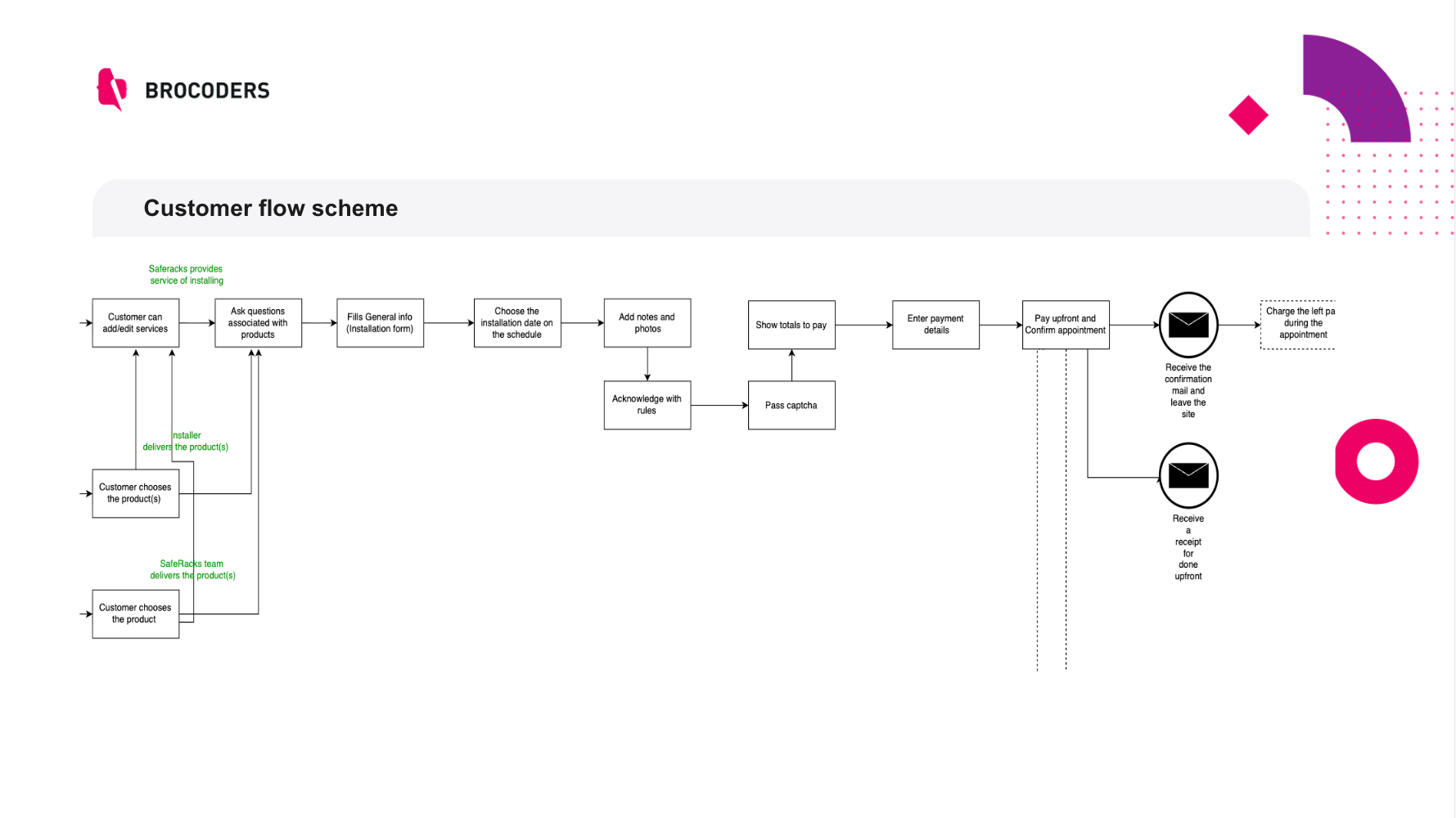
For each group, we documented the current state. We identified where processes started, which steps required manual work, where information got lost between systems, and what workarounds people had created to deal with limitations.
This mapping revealed the core blockers.
- Scheduling logic lived in people's heads, not in software.
- Inventory tracking had gaps that caused accountability issues.
- Customer service spent time on tasks that software should handle automatically.
Gathering feedback from customers and installers
Requirements documents only tell part of the story. We needed to hear from the people who use the systems every day.
The SafeRacks team worked with customer service to understand the edge cases: rescheduling scenarios, product type mismatches, and cancellation triggers. These conversations surfaced requirements that would never appear in a feature list.
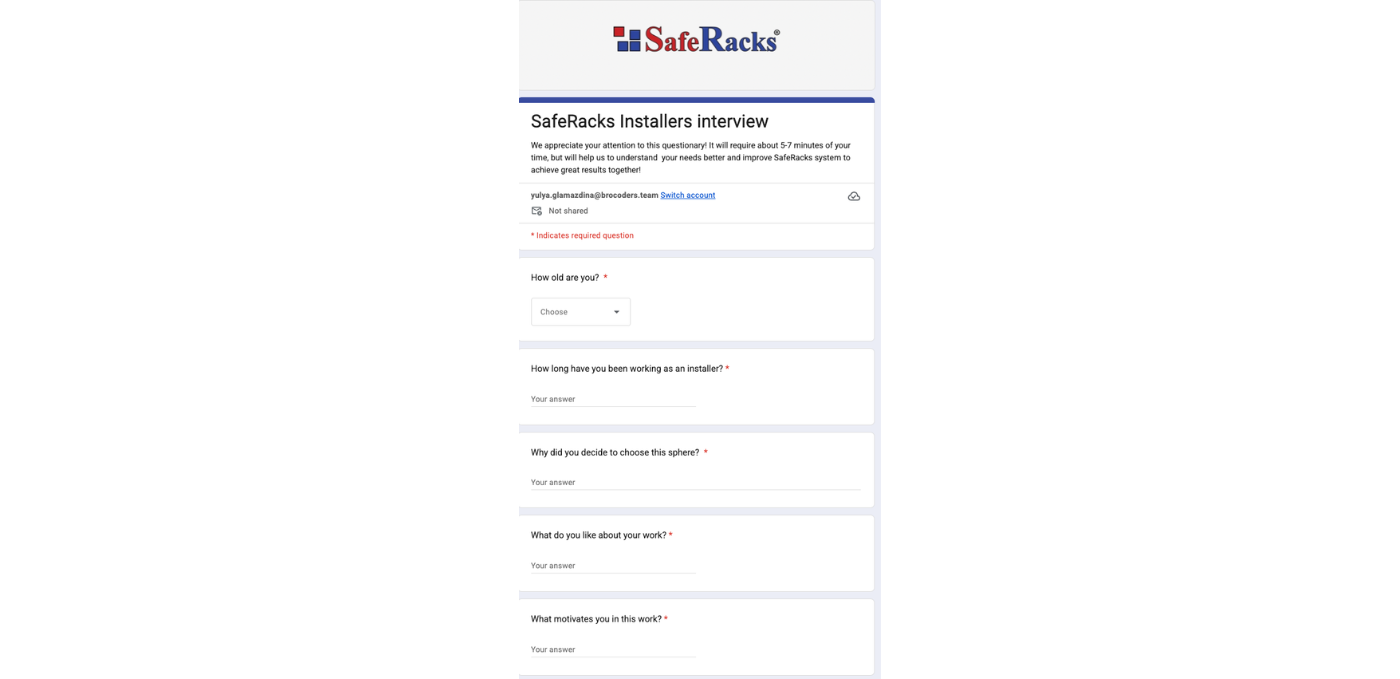
They also conducted interviews with installers. Installers described what frustrated them about the current portal, explained what information they needed before arriving at a job, and shared ideas for features that would make their work easier.
Turning feedback into user stories
Raw feedback is valuable. Actionable specifications are better.
We translated installer frustrations into user stories with clear acceptance criteria. "As an installer, I need to see my upcoming appointments with addresses, products, and customer contact information so I can prepare for each job." Each story connected to a specific pain point from the research.
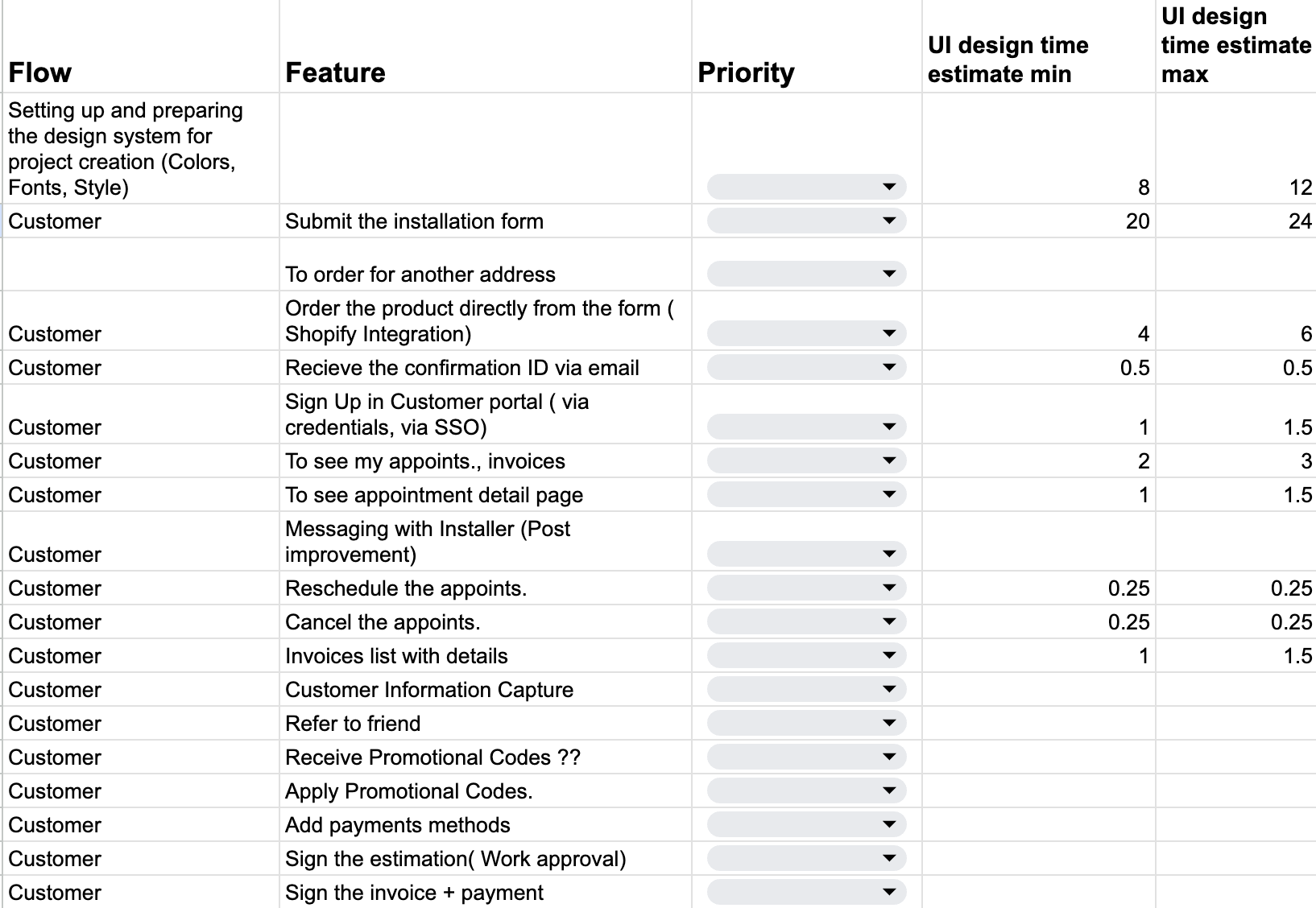
We defined the scheduling logic that would replace manual checks. The system would account for installer proximity, product type certifications, daily capacity limits, and availability windows. If a day had no valid installer match, the system would explain why and suggest alternatives.
Delivering the prototype
With requirements documented, we built interactive wireframes that SafeRacks could test before any code was written.
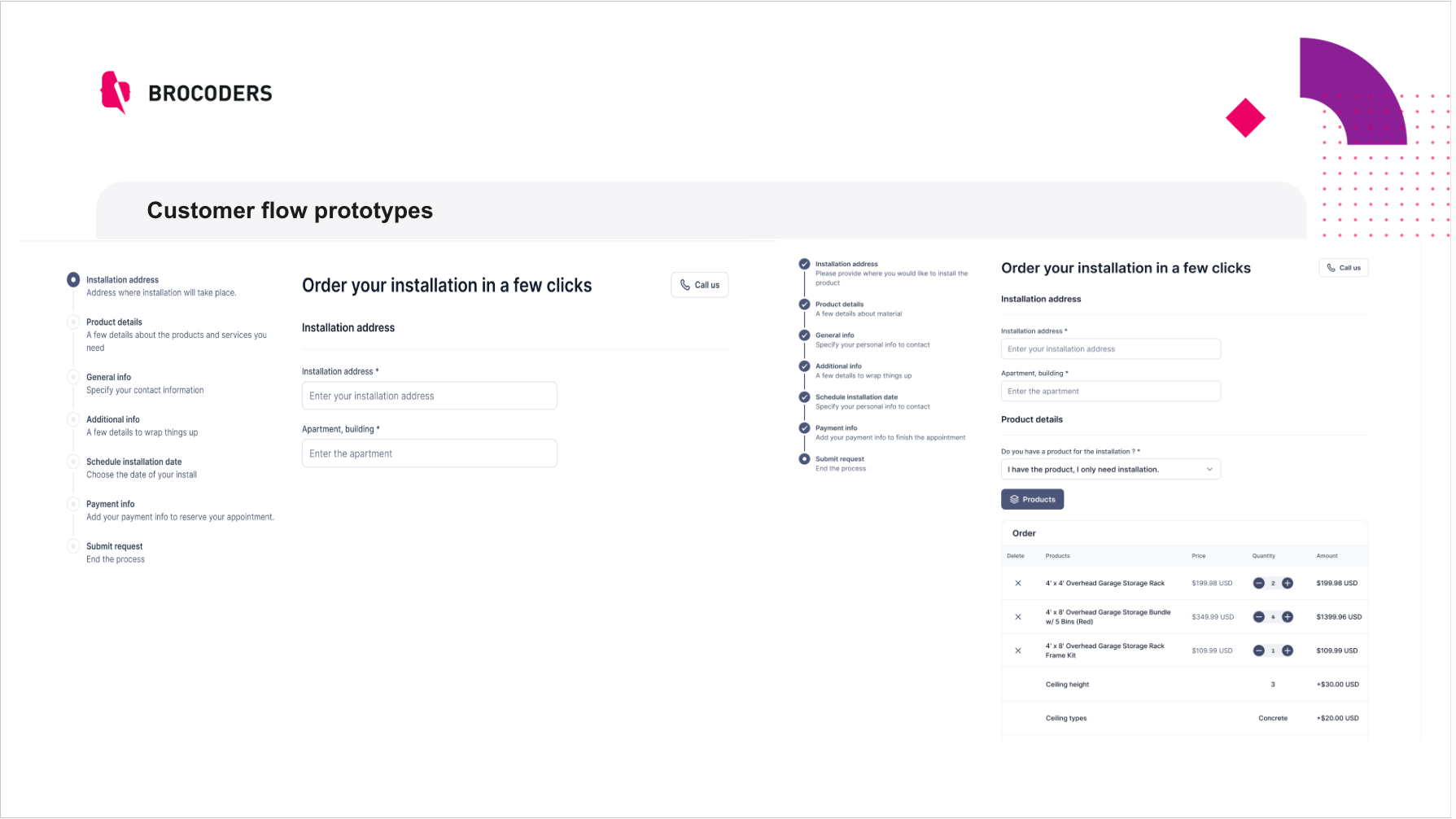
The customer booking flow shows real-time availability based on location and product selection. Customers enter their ZIP code and see available installation dates based on real logic: installer proximity, product type, and capacity. They select a time, provide their information, and receive confirmation. No phone calls. No waiting for callbacks.
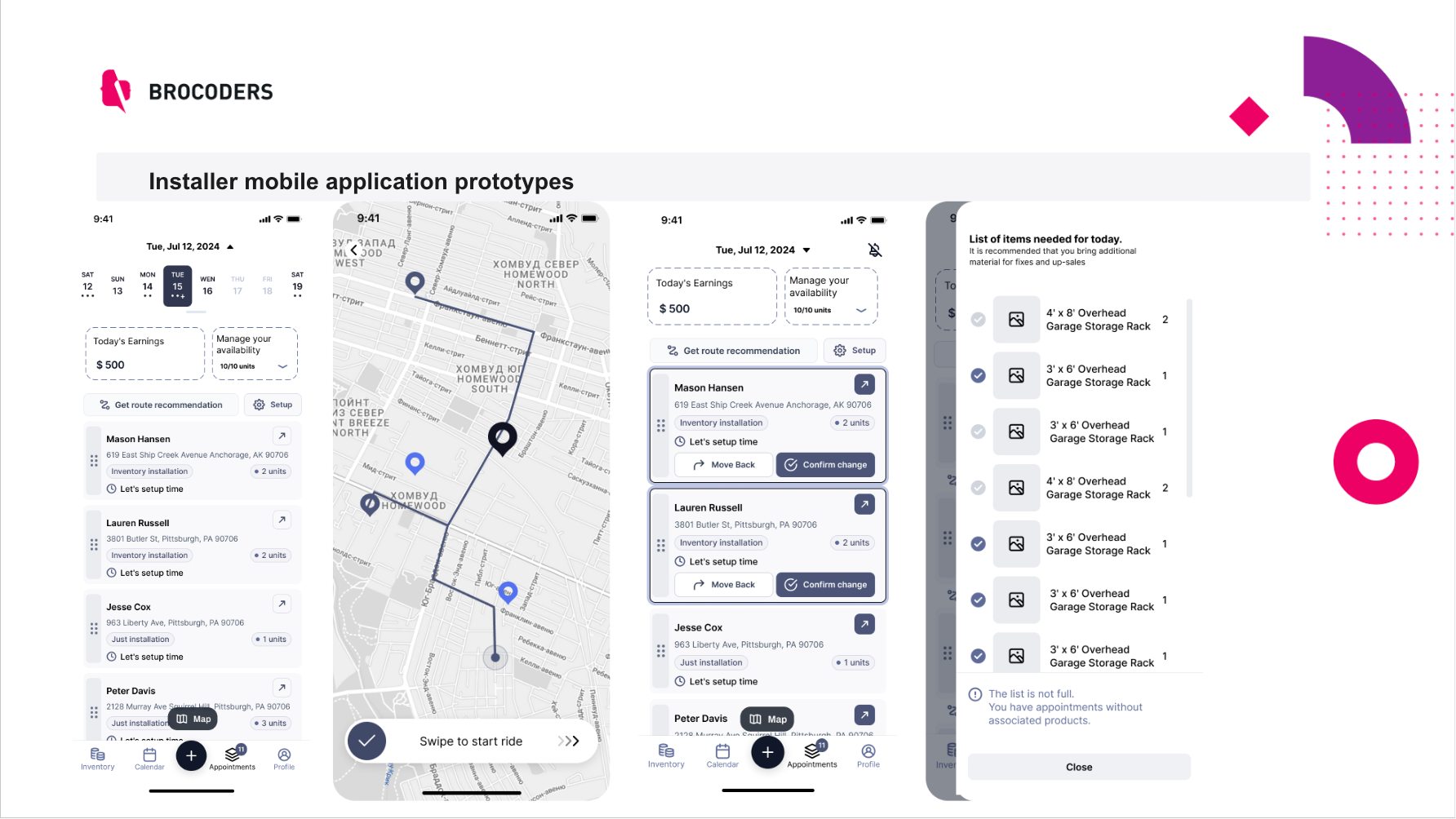
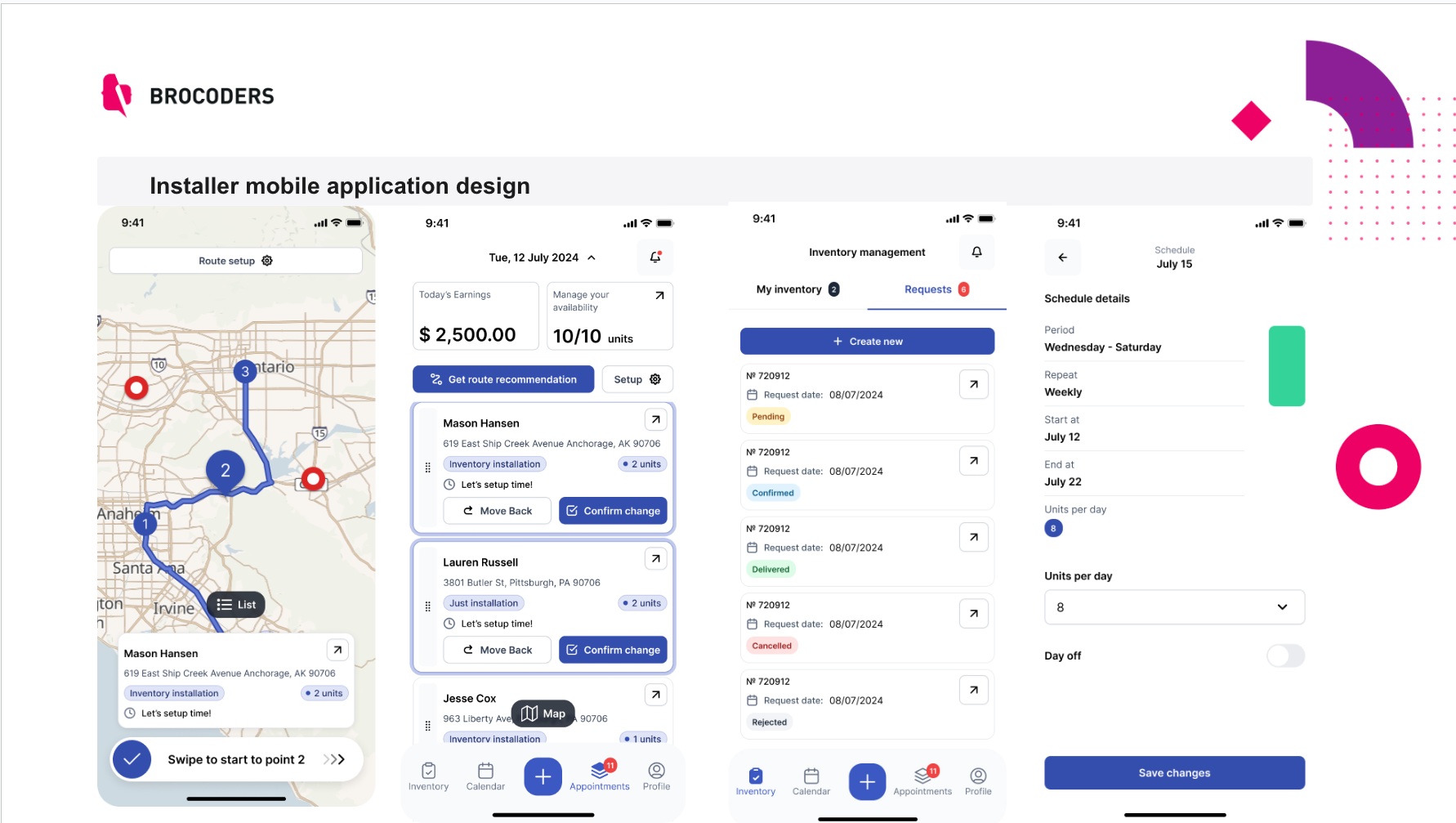
The installer mobile app covers the complete job lifecycle from acceptance to payment collection. Installers see their upcoming appointments with addresses, product details, and customer contact information. They can accept jobs, view navigation, collect signatures, and process payments. The app includes inventory requests with clear units and delivery tracking.
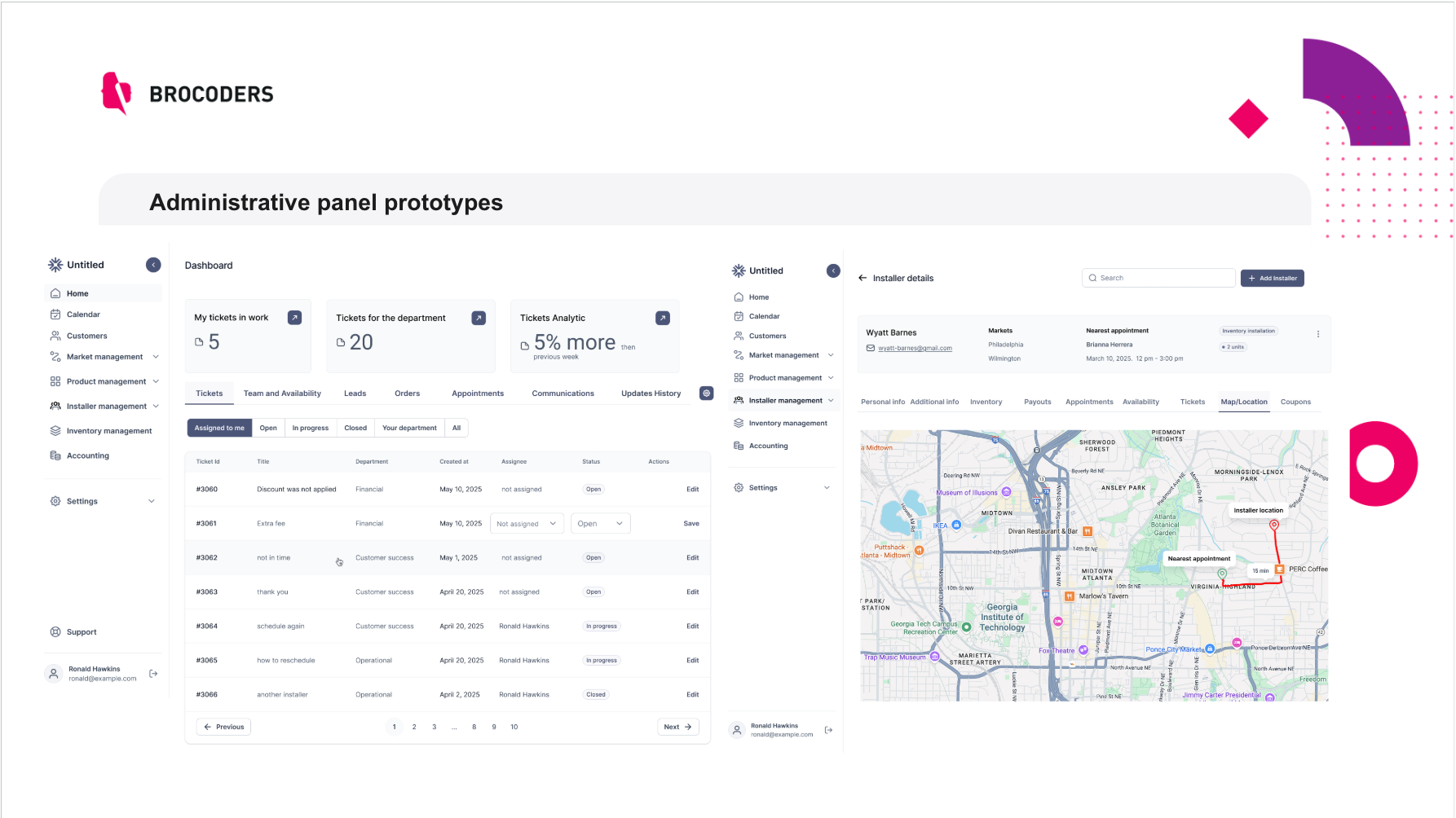
The admin panel gives operations staff visibility into scheduling, customers, installers, and payments. Customer service reps can search by customer name, phone number, or appointment code. They can view scheduling availability, override rules when needed, and see exactly why a specific date shows as unavailable.
SafeRacks tested the prototype with their team. They clicked through scenarios, identified gaps, and requested adjustments. We refined the prototype based on their feedback.
Delivering the design
The polished design system positions SafeRacks as a modern, professional brand.
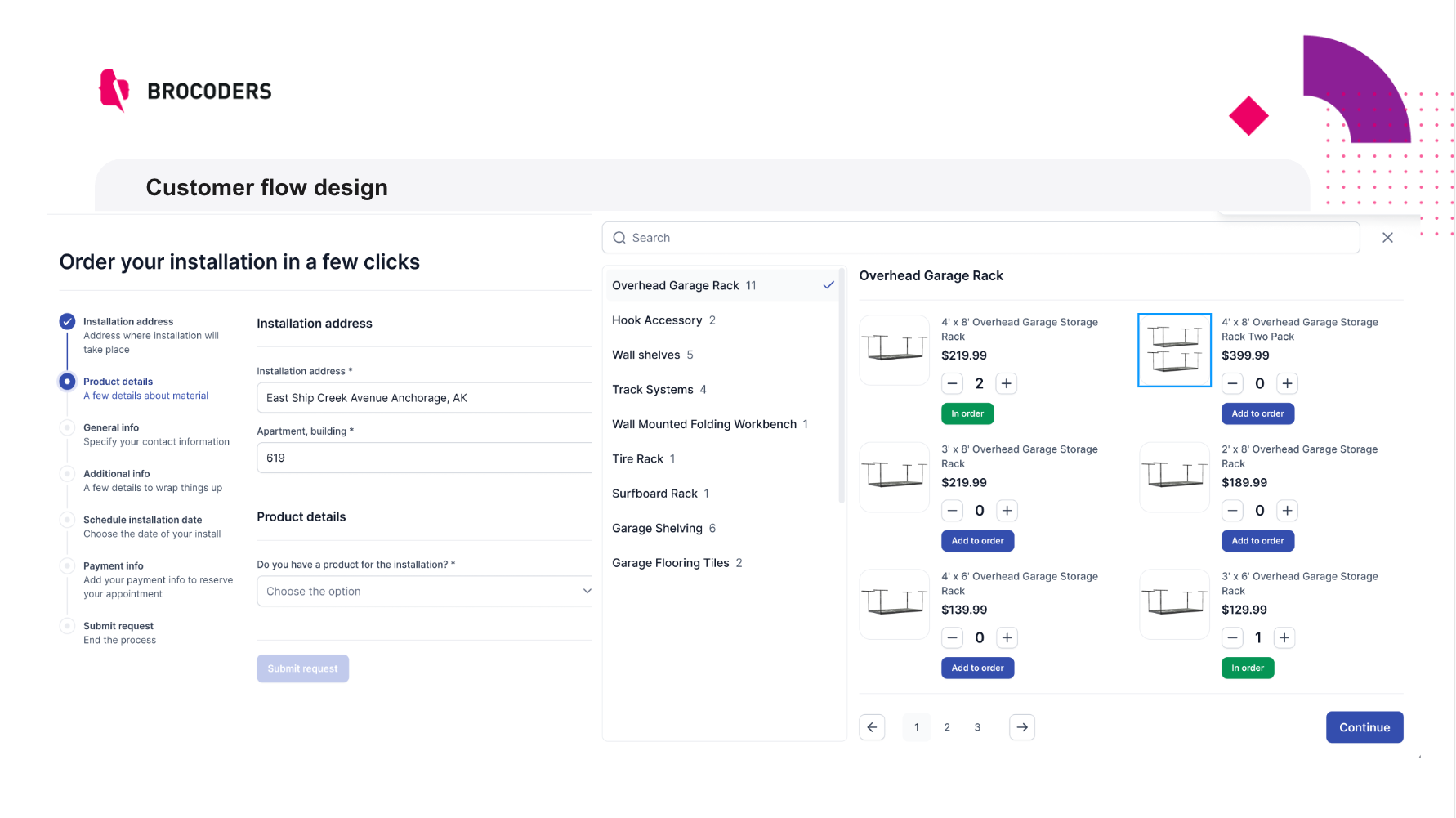
Customer-facing screens use clean layouts and clear calls to action. The booking experience feels simple even though complex logic runs underneath.
The installer app prioritizes speed and clarity. Information displays in large, readable formats for people working in garages and driveways. Key actions require minimal taps. The design reduces the frustration that installers reported with the old portal.
The admin panel organizes dense information into logical sections. Scheduling, customers, installers, payments, and inventory each have dedicated views. Staff can find what they need without clicking through multiple screens.
Delivering the estimation and roadmap
SafeRacks received a detailed breakdown of the platform development.
The estimation covers each module: scheduling engine, customer booking portal, installer mobile app, admin dashboard and inventory management. Each module includes scope, timeline, and investment range.
The roadmap prioritizes features by impact. Core scheduling and payment functionality comes first. Advanced reporting and analytics follow in later phases. SafeRacks can launch with an MVP and expand based on real usage data.
Every user story, workflow diagram, and technical specification is documented. SafeRacks owns these artifacts. They can use them to evaluate vendors, onboard development teams, or continue working with Brocoders.
What the future platform will deliver for SafeRacks
The prototype and design give SafeRacks a clear picture of their operational future. When the platform launches, every stakeholder benefits.
For customers
Booking an installation will take minutes instead of days. Customers will enter their location, select products, and see available dates instantly. No waiting for a callback. No uncertainty about whether the appointment is confirmed.
Communication will happen automatically. Customers will receive reminders before their installation date. If anything changes, they will know immediately. After the job, they will get receipts and documentation without asking.
For installers
The mobile app will replace the clunky portal that frustrated installers for years. Job details will sync reliably. Calendars will update in real time. Installers will know where to go, what products to bring, and how to contact the customer.
Inventory requests will make sense. Installers will order materials in units they understand. They will track deliveries and know when stock arrives. The accountability issues that created friction will disappear.
For SafeRacks operations
Scheduling time will drop from 20 minutes to under 5 minutes. The system will handle proximity checks, capacity limits, and product type matching automatically. Customer service reps will focus on helping customers instead of coordinating calendars.
The cancellation rate target is 10%, down from 20%. Better scheduling accuracy, clearer communication, and reliable installer coordination will reduce the friction that causes cancellations.
Competitive positioning
Most garage storage companies still run on phone calls, spreadsheets, and disconnected tools. SafeRacks is investing in digital operations that scale.
When customers compare providers, SafeRacks will offer instant online booking while competitors ask for callbacks. When installers choose which companies to work with, SafeRacks will provide tools that make their jobs easier. Better installer experience leads to better customer experience.
SafeRacks will compete on service quality, not just price. The platform makes that possible.
What you can apply to your field operations
SafeRacks faced challenges that many field service companies share. If their situation sounds familiar, here is how to evaluate your own operational readiness.
Signs you need to modernize your operations
Your scheduling involves manual checks and phone calls to confirm availability. Customer service spends time coordinating calendars instead of helping customers. Your team uses workarounds because the system lacks flexibility to handle your actual workflows.
Your installers or technicians complain about the tools they use daily. Information does not sync reliably. They waste time on administrative tasks instead of completing jobs.
Your software vendor is slow to respond. Fixes take weeks. Feature requests go nowhere. You feel locked into a system that does not fit how your business operates.
What proper discovery delivers
Documented requirements based on real workflows, not assumptions. Feedback from all stakeholders including the people who use the systems daily. A prototype you can test and validate before committing to development. Design that reflects your brand and serves your users. An estimation that helps you plan timeline and budget.
Discovery reduces risk. You confirm that the solution matches your needs before writing code. You surface edge cases and complications early when they are cheap to address. You align your team around a shared vision of the future platform.
Getting started
Map your current workflows. Identify where time gets wasted, where errors happen, and where your team has created workarounds. Talk to the people who do the work every day. Their frustrations point to the requirements that matter most.
If you want help mapping your operations and designing a platform that fits your business, we offer a workflow discovery session at no cost. We will document your challenges, identify specific requirements, and show how proven modules could configure to your needs.
Schedule an operational assessment with our team.
Conclusion
SafeRacks chose to do this right. Instead of patching an outdated system or rushing into development, they invested in understanding their operations first.
The discovery phase delivered a validated prototype, polished design, and clear estimation for their future platform. Every workflow is documented. Every requirement is specified. SafeRacks knows exactly what they are building and why.
When the platform launches, customers will book installations in minutes. Installers will have tools that actually help them do their jobs. Operations will run on logic instead of phone calls and spreadsheets.
SafeRacks is positioning itself as the most customer-friendly garage storage company in the industry. The operational foundation is ready. Brocoders helped them prepare for that future with requirements that reflect how their business actually works and designs that bring those workflows to life.
Learn more about Custom FSM software development service Brocoders provides.