
Who this is for: Operations managers and owners at service companies managing 50+ contractors across multiple regions. Teams running hybrid product-plus-installation businesses. Leaders who have invested in FSM software, CRMs, and payroll platforms but still struggle with fragmented data across systems. Anyone who has searched for "one platform that does everything" and discovered that platform does not exist.
Search for "contractor management system" and you will find two dominant messages. The first: store W-9s, certificates of insurance, and compliance documents so you do not get sued. The second: pay contractors and employees from one dashboard. About 60% of top results push the compliance angle. Another 25% sell unified payroll.
Both messages assume the problem is administrative. Both assume you need one more platform to add to your stack.
The reality for contractor-heavy businesses looks different. Most companies have already invested in software. They have FSM platforms. They have contractor management tools. They have CRMs, payroll systems, inventory tracking, and safety training software.
Each tool works on its own. The problem is they do not talk to each other.
The Fragmented Data Problem: Your Tools Work, Your Data Does Not
Some companies still dispatch through spreadsheets, WhatsApp groups, and phone calls. This is the worst-case scenario, where synchronization becomes critical just to operate.
Most companies have moved past that. They run real FSM software. They have contractor management platforms, CRMs, payroll systems, and inventory tools. Each platform handles its function adequately.
The problem is the same in both cases: fragmented data.
The spreadsheet company has data scattered across files and chat threads. The software-equipped company has data scattered across five platforms that never synchronize. When a contractor's certification expires, someone updates it in one system. The other four systems still show it as valid. When a job gets rescheduled, someone changes it in the FSM platform. The CRM still shows the original date. The payroll system calculates based on outdated job data.
Mike Porter, IT Infrastructure Service Manager at Isku, a Finnish furniture and interiors company, described:
System integration is the biggest pain. Multiple disconnected systems. Data moving across tools without proper synchronization. Changes are difficult and risky to implement.
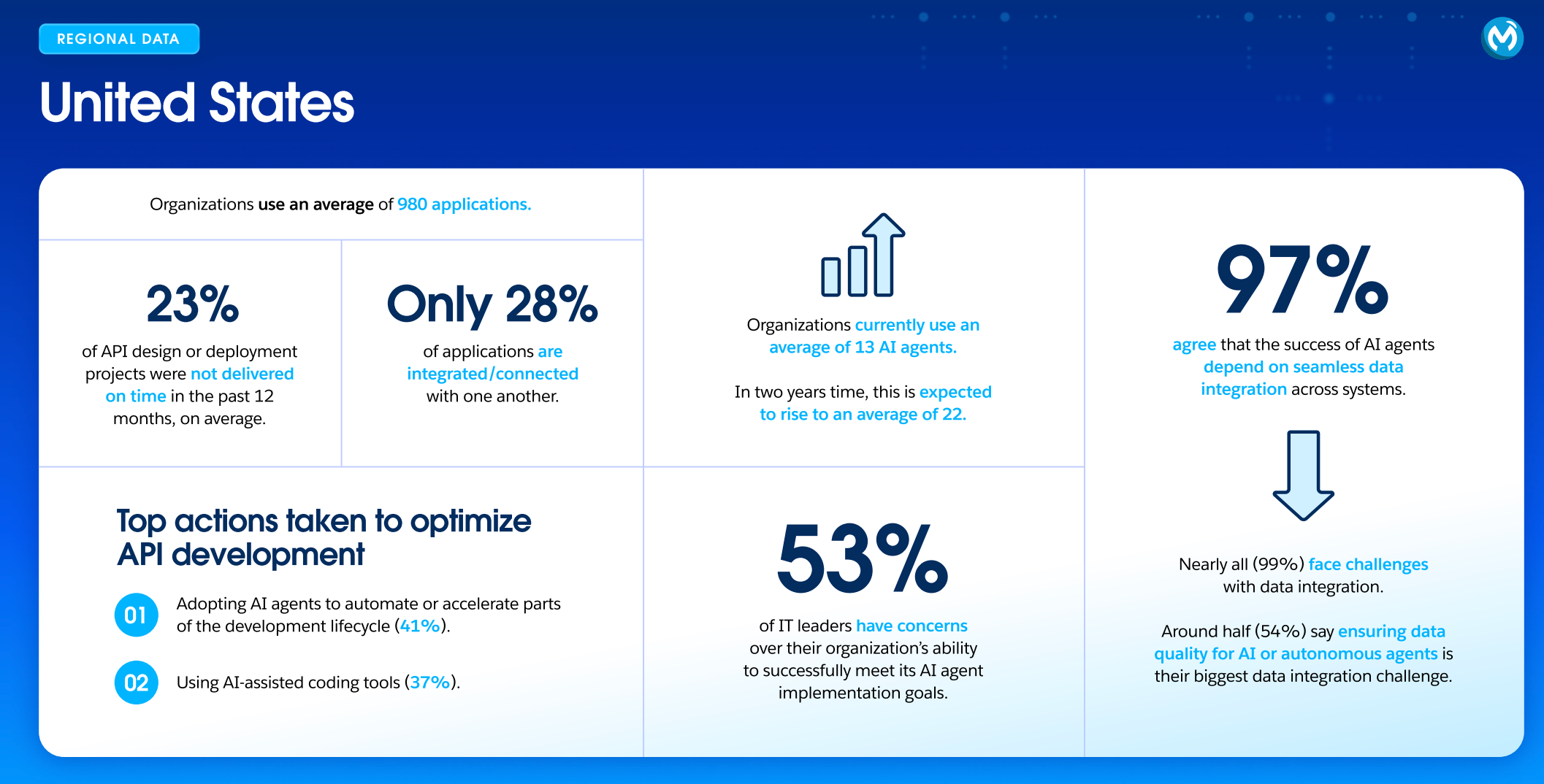
According to MuleSoft's 2025 Connectivity Benchmark, only 28% of enterprise applications are integrated, despite organizations averaging roughly 897 apps.
The director of an electrical services company put the cost in concrete terms:
The biggest hidden cost is not the monthly fee for an off-the-shelf tool. The real cost is the daily friction added to your workflow. If a technician wastes 10 or 15 minutes on every job just trying to input data correctly, the losses are huge. We might complete 25 jobs in a day. Those lost times quickly add up to several hours of wasted labor.
The math compounds. 25 jobs multiplied by 15 minutes equals more than 6 hours of technician time lost daily to data friction. Scale that across 50 contractors and the annual cost reaches six figures in wasted labor.
The Fragmented Data And AI Integration
Right now, operations managers are facing immense pressure from leadership to implement AI. The hype is unavoidable: 98% of organizations are actively planning to embrace AI agents. Management sees AI as the silver bullet to fix inefficiencies and streamline contractor management.
However, there is a glaring roadblock: your data silos. Your team is already losing 2.4 hours every single day just trying to track down information across disconnected CRMs, payroll platforms, and FSMs. These silos don't just cause operational headaches—they actively prevent successful AI integration. AI relies entirely on context, yet on average, only 27% of enterprise applications are actually connected. Because of this broken infrastructure, IT leaders admit that basic system integration is the biggest challenge they face when trying to use AI.
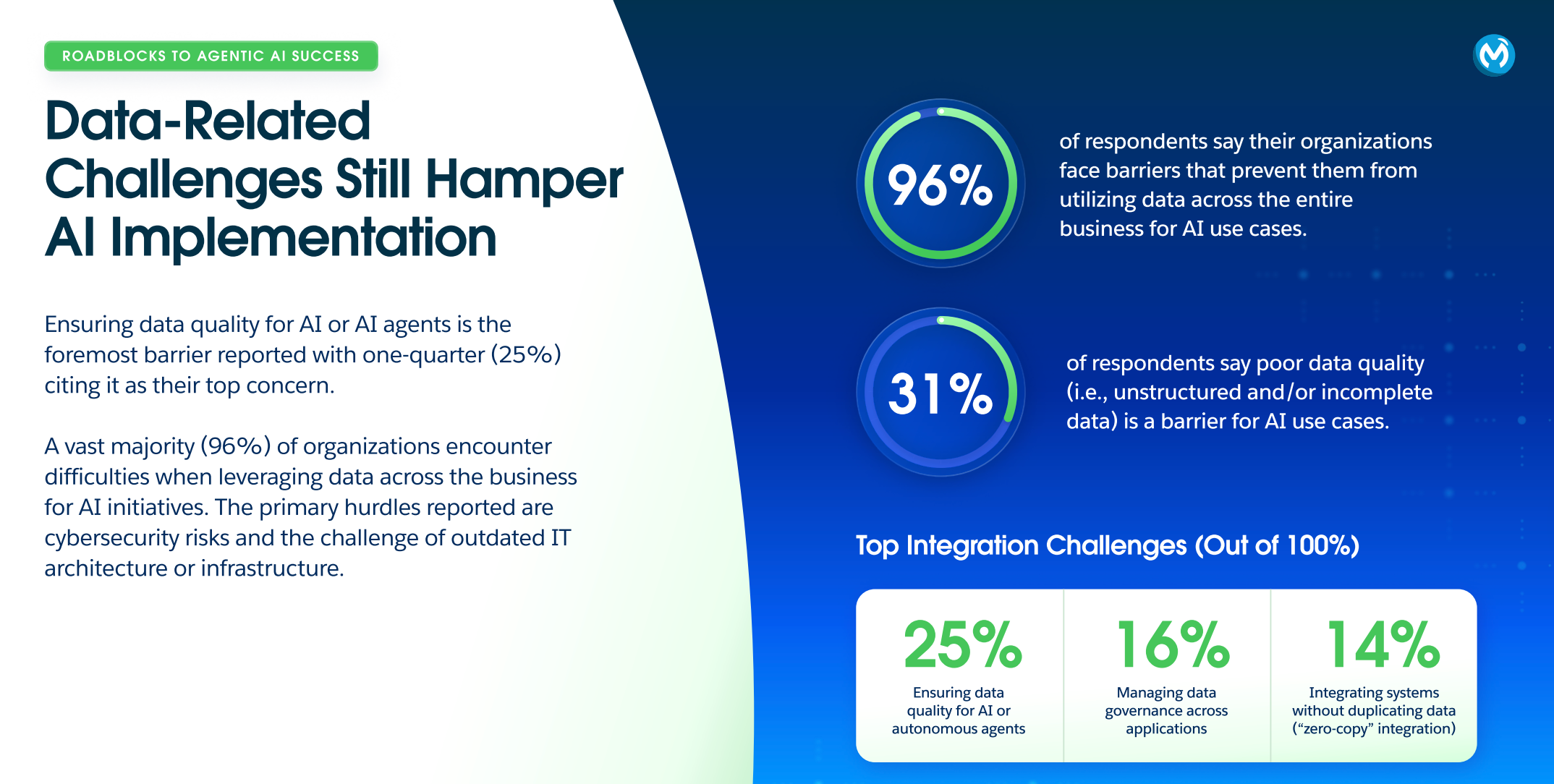
In fact, without proper integration, 50% of deployed AI agents end up operating in complete isolation, rendering them useless.
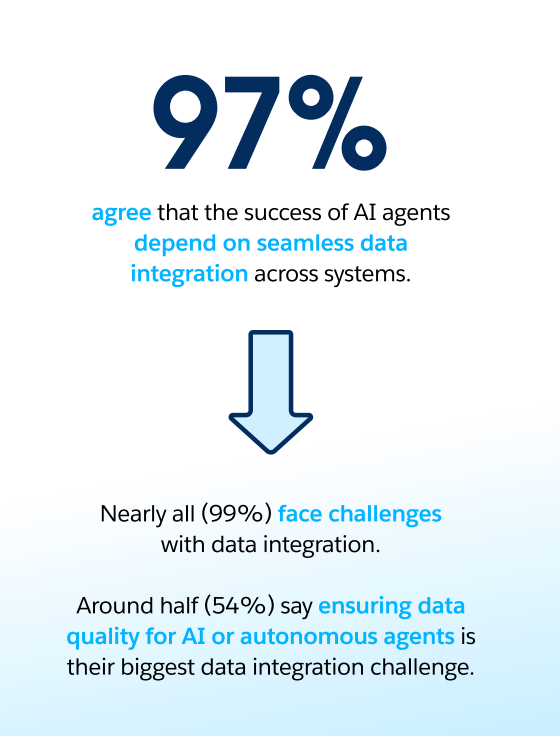
This is why solving the fragmented data problem requires a strict two-step evolution. First, a Hub-and-Spoke Operational Core must integrate your existing systems and centralize your business logic. 97% of IT leaders agree that the success of AI depends entirely on this seamless integration. Next, only once your data is synchronized, AI Communication Agents can be deployed to eliminate data entry friction and coordinate your operations...
The First Instinct: Hunt for the Unicorn Platform
Faced with fragmented data, most companies reach for what seems like the obvious solution: find one platform that does everything. Consolidate. One login. One database. One dashboard.
The market responds with promises. Contractor management systems claim to handle compliance, payroll, CRM, dispatch, routing, quality control, inventory tracking, and customer communication. The pitch sounds appealing.
That unicorn platform does not exist.
We have talked to dozens of service company operators over the past three years. The pattern repeats regardless of company size or industry. Companies try the all-in-one platforms. They discover these platforms either lack depth in critical areas or force workflow changes that create new problems.
Generic platforms cannot know these specifics. They were built to serve thousands of companies with different processes. Your routing rules are not their routing rules. Your certification requirements do not match the next customer's. Your contractor payment splits follow your specific agreements, not a template.
Even if a true "does everything" platform existed, the economics work against it. Development costs for such a platform run into tens of millions of dollars. Those costs get passed to customers through licensing fees, implementation charges, and ongoing subscription costs. Companies end up paying premium prices for features they will never use while still lacking the specific functionality their operations require.
Why Your Best-of-Breed Stack Already Contains the Right Tools
Most contractor-heavy businesses have already made smart software choices. They use Deel or Gusto because those platforms specialize in compliant contractor payments. They use QuickBooks or Xero because those platforms excel at accounting. They use Salesforce or HubSpot because those platforms have spent decades refining CRM functionality.
Industry research supports this approach. Best-of-breed SaaS stacks consistently deliver better workforce management outcomes, higher service quality, and faster payback compared with monolithic suites. Specialized tools go deep in their domain. Generalist platforms spread capabilities thin across too many functions.
The problem is not your tool choices. The problem is the gaps between them. Contractor skills live in your HR system. Customer SLAs live in your CRM. Inventory lives in your ERP. Schedules live in Excel. When a customer calls to book an installation, your team manually checks each system. When you need to dispatch an emergency repair, someone pulls availability from one tool, certifications from another, and customer history from a third.
This fragmentation explains why 70-80% of digital technology projects fail to reach their stated goals, with integration challenges cited as a core reason. Organizations without solid integration strategies see stalled initiatives and paralyzed operations. Studies indicate that integration issues can drain 40-60% of project budgets when left to ad-hoc point-to-point connections.
So here is what Mike suggests to consider
Exploring two possible directions: one large ERP to reduce integrations and improve cost efficiency, or a smaller ERP combined with several specialized systems, connected via an orchestrator. The second option is currently seen as more flexible and realistic.
So let's go deeper into the second option.
The Hub-and-Spoke Operational Core: A Framework for Contractor Coordination
The alternative to replacing your stack is connecting it. Instead of hunting for one platform that does everything, you keep your specialized tools and build an operational layer that sits in the middle.
This approach follows a hub-and-spoke architecture.
Your existing tools become the spokes: Deel for compliance, QuickBooks for finance, Salesforce for CRM, your safety training platform, your inventory system.
The hub becomes a custom operational core that pulls data from each spoke and applies your specific business logic. It ingests availability from your HR tool, customer data from your CRM, inventory levels from your ERP, safety certifications from your training platform. Then it applies dispatch logic specific to your business: proximity-based routing, skill matching, territory rules, priority scoring, and equipment requirements.
Point-to-point integrations between systems scale badly. Connecting 50 systems directly requires 1,225 distinct links, each with its own data mappings, error handling, and maintenance requirements. A hub-and-spoke model collapses this complexity. Each system integrates once with the hub. 50 systems require 50 connections, not 1,225. That represents roughly a 96% reduction in integration complexity.
AI Agents As The Next Step
A second step works based on full middleware integration: AI agents that communicate data across your systems. These agents interact with contractors, customers, and internal teams through familiar channels like WhatsApp, SMS, and QR codes. They push and pull data across your existing tools.
Consider how this works in practice. A contractor finishes a job. Instead of logging into multiple systems to update status, upload photos, and record time, they scan a QR code at the job site. A WhatsApp conversation opens. The AI agent asks for completion photos, notes, and any issues. The contractor responds conversationally. The agent then populates the relevant fields across your FSM, CRM, and payroll systems automatically.
This approach solves the data entry friction that creates errors and wastes technician time. The contractor interacts with one simple interface. The agent handles the complexity of updating fragmented systems behind the scenes.
Examples of AI agents for contractor operations:
| Agent Type | Function |
|---|---|
| Job Completion Agent | Contractor scans QR after job. Sends photos, notes, time via WhatsApp. Agent populates records across FSM, CRM, payroll. |
| Availability Sync Agent | Contractor messages "unavailable Thursday." Agent updates calendar in all connected systems automatically. |
| Dispatch Acceptance Agent | Pushes job details to contractor's WhatsApp. Contractor confirms. Agent updates dispatch board and notifies customer. |
| Rescheduling Cascade Agent | Job runs 2 hours long. Agent automatically notifies downstream customers, suggests new slots, updates all calendars. |
| Certification Monitor Agent | Tracks expiration dates across systems. Prompts contractors before expiry. Syncs updated certs to all platforms. |
| Emergency Dispatch Agent | Urgent request comes in. Agent finds nearest certified available contractor. Sends job via WhatsApp. Confirms acceptance. |
| Contractor Onboarding Agent | New contractor receives WhatsApp link. Agent guides them through document submission, training acknowledgments, system setup. |
See an example of AI communication agents in action: whatsapp.brocoders.com
See It Solved: Backbone International Event Production Platform
Backbone International operates as a global event production company. Their challenge was never "we cannot pay suppliers." Their challenge was "we cannot coordinate them."
Supplier and contractor data lived across emails, PDFs, and various tools. Schedules existed in Excel files. Equipment lists sat in static documents. No payroll or compliance platform would have solved this fragmentation because the core work involved orchestrating complex schedules, resource allocations, and role-specific views across multiple stakeholder groups.
Brocoders built a custom event production management system that became Backbone's operational core. The platform ingests supplier capabilities and availability, centralizes schedule visualization, and enforces role-based permissions so each contractor sees only their specific events, tasks, and equipment needs.
The result was a single operational truth shared by internal teams, contractors, and clients. Tailored interfaces serve each stakeholder group. Static data became an active engine driving events from planning to execution.
Backbone did not replace their accounting or communication tools. They connected them through a purpose-built hub tailored to event production workflows.
Read the full Backbone case study: https://brocoders.com/case-studies/backbone-events-management-software/
The Evidence for Orchestration Over Replacement
Several data points support the hub-and-spoke approach over the unicorn platform search.
Tool sprawl continues despite consolidation efforts. Organizations used an average of 220 SaaS applications in 2024, down from a peak of 371 in 2023. Even after aggressive consolidation, the average department still uses about 87 different SaaS applications.
Connected operations drive measurable results. Research from StaffingHub found that staffing organizations leaning into API-enabled automation and connected operations fill 22% more jobs without increasing headcount. Orchestration drives capacity gains that adding more tools cannot achieve.
Integration architecture determines project ROI. Organizations with robust governance and integration frameworks achieve 3.2 times higher ROI than those focusing only on technology purchases without operational architecture.
The pattern is clear. Adding another platform to a disconnected stack does not solve operational coordination problems. Building the connective tissue between existing platforms does.
The Real Cost of Living Without an Operational Core
Without orchestration, teams build workarounds. Every contractor-heavy business we talk to has the same stories.
One field service company told us: "We built 10 workarounds. None of them scale."
Another described their payment software costs: "We were paying $340 per month for software where our team used maybe 30% of the features."
The founder of a logistics company quantified what happens when integration fails: "We had an implementation of a custom logistics platform that did not work with our financial ledger, requiring my team to spend 15 hours a week reconciling data until we spent $150,000 to rebuild the integration layer."
These costs compound. The monthly software fees. The labor hours spent on manual data entry. The errors from double-entry across systems. The revenue lost when scheduling conflicts cause missed appointments. The customer churn from poor coordination.
Research suggests employees lose 12 hours weekly chasing data across disconnected systems. For a 50-person operation, that represents 31,200 hours annually. At an average labor cost of $35 per hour, the annual price tag for disconnected systems exceeds $1 million in lost productivity alone.
How to Know If You Need an Operational Core
Not every company needs custom orchestration software. The hub-and-spoke approach makes sense for specific operational profiles.
Your coordination complexity exceeds what generic tools can handle. If your dispatch logic involves territory rules, skill matching, equipment requirements, priority scoring, and contractor-specific payment structures, generic platforms were not built to accommodate your needs.
You already own best-of-breed tools that work well individually. If your compliance software does its job, your payroll platform processes payments correctly, and your CRM tracks customer relationships, replacing them makes no sense. Connecting them does.
Your team runs critical workflows outside your purchased software. If dispatching still happens in spreadsheets, contractor communication still flows through WhatsApp, and scheduling still requires manual calendar checking, your systems are not integrated at the operational level.
Your operational requirements differ from industry templates. If you have tried multiple off-the-shelf platforms and each one covers 60-80% of your needs while creating new problems in the remaining areas, your workflows may require custom logic that generic platforms cannot provide.
Scale amplifies your coordination challenges. If managing 20 contractors was difficult and managing 50 is chaotic, your coordination approach does not scale. Hub-and-spoke architecture handles growth because adding systems means adding spokes, not multiplying point-to-point connections.
AI integration is in your 2026 plan If your company willing to integrate AI into operations processes but fragmented data is the main challenge to do this.
How Brocoders Approaches Operational Cores
Brocoders builds operational software configured to how field service companies actually work. Our approach does not start with replacing your existing tools. It starts with understanding your workflows and identifying where orchestration would eliminate the spreadsheets, phone calls, and manual coordination that generic platforms cannot handle.
We have built operational cores for companies like SafeRacks, a garage storage installation business coordinating contractors across 12 states. Their previous software "basically just drew a big circle" for routing. Their new operational platform handles proximity-based scheduling, skill matching, split payments, and quality workflows specific to their business. The result: scheduling time dropped from 20 minutes to 4 minutes per job, and planned cancellations dropped from 29% toward a 10% target.
Our deployments typically take 3-5 months because we configure proven modules to your workflows rather than building everything from scratch. We integrate with your existing tools: QuickBooks, Stripe, CRMs, legacy databases. We do not ask you to replace what works.
Most importantly, we tell you honestly whether you need custom operational software. Sometimes targeted integrations solve the problem. Sometimes process changes eliminate the need for new development. We recommend what actually solves your coordination challenges, not what generates the largest project.
Once your Hub-and-Spoke core is active, AI Communication Agents become your next step. We have strong experience in AI Communication Agents for companies that need to reduce data entry friction quickly. These agents work via WhatsApp and QR codes, requiring lighter integration while delivering immediate results for contractors in the field. Start with a Job Completion Agent or Contractor Onboarding Agent. Expand from there.
If your contractor management needs orchestration rather than another platform, we can help you map your workflows and identify where an operational core would sit between your existing systems. Learn more about our digital solutions for field service management brocoders.com.
Stop Searching for the Unicorn. Build the Glue.
The contractor management system market keeps promising one platform that handles everything. The market keeps failing to deliver because "everything" looks different for every company.
You already own specialized tools that work. Your problem is not a lack of software. Your problem is a lack of orchestration between the software you already have.
A hub-and-spoke operational core keeps your best-of-breed spokes doing what they do well. The hub adds the coordination layer: pulling data from each system, applying your specific business logic, and automating the dispatch, routing, and scheduling decisions that currently live in spreadsheets and group chats.
The results speak through data. 96% reduction in integration complexity. 22% more capacity without adding headcount. 3.2x higher ROI from connected operations. Real companies like Backbone International and SafeRacks running coordinated operations instead of fighting their tools.
The unicorn contractor management system does not exist. The operational core that connects your existing stack can.