
TL;DR: Software as a service (SaaS) is cloud-hosted software that customers access on a subscription instead of installing and maintaining it themselves. The global SaaS market is valued at $530.0 billion in 2026 and is projected to grow at an 11.1% CAGR through 2033, according to Grand View Research. The model itself hasn't changed, but in 2026 the fastest-growing SaaS products are AI-native and priced on usage or outcomes rather than per seat.
Software as a service, or SaaS, is one of the three core components of cloud computing, alongside Platform as a Service (PaaS) and Infrastructure as a Service (IaaS). Grand View Research values the global SaaS market at $530.0 billion in 2026, projecting an 11.1% compound annual growth rate through 2033, when the market is expected to reach $1,109.2 billion. The continued shift from on-premises software to cloud subscriptions, combined with rapid AI adoption inside SaaS products, is the primary driver behind this growth.
Organizations deploy SaaS across sales automation, customer relationship management (CRM), content management, conferencing, and dozens of other functions. In 2026, Gartner forecasts overall business software spend will grow 14.7% to $1.4 trillion, with AI-driven products and agents accounting for a growing share of that increase. SaaS now represents roughly 70% of total software budgets, up from 55% in 2020, as organizations continue retiring legacy on-premises systems in favor of cloud-delivered tools.
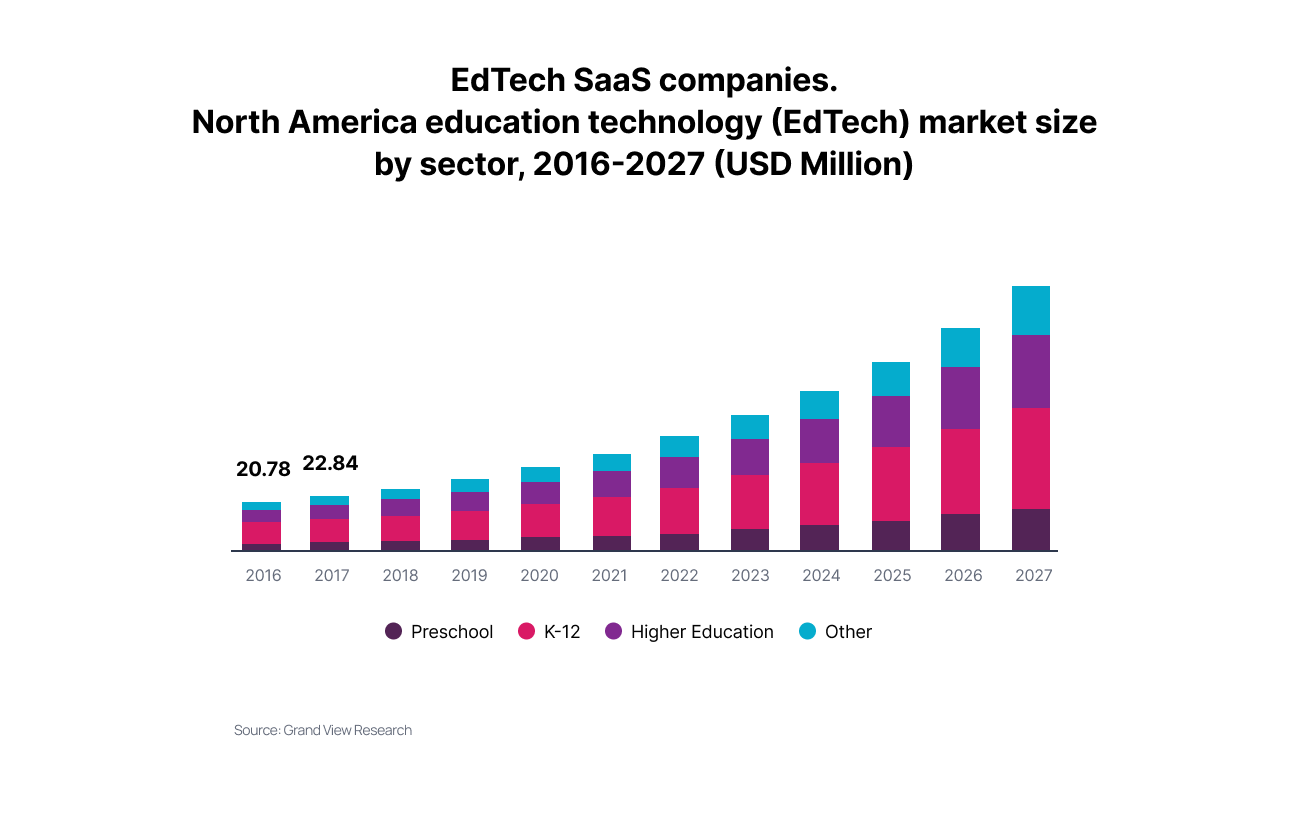
The SaaS industry keeps evolving, with major vendors updating strategy every year to stay ahead. Some of the largest players in the SaaS market in 2026 include:
-
Microsoft Corp.
-
Salesforce
-
Adobe Inc.
-
Google LLC
-
ServiceNow
-
Workday
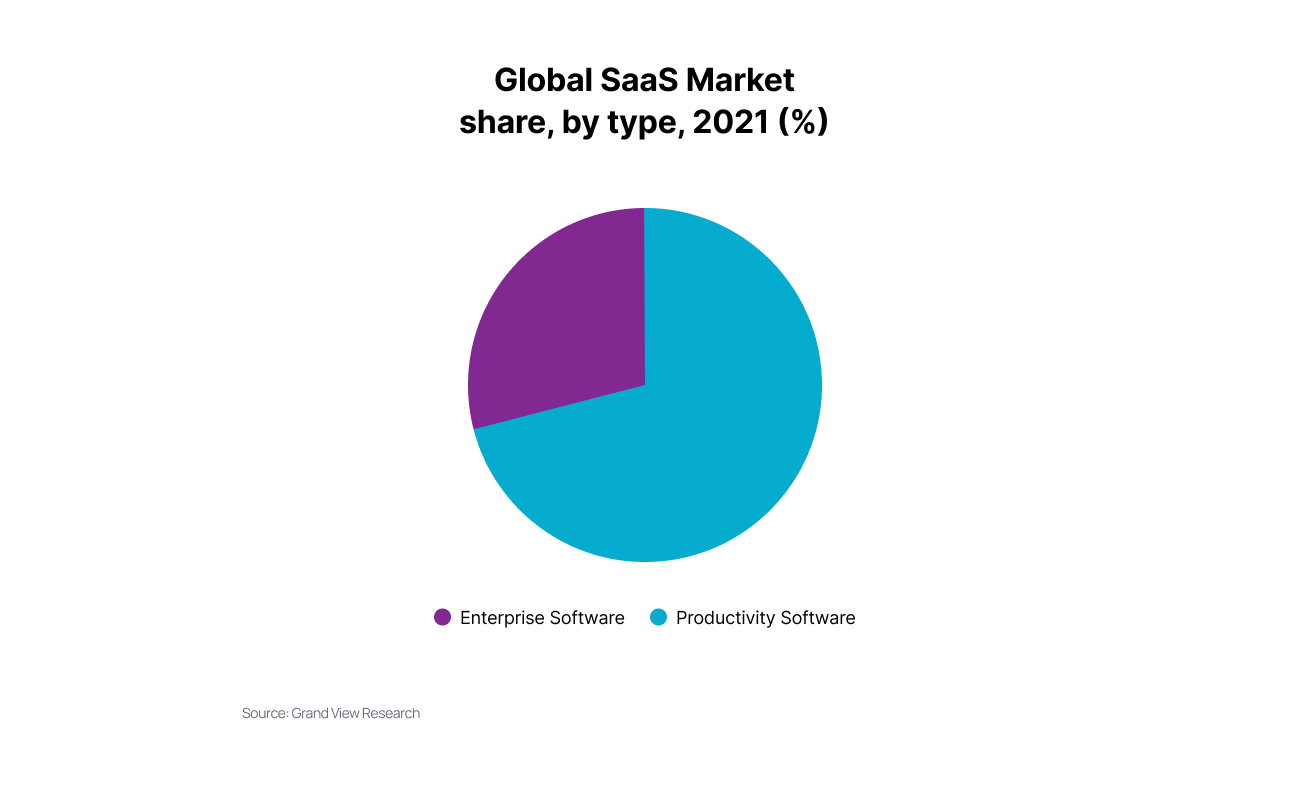
Source: Grand View Research
Enterprise software remains the largest SaaS segment by revenue, and productivity software continues to be one of the fastest-growing categories as smaller organizations adopt cloud-based email, calendaring, and collaboration tools without dedicated IT teams. North America still holds the largest share of the global SaaS market, with Microsoft, Salesforce, and Google anchoring enterprise demand. Asia Pacific and Europe continue to grow their share as cloud infrastructure investment increases across India, China, Germany, and the UK.
The rising adoption of AI agents inside SaaS products is now one of the strongest growth drivers in the market. Gartner expects 40% of enterprise applications to include task-specific AI agents by the end of 2026, up from under 5% a year earlier, pushing both new SaaS adoption and expansion spend within existing accounts.
What Is a SaaS Company? Key Features SaaS Companies Should Offer
As one of the core components of cloud computing, software as a service is one of the most established ways businesses buy and run software today. Along with PaaS and IaaS, SaaS has changed how businesses access software, applications, and IT infrastructure, moving delivery from local installations to the browser.
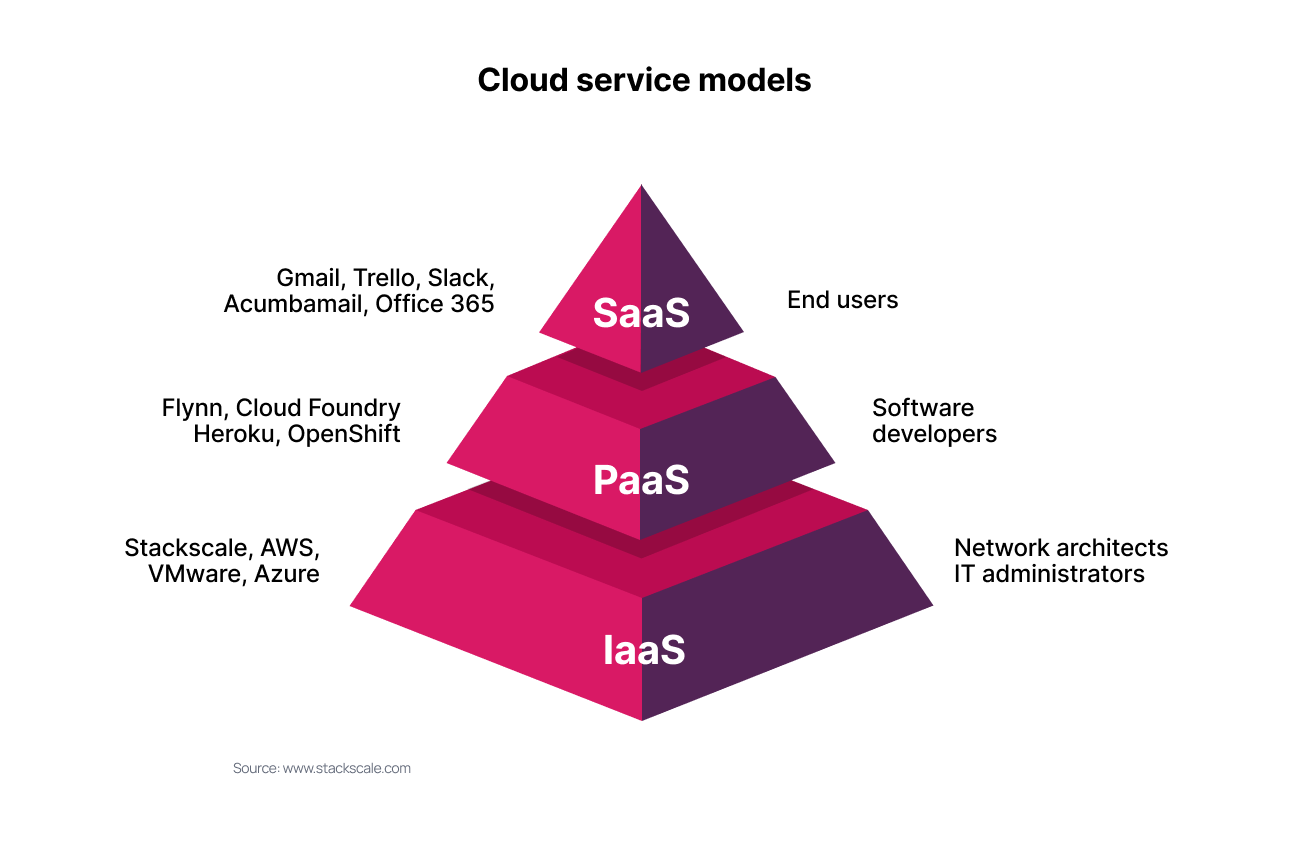
Source: Stackscale
Software as a service is a cloud-based application delivery and consumption model in which users pay for software on a subscription basis. Pricing usually depends on the subscription term, the number of licenses or usage volume, and the features in use. As of 2026, an estimated 30,800 to 33,200 SaaS companies operate worldwide, according to Demandsage, with the United States home to the largest concentration, followed by the United Kingdom and Canada. SaaS now accounts for roughly 70% of total software budgets across organizations, a figure that keeps climbing as legacy on-premises contracts expire.
One reason software providers keep moving to a SaaS model is predictable recurring revenue. Customers benefit from pay-as-you-go flexibility and on-demand scaling. SaaS remains the fastest-growing software delivery model, and businesses continue increasing cloud technology spend year over year.
What is a SaaS company, and what should it offer customers? SaaS companies are organizations that build, host, maintain, and update a product themselves, delivering it online so it's accessible from a browser on any device. Compared to traditional software vendors, SaaS companies typically control the full stack, which lets them ship security patches and feature updates faster and offer more transparent, usage-aligned pricing.
There are five essential features SaaS companies should offer their customers:
- Application hosting on the cloud. A SaaS company's primary criterion is using cloud infrastructure to deliver software, which makes it easier to monitor consumption, scale up, or terminate a subscription when needed.
- An easily extensible integration marketplace. Products should be extensible via native integrations or open APIs and SDKs, since buyers now expect a SaaS tool to plug into their existing stack, not replace it.
- Flexibility and scalability. The product should support both small teams and large enterprises with thousands of users without a different underlying architecture.
- A straightforward pricing catalog. Whether the model is per seat, usage-based, or outcome-based, pricing should be predictable and easy for a buyer to model before they commit.
- Low maintenance effort and hassle-free implementation. SaaS vendors handle setup support, training, and over-the-air updates, so customers avoid the operational burden of running the software themselves.
The Main Stages of the SaaS Business Model
Building a SaaS product is not the same as having a SaaS business. If you plan to build one, our guide to SaaS application development covers how to build, staff and ship a SaaS product in 2026. A SaaS business model defines how the company will operate, generate revenue, and stay competitive as the market shifts, and in 2026 that shift includes AI-native competitors and new pricing expectations. SaaS businesses are generally more complex to run than traditional software vendors and require ongoing investment in engineering, design, and go-to-market strategy to keep pace.
Every SaaS business moves through three main phases: startup, growth, and stabilization. Founders usually understand the startup phase and look forward to the "Stable Golden Goose" stage, when the business generates steady, predictable profit. The growth phase gets less attention, though it's often the most stressful period, since it's where a SaaS business either scales sustainably or breaks under its own demand.
Phase 1: Startup
During the startup stage, the foundation of the SaaS company is built. This phase includes shipping a working product and entering the market to acquire the first customers. Founders discover real consumer needs, identify their target audience, and build an initial marketing and sales motion while planning financial resources and support.
Phase 2: Hypergrowth
Once the product finds product-market fit, the business experiences hypergrowth. Adoption creates sudden demand for marketing, sales, and customer service, which usually costs more before it pays off, since the company needs to scale data, storage, and infrastructure quickly to keep the product reliable. The growth phase is also when reinvestment into the product pays off fastest, provided the underlying architecture can absorb the load.
The startup "valley of death" lies in between startup success and startup failure, and it's the worst place to get stuck
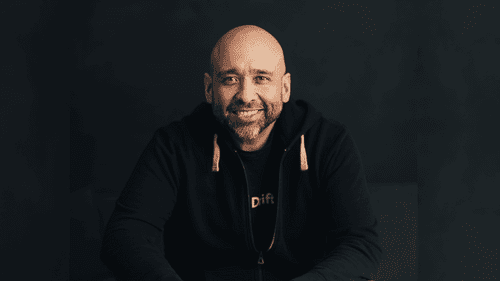
David Cancel
Phase 3: Stabilization, or the "Stable Golden Goose"
As a SaaS company retains more customers, it enters a stabilization phase. Growth levels out, churn becomes predictable, and new customers no longer stress-test the infrastructure the way they did during hypergrowth. Companies that reinvested wisely in customer success tooling, product updates, and marketing automation during the growth stage keep pace with demand without ballooning overhead.
SaaS business models fall into three broad categories:
- SaaS Revenue Model
- SaaS Pricing Model
- SaaS Distribution Model
SaaS Revenue Model
This model defines how a SaaS business monetizes its product and at what price, which in turn shapes how the product is marketed. The main types of SaaS revenue models include:
- Ad-based revenue model
- Channel sales
- Affiliate revenue model
- Freemium model
- Direct sales
- Subscription revenue model
SaaS Pricing Model
Pricing model choice has shifted meaningfully in 2026. Per-seat pricing is no longer the default: 37% of software companies now use a hybrid pricing structure as their primary model, the single most common approach, according to Kyle Poyar's 2026 State of B2B Monetization survey. Usage-based components now appear in the majority of SaaS pricing pages, and Gartner has tracked steady growth in outcome-based pricing, where the customer pays for a completed result (a resolved support ticket, a booked appointment) rather than a license. The most common SaaS pricing models today include:
- Flat rate
- Tiered pricing
- Per-user pricing
- Usage-based / pay-as-you-go
- Outcome-based pricing
- Hybrid (subscription base plus usage or outcome component)
SaaS Distribution Model
This describes how a SaaS product reaches customers. There are two broad types of SaaS distribution:
- Direct distribution (ecommerce self-service, field-based sales teams, phone-based sales teams)
- Indirect distribution (app marketplaces, resellers, in-app purchases, professional services partners)
Both depend on the company's budget and business goals, and most SaaS companies use a mix of both as they scale.
What Is a SaaS Product? Pros and Cons of SaaS Products for Business
A SaaS product is software accessible to users via any device with internet access. The model originated in the late 1990s and has become one of the dominant software distribution models today. SaaS now accounts for roughly 70% of organizations' total software use, and an estimated 30,800+ SaaS companies serve customers worldwide in 2026, according to Demandsage.
SaaS products are also called web-based or hosted software. Nothing needs to be installed locally, since the provider hosts the application, handles maintenance, and ships updates invisibly to the end user. SaaS doesn't require special equipment or in-house experts; customers log in and use the product directly.
SaaS customers get a licensed subscription accessible over the internet. The vendor hosts the software, shares it across all subscribed users, and takes responsibility for access, IT support, security, and user experience.
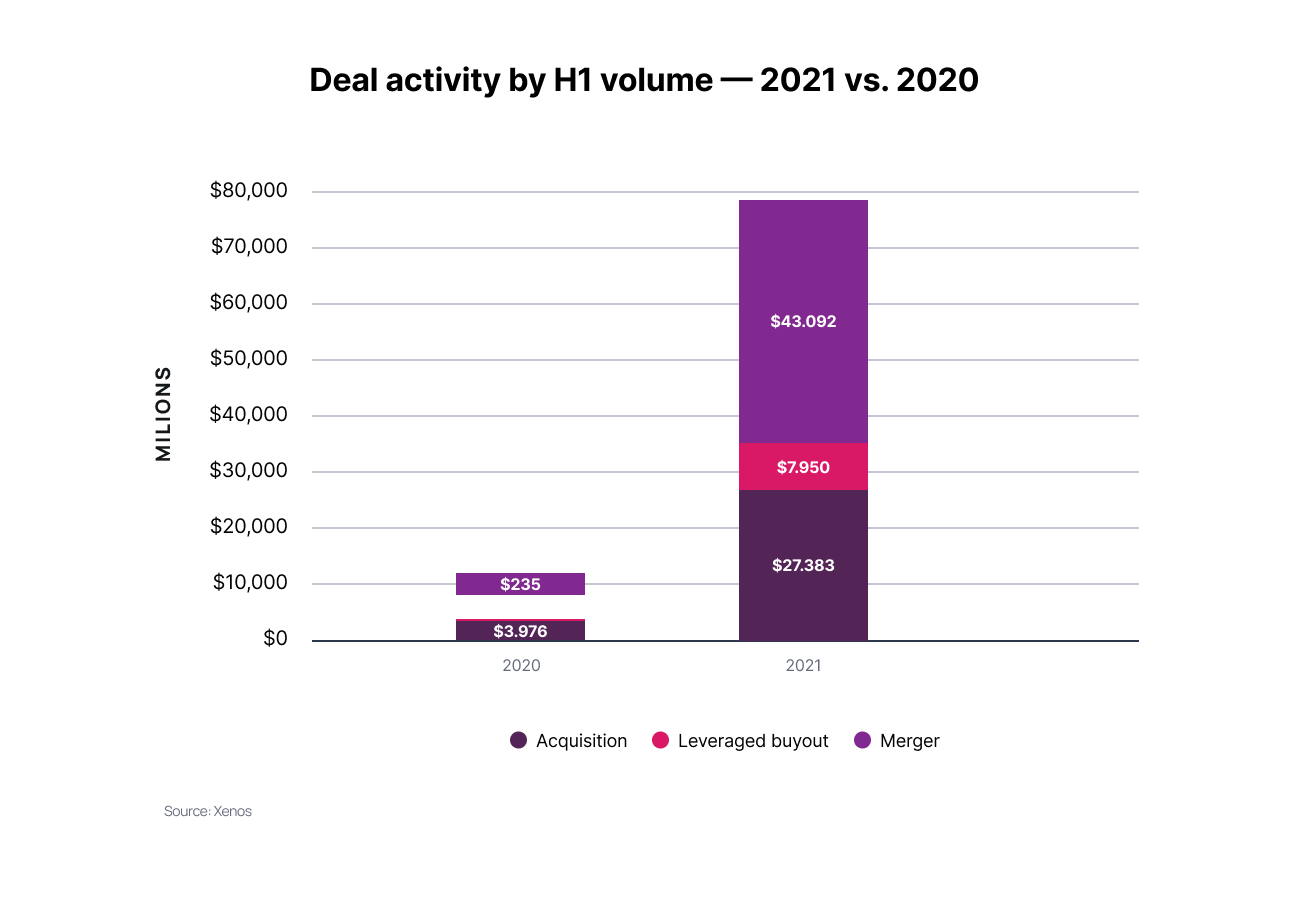
Because SaaS is simple to adopt, large corporations continue acquiring SaaS companies at a steady pace. In 2025, Salesforce acquired data-management company Informatica for $8 billion, and in early 2026 it agreed to acquire customer-agent company Fin (formerly Intercom) for roughly $3.6 billion. Elsewhere in the market, Google acquired cloud-security company Wiz for $32 billion in 2025, and Q1 2026 alone saw 443 software M&A transactions worth a combined $287.2 billion. According to SaaSMag, 72% of SaaS M&A targets in 2025 referenced AI capabilities in their positioning, a clear signal that acquirers are consolidating around AI-native products.
The SaaS market offers real advantages to customers, though the model still has trade-offs. Here's a closer look at both.
Advantages of a SaaS Product
- Accessibility is one of the most important advantages of SaaS. Products are hosted in the cloud and reachable from anywhere via a browser or mobile device, limited only by an internet connection.
- No hardware purchase is required to build with SaaS. Teams can start with the APIs a SaaS vendor already provides instead of provisioning infrastructure.
- Integrations keep expanding. The number of cloud-based apps keeps growing, and native integrations between them have become a baseline requirement, not a nice-to-have.
- SaaS products scale with a simple subscription upgrade, which supports smooth feature growth, an important quality for any MVP.
- Customers don't have to worry about maintenance. The SaaS provider keeps the service running.
- Cloud security standards keep improving. Gartner has consistently found that the large majority of cloud security failures trace back to customer-side misconfiguration rather than the vendor's infrastructure.
Disadvantages of a SaaS Product
- Security remains both a strength and a weakness of SaaS. Standards like ISO/IEC 27017 reduce risk but don't eliminate it, and issues from weak passwords to phishing can still cause data leakage.
- Many SaaS applications handle regulated data, so meeting requirements like GDPR or HIPAA can add technical and legal complexity.
- Loss of control can be a real drawback, since the vendor manages the infrastructure and customers depend on the vendor's roadmap and uptime.
- Most SaaS solutions offer limited customization compared with a fully custom client/server application, and some add latency the customer can't fully control.
SaaS Types
There's a wide range of SaaS categories, which is one of the reasons the model dominates such a large share of the software market. Below are the main types of SaaS available today, along with current market sizing where available.
Customer Relationship Management (CRM) Software
CRM remains one of the fastest-growing categories in business software. Grand View Research values the global CRM market at $86.4 billion in 2026, projecting growth to $163.16 billion by 2030 at a 14.6% CAGR. AI-driven features, including predictive analytics and AI chatbots for real-time engagement, are now standard in most leading CRM platforms.
Examples: Salesforce, HubSpot, Intercom, Close, Pipedrive.
Enterprise Resource Planning (ERP) Software
ERP software helps organizations manage day-to-day operations like project management, planning, accounting, risk management, and procurement. Grand View Research estimates the global ERP market at $83.2 billion in 2026, growing at a 9.5% CAGR to reach $157.1 billion by 2033. As of 2025, roughly 65% of ERP vendors had already integrated AI and machine learning into their products.
Examples: Oracle, Microsoft Dynamics 365, Odoo, SYSPRO, Acumatica Cloud ERP.
Project Management Software
This type of SaaS product helps project managers collaborate with teams, track scope, and manage budgets and timelines.
Examples: Jira, Asana, ClickUp, Trello, Confluence.
Collaboration Software
Collaboration SaaS includes tools for communication, information sharing, and teamwork, including distributed and remote teams.
Examples: Slack, Miro, Notion, Todoist, Teamwork.
Billing Software
Billing SaaS covers payment procedures, making it easier to track invoices and get paid on time.
Examples: Stripe Billing, Zoho Invoice, Xero, Chargebee, Tipalti.
CMS and Ecommerce Platforms
Ecommerce SaaS lets a business start selling immediately without building custom infrastructure, covering payment integrations and inventory management. A CMS, or content management system, handles publishing and editing content like blog posts and articles.
Examples: Shopify, BigCommerce, Wix, Adobe Commerce, WordPress.
HR/HRM Solutions
HR SaaS focuses on recruiting, interview scheduling, performance reviews, and time tracking, automating manual HR work and simplifying onboarding.
Examples: Lattice, Gusto, ADP Workforce Now, Rippling, Personio.
Mobile Device Management Software (MDM)
Businesses use MDM SaaS to optimize the functionality and security of mobile devices across the organization while protecting the corporate network. IT teams use MDM to monitor, manage, and secure employee devices.
Examples: Scalefusion, Kandji, BlackBerry Unified Endpoint Management, VMware Workspace ONE.
Vertical SaaS
Vertical SaaS describes software built for a particular niche or industry-specific workflow rather than a horizontal, cross-industry use case. This is also the category where most AI-native products are emerging in 2026, since a narrow industry focus makes it easier to automate an entire workflow with agents instead of just supporting it with a dashboard.
Examples: Clio (legal), Procore (construction), Harvey (legal AI), Avoca (home services voice AI).
Each type of SaaS software solves a specific customer problem, whether it's organizing a team's tasks, collecting a card payment, or automating a workflow end to end. By hosting software in the cloud, SaaS reduces costs, lets employees work from anywhere, and scales quickly when a business needs it to.
B2B and B2C SaaS
Business-to-business (B2B) and business-to-consumer (B2C) are the two major categories of SaaS, classified by who the end customer is. B2B SaaS sells to other companies; B2C SaaS sells directly to individual consumers.
"With the shift to the SaaS model, the connection between your customer's success and your success is much more direct and felt more quickly. Smart companies have realized that customer loyalty is the most powerful sales and marketing tool that they have." (Bill Price)
B2B SaaS companies build for organizations and focus on the needs specific to business buyers, helping them operate more efficiently and automate work that used to require more headcount. HubSpot and Salesforce are well-known B2B SaaS examples. The main advantages of the B2B SaaS model are:
-
Cost-effectiveness
-
Easy accessibility
-
Easy upgrades
-
Flexible payment options
B2C SaaS businesses target individual consumers rather than companies, spanning entertainment, personal organization, and personal finance. Dropbox, Canva, and Notion are examples of B2C-facing SaaS products. The main benefits of the B2C SaaS model include:
-
Reduced costs
-
Scalability
-
Increased efficiency
-
Faster time to market
-
Flexibility
The B2B SaaS market remains larger than the B2C market by total spend. Business software needs tend to be more stable and predictable than individual consumer preferences, which change faster and make it harder for B2C applications to keep pace with shifting demand.
SaaS in the AI Era: Is SaaS Dead, or Just Changing Shape?
In late 2024, Microsoft CEO Satya Nadella said the traditional SaaS model was dead, and the phrase "SaaSpocalypse" stuck. In February 2026, a single trading session wiped out roughly $285 billion in software market value, and pieces like Forrester's "SaaS As We Know It Is Dead" reinforced the fear that software as a service had run its course.
The data tells a steadier story. Global SaaS spend is still growing, from $318 billion in 2025 to a projected $576 billion by 2029, according to IDC. What's changing isn't whether companies buy software. It's how that software gets built, priced, and delivered.
Four shifts define SaaS in the AI era:
- The product does the work. Deloitte's 2026 TMT predictions describe a move from software that helps humans work to AI agents that perform the work directly. Gartner expects 40% of enterprise applications to include task-specific AI agents by the end of 2026, up from under 5% a year earlier.
- Pricing moves from seats to outcomes. Gartner projects that by 2030, at least 40% of enterprise SaaS spend will shift to usage, agent, or outcome-based pricing, and IDC expects pure seat-based pricing to become obsolete by 2028.
- Vertical beats horizontal. IDC found that industry-specific AI solutions are growing at a 36.5% CAGR, almost double the 18.9% CAGR of general-purpose AI tools. Y Combinator's own thesis is that vertical AI agents could be 10 times bigger than SaaS. We break down what this means for builders in vertical vs. horizontal products.
- The service becomes the software. Analysts have started calling this pattern service-as-software: instead of selling a tool that helps a team deliver a service, the AI product delivers the service itself and is priced on the outcome it produces. A services firm turning its delivery work into an agent-run product is the same pattern venture capital is funding under this name. It's also the clearest on-ramp for a company that already sells expertise and wants to productize it.
SaaS vs. AI Product: What's Actually Different
A modern AI product is still, underneath, cloud-hosted and multi-tenant, so in the technical sense it's still SaaS. The differences that matter to buyers and investors sit in positioning, pricing, and shape:
| Traditional SaaS | AI-native product | |
|---|---|---|
| Positioning | "A SaaS for X" | An AI-native product, vertical agent, or system of record for X |
| Pricing | Per seat | Usage or outcome-based, often hybrid |
| Shape | Horizontal, human-operated dashboard | Vertical, agentic, does the work |
Founders building in 2026 aren't walking away from SaaS. They're building AI-native, vertical, outcome-priced products, and many of the fastest-growing companies of the past year, including Harvey in legal, Abridge in healthcare documentation, and Avoca in home services, follow exactly this pattern.
Here in Brocoders, we build both: SaaS products for teams that need a reliable operational tool, and AI-native products for founders who want the software to do the work and price on results. If you're weighing the two, our SaaS development team can help you figure out which shape fits your market before you write a line of code.
Best SaaS Companies to Watch in 2026
SaaS businesses cover a wide range of categories, but they all share one thing: SaaS companies help other businesses work more efficiently. Below is a mix of established players and fast-growing companies worth watching across industries in 2026.
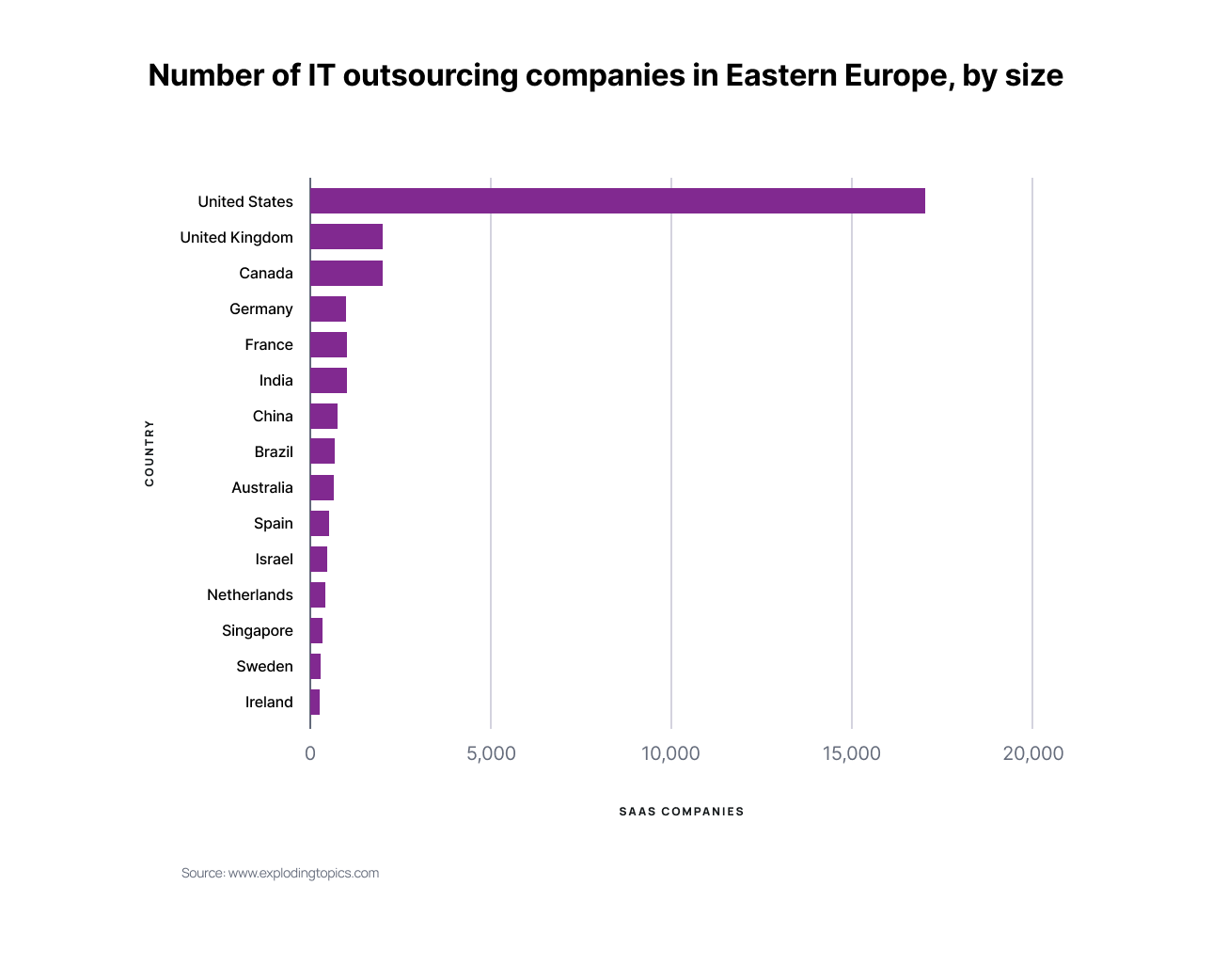
Source: Exploding Topics
EdTech SaaS Companies
Kahoot
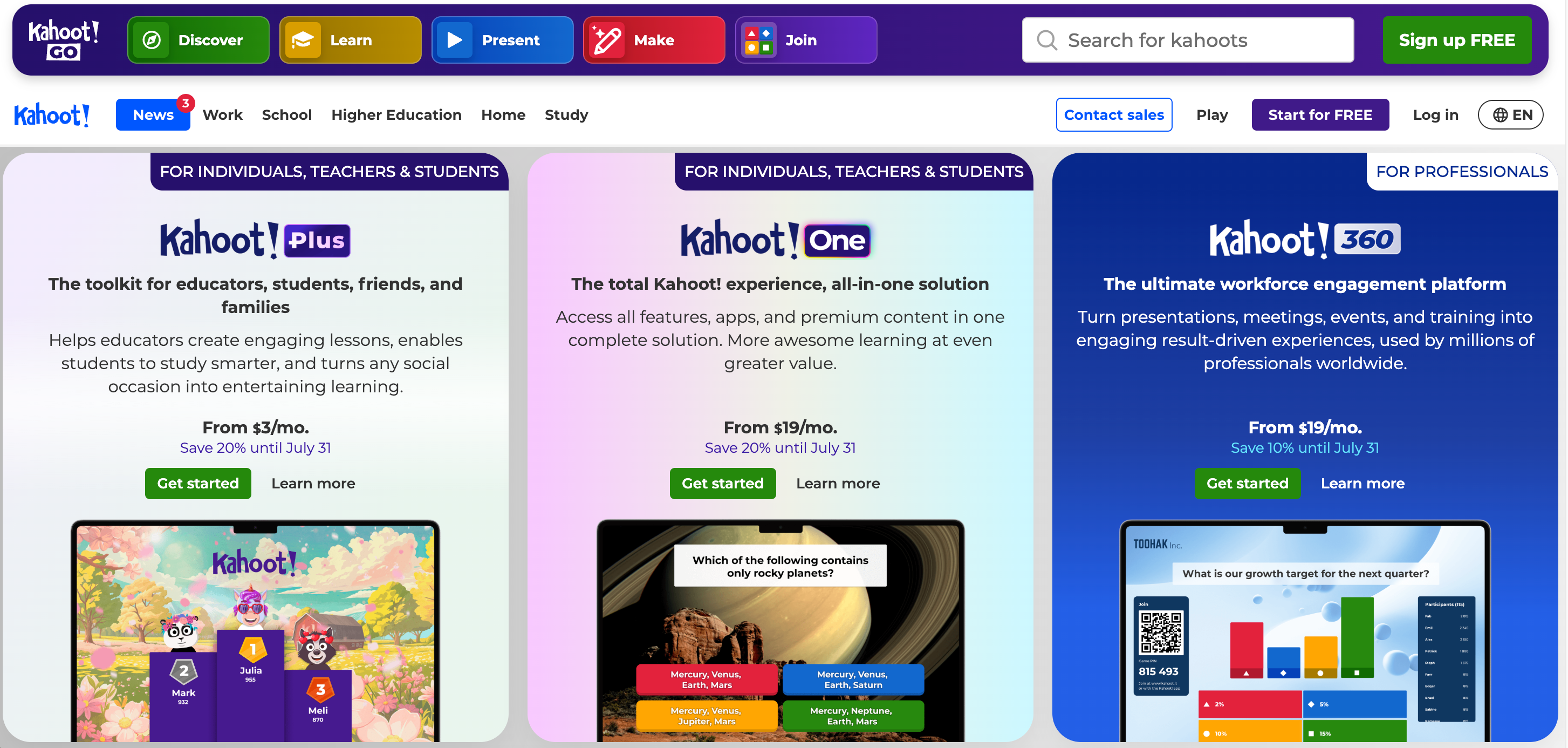
Kahoot is a cloud-based gamified content platform built for schools and organizations. It lets educators create learning games or choose from more than 100 million ready-to-play options, with features like importing questions from spreadsheets and searching millions of questions in its question bank.
Clever
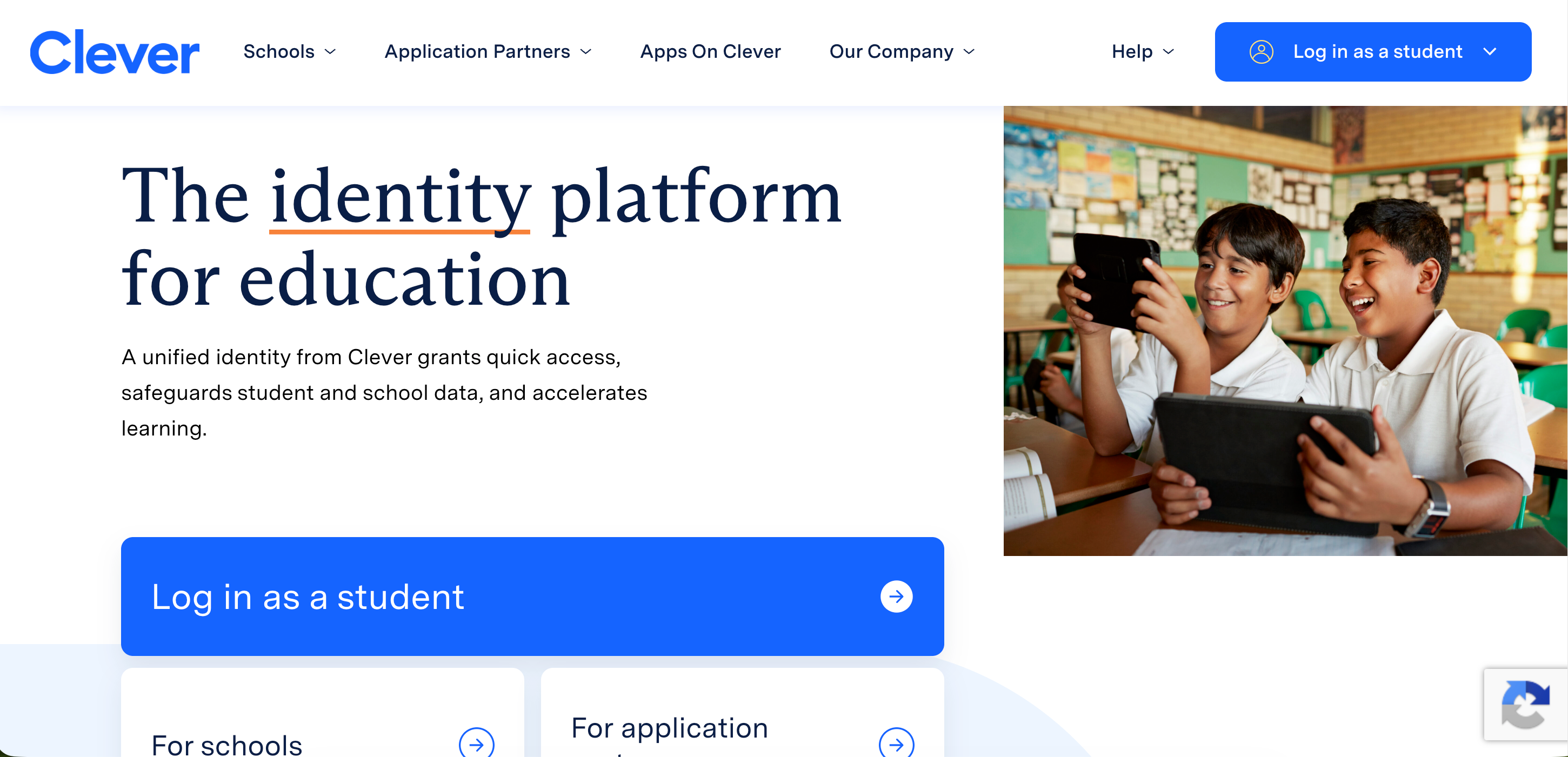
Clever provides learning and data-handling solutions for schools, simplifying digital learning with individual portals for students, teachers, and staff. Parents use the platform to stay connected to their child's education, receive updates, and message teachers.
Codecool
Codecool is Central Europe's largest digital skilling and sourcing platform, offering training, upskilling, and reskilling to students, companies, and governments through mentor-led, agile work teams and a pay-afterward option.
Brightwheel
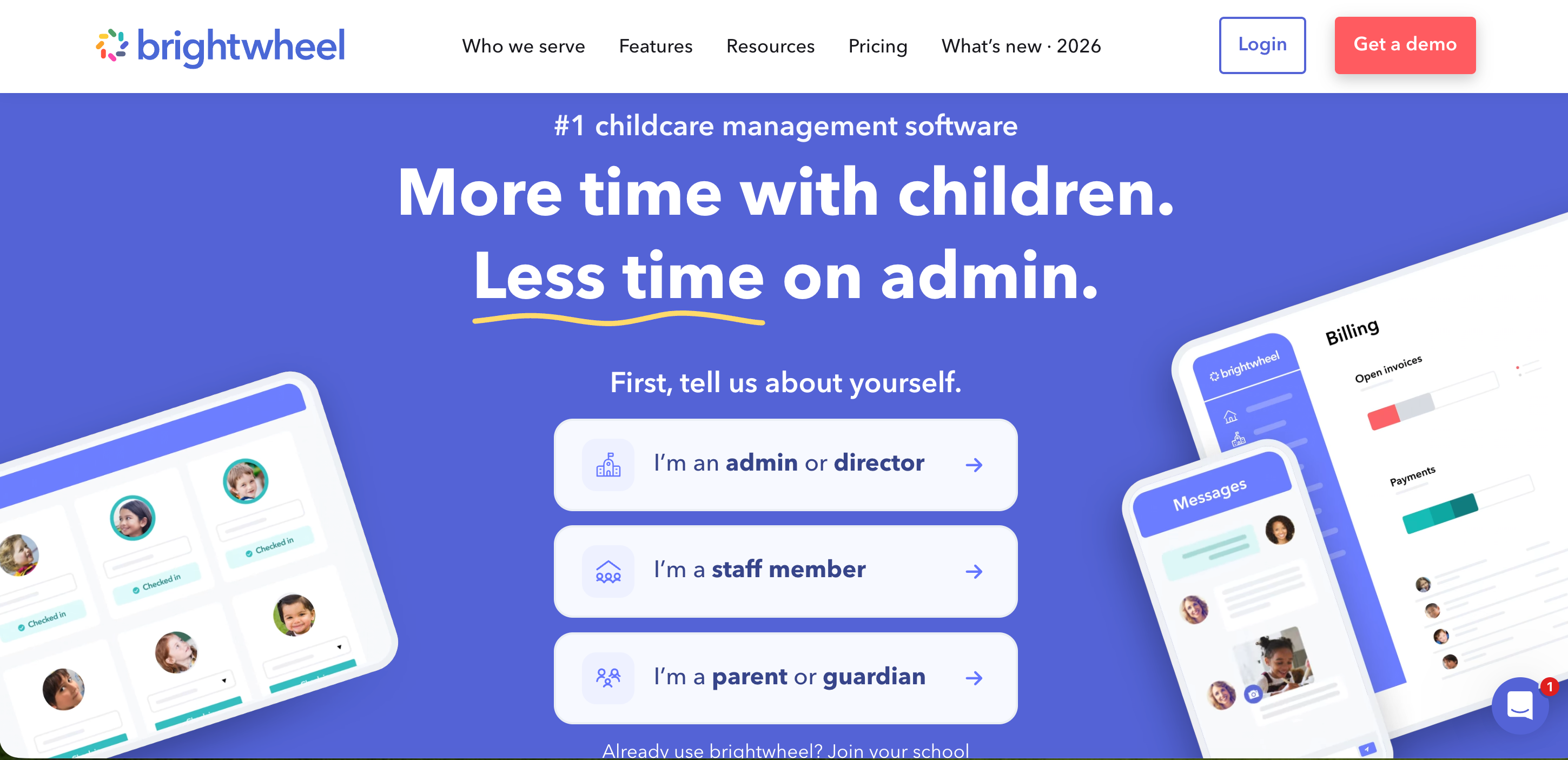
This online management platform for pre-schools lets teachers track attendance, communicate with parents, and share photos and daily updates. Parents get a real-time feed of their child's day, and the platform offers paperless billing with automated invoices.
Klassroom
Klassroom helps families stay involved in their child's school life. Core features include attendance management, private teacher chat, appointment management, video conferencing, and a "Know Your Students" feature that supports differentiated teaching.
AdTech SaaS Companies
Permutive
Permutive's privacy-safe infrastructure helps advertisers and publishers reach audiences while keeping control of their first-party data, eliminating the data leakage common in older adtech stacks.
illumin (formerly AcuityAds)
illumin, the platform previously known as AcuityAds, helps advertisers run targeted campaigns across ad formats and screens, using AI-driven journey mapping to connect the full consumer path from first touch to conversion.
InfoSum
InfoSum was built for enterprise clients with owned media and large media holdings to manage, organize, and transfer first-party data without it ever leaving the ecosystem, enabling data collaboration without direct data sharing.
ID5
ID5 gives large publishers a cookieless alternative for linking buyer and seller IDs, helping them grow sustainable revenue as third-party cookies continue to disappear from major browsers.
MarTech SaaS Companies
Bazzoole
Bazzoole automates influencer marketing with AI technology based on deep learning and social listening, helping brands select creators, manage campaigns, and measure results.
Mavrck
Mavrck is an influencer marketing platform built for enterprise brands, offering end-to-end relationship management, influencer discovery, and workflow automation across advocacy, referral, and loyalty programs. As of January 17th, 2024, Mavrck has rebranded to Later.
FullCircl
FullCircl helps financial services providers gain insight into their marketing strategy and audience, accelerating onboarding and helping teams find, engage, and win the right customers. FullCircl is now nCino.
PropTech SaaS Companies
BeamUp
BeamUp helps enterprises drive operational excellence across facilities using digitization and AI, giving engineers and architects greater predictability about a building's future performance through AI-powered digital twin technology.
VTS
VTS supports leasing and asset management, collecting commercial real estate data across retail, office, and industrial markets to give agency brokers and landlords accurate, up-to-date market information.
Enertiv
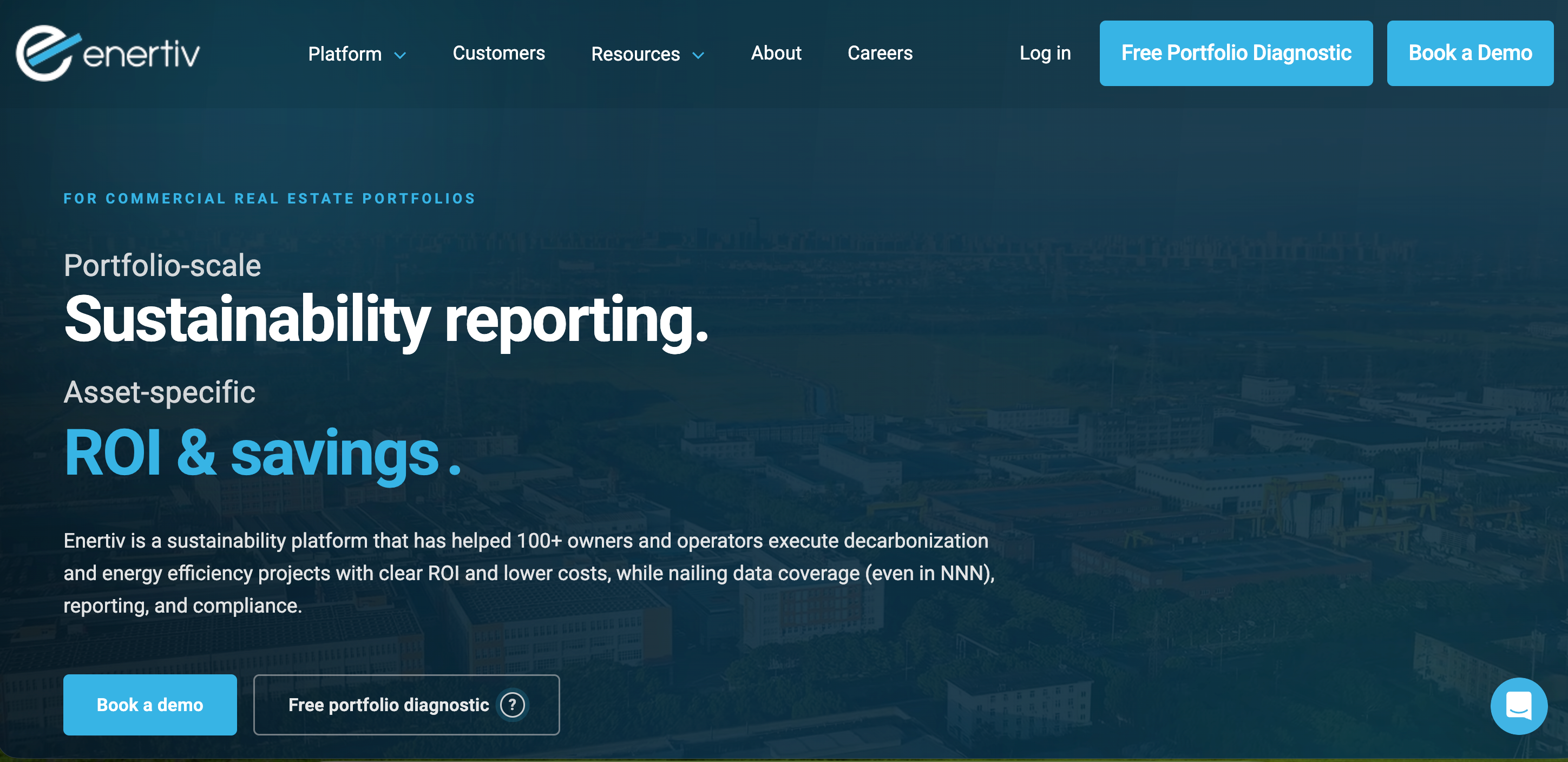
Enertiv simplifies daily operations for commercial real estate teams, replacing paper workflows with digitized, sensor-driven data that enables predictive maintenance and automated utility billing.
LeaseAccelerator
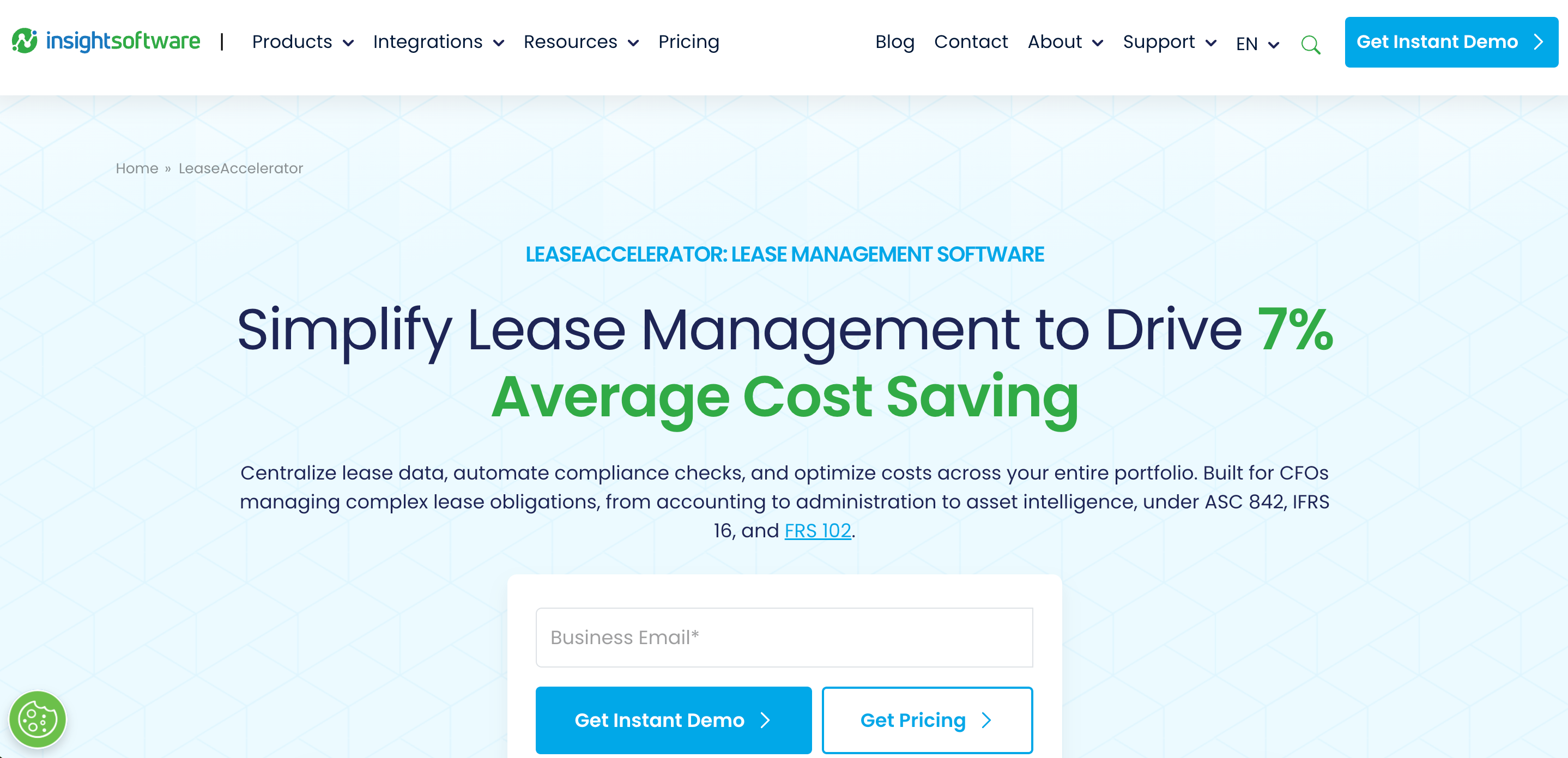
LeaseAccelerator manages and optimizes the leasing lifecycle, using robotic process automation to simplify lease management, accounting, and sourcing while supporting ASC 842 and IFRS 16 compliance.
FinTech SaaS Companies
Rapyd
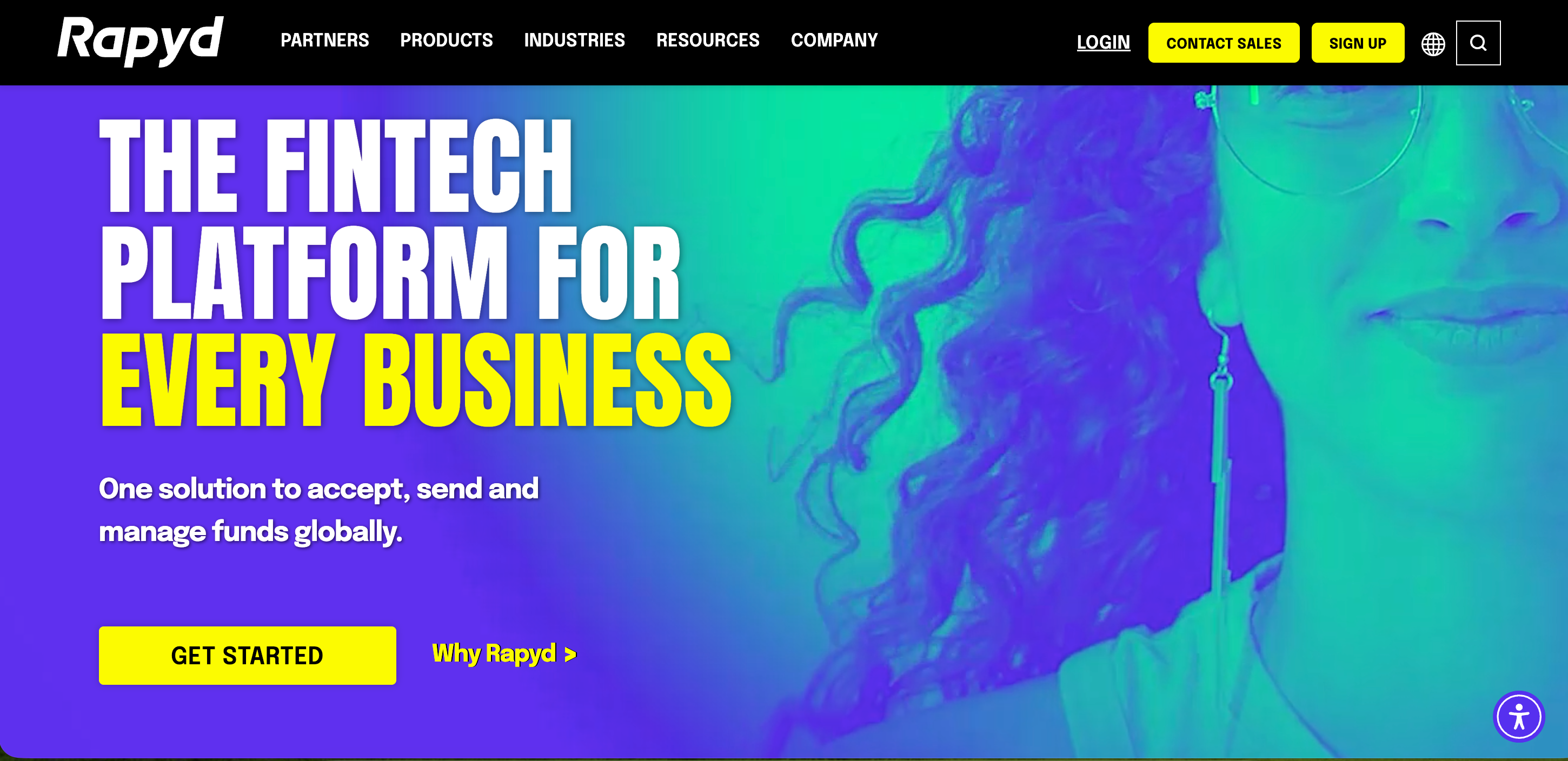
Rapyd is a mobile-first financial network that lets businesses build payment, payout, and fintech experiences through a single API and SDK, including corporate cards, multi-currency accounts, and compliance management.
Ramp
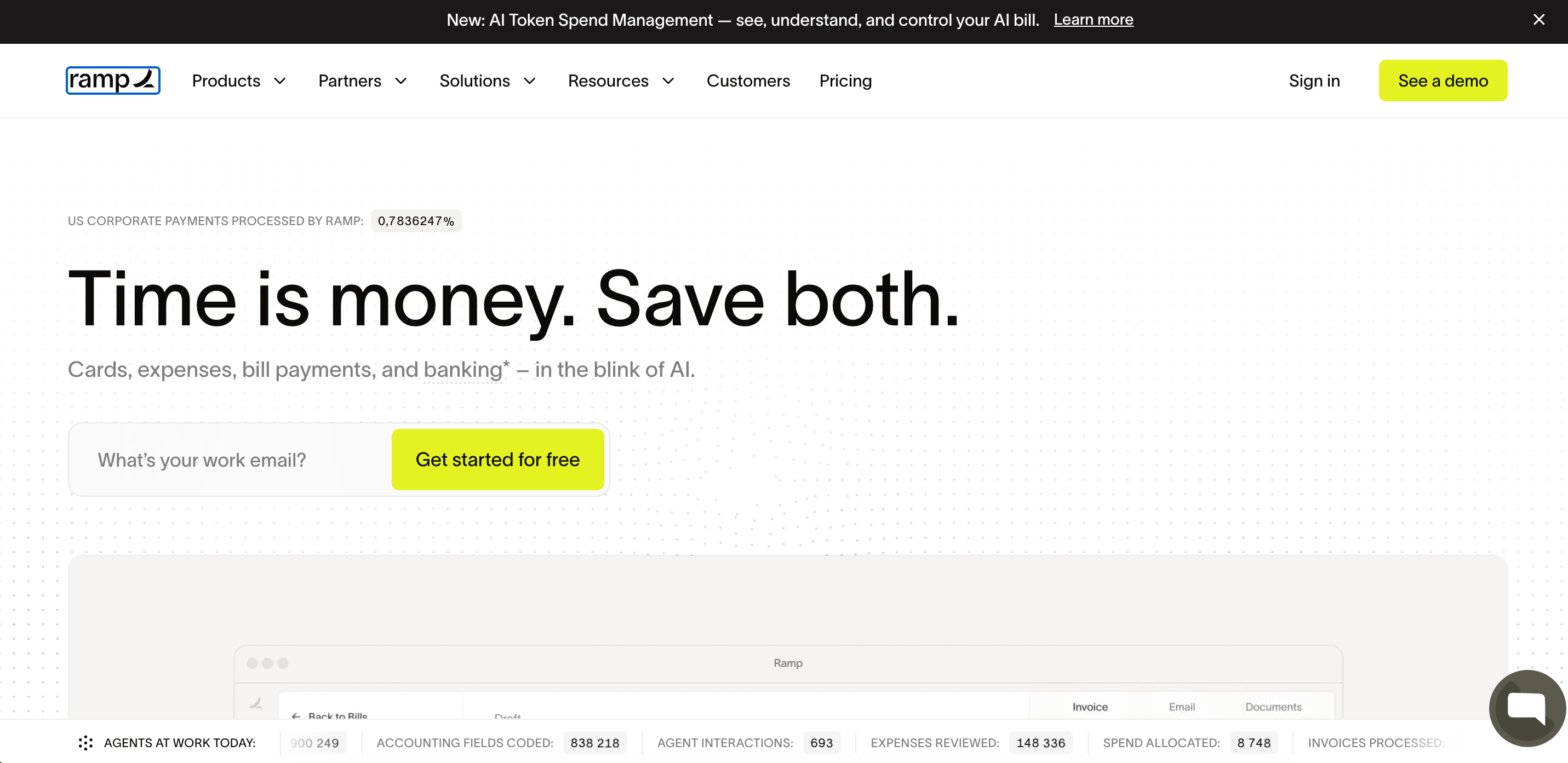
Ramp is a corporate card and spend management platform built to help finance teams close their books faster, automate expense management, and control company spend in real time. It's one of the fastest-growing fintech SaaS platforms of the past few years, replacing the seat-based small-business lending tools of the previous decade.
Guidewire
Guidewire is the industry-leading P&C insurance cloud platform, offering billing, claims management, underwriting, and policy administration, with AI-based tools for predictive sales and risk analysis across dozens of countries.
Tink
Tink provides a cloud-based, API-driven platform that lets banks and financial institutions build account aggregation, data enrichment, payment initiation, and personal finance products, using machine learning to analyze data from multiple sources.
How Can Brocoders Help You?
Here in Brocoders, we're a technical partner building web and mobile SaaS products, from initial architecture through delivery, alongside AI-native products for founders who want their software to do more than support a workflow. Our team works with clients across fintech, proptech, martech, healthtech, and agritech, and our published case studies include:
-
CondoGenie (proptech)
-
Adact (martech)
-
LadderOut (healthtech)
-
Converthero (martech)
-
EveryPig (agritech)
The global SaaS market is on track to reach $1,109.2 billion by 2033, growing at an 11.1% CAGR from its current $530.0 billion size, according to Grand View Research. SaaS-based apps continue to cut the time businesses spend on installation and configuration while delivering meaningful cost savings, and they remain a strong choice for companies of nearly any size, whether the goal is a classic SaaS product or an AI-native one.
Building in-house can require significant time and investment that isn't always the right call, which is where an experienced outsourcing partner can help you reach your goals faster. At Brocoders, you can hire a trusted SaaS or AI product development team that handles dedicated team staffing, team augmentation, DevOps, mobile and web development, MVP development, and digital transformation, so you can find the right setup for your product. Hire senior engineers for your SaaS or AI product development and make sure your build is in good hands.
Wrapping Up
An estimated 30,800 to 33,200 SaaS companies operate worldwide in 2026, and that number keeps growing as the model matures further into AI-native, vertical, and outcome-priced products. Enterprises and consumers alike continue moving toward cloud computing, and that shift shows no sign of slowing down.
The companies featured in this article show how much room there still is to build a successful SaaS or AI-native business across industries. Software as a service continues to save businesses money, headcount, and time, cutting maintenance overhead and letting teams focus on the work that actually differentiates them.
To build on that foundation, consider investing in a development partner who understands both sides of the shift. Discover how the Brocoders team provides SaaS development tailored to your business needs, whether you're building a classic SaaS product or the AI-native version of one.
Frequently Asked Questions
SaaS companies use software to provide their customers with a service. Examples of popular SaaS vendors include Dropbox, Salesforce, Google Workspace, and Atlassian.
SaaS is a software distribution model in which a cloud vendor creates, develops, hosts, and updates the products themselves, offering companies access to software products through the cloud.
Netflix is one of the most popular SaaS organizations that provides on-demand videos using the software.
Amazon Web Services is a cloud computing platform that includes PaaS (platform-as-a-service), IaaS (infrastructure-as-a-service), and SaaS offerings.
The primary distinctive feature of a SaaS platform from conventional computer application software is that SaaS products are primarily web-based, offering application software that requires no installation and can be accessed via a web browser.