
Even before the pandemic hit and after it, millions of people worldwide were tracking calories, keeping up with fitness community news, and reaching their goals with the help of fitness tracking apps. Today, the fitness app market is exploding with AI-powered personalization and seamless wearable integrations, delivering hyper-customized coaching to users everywhere.
If you’re thinking of developing a fitness app for Android/iOS or wearables like the Apple Watch, you should take a page out of the collective books of the most popular apps available. In this review, we’ll highlight the top apps, what makes them popular, and reveal one of the biggest selling points your app may be missing.
Why Fitness Apps Are (Still) so Important in 2026
As we have seen through our fitness-related projects we’ve helped clients with, users are flooding to app stores to find a way to deal with the stress, and often weight gain, that they’re experiencing post-pandemic.
A Harvard Medical School article reviewed several studies related to weight change and found that:
As it turns out, 39% of patients [15 million people included in the study] gained weight during the pandemic, with weight gain defined as above the normal fluctuation of 2.5 pounds.
And that’s not all.
Approximately 27% gained less than 12.5 pounds, and about 10% gained more than 12.5 pounds, with 2% gaining over 27.5 pounds.
The article also states that stress may be a major factor as cortisol (the stress hormone) raises the likelihood of eating tasty (hyper-palatable) foods. Granted, the Harvard researchers also point out that some people respond to cortisol by not eating. So, whether people gained or lost weight during the pandemic, stress was through the roof. And as we all know, one of the best ways to deal with stress is sweating it out in a fun workout.
The Best Activity Tracking Apps for Android & iOS
We chose these as the best exercise apps because they represent three of the most common use cases — tracking activities, tracking calories and food intake, and staying mindful of stress and how to deal with it.
Hevy
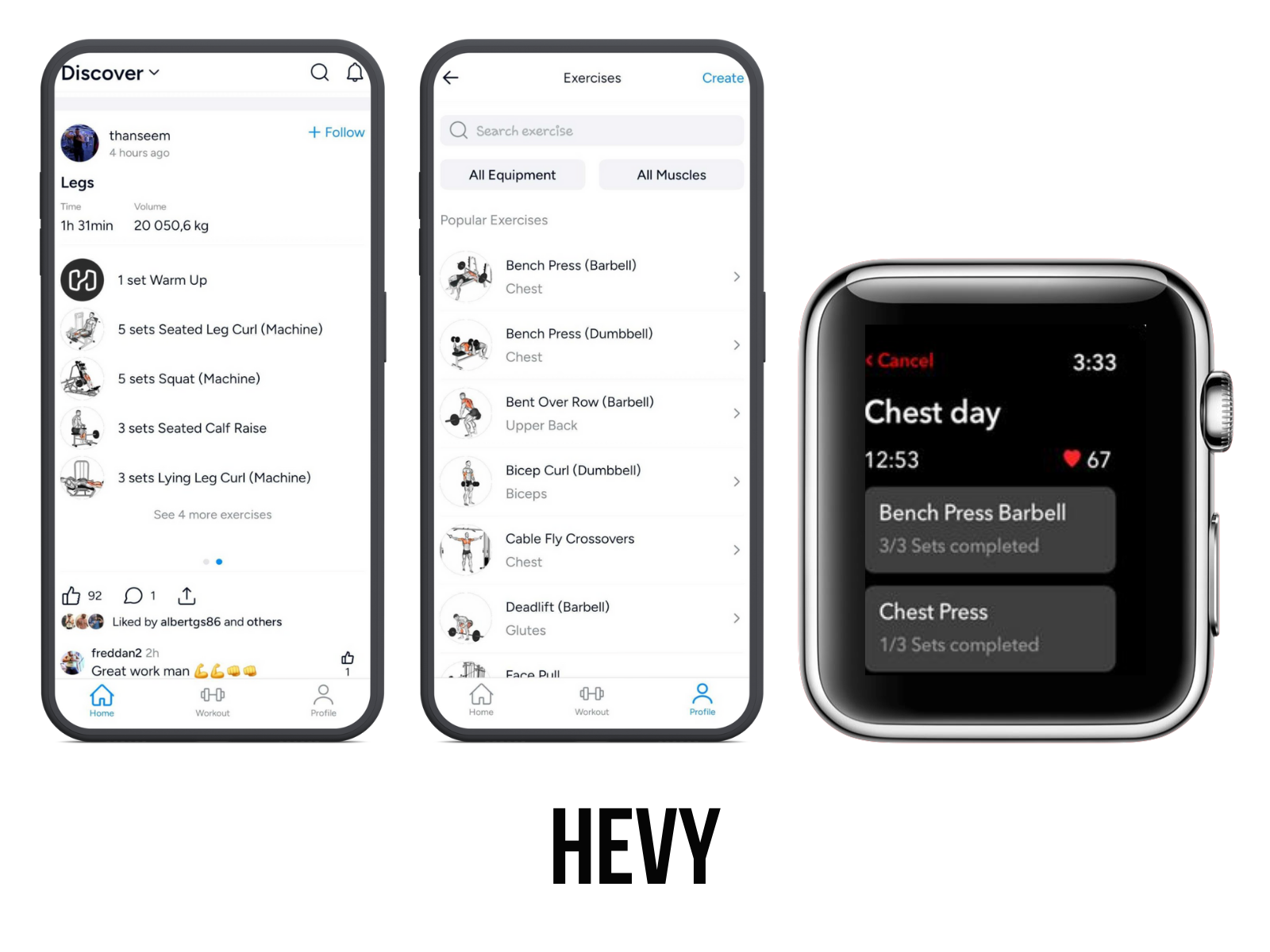
Hevy combines serious strength logging with a community-first approach — public workouts, shared routines, and gym-based social discovery.
Main features:
- Advanced strength & hypertrophy tracking
- Public workout sharing & community feeds
- Custom routines and progression tracking
- Available on Android and iOS
Centr
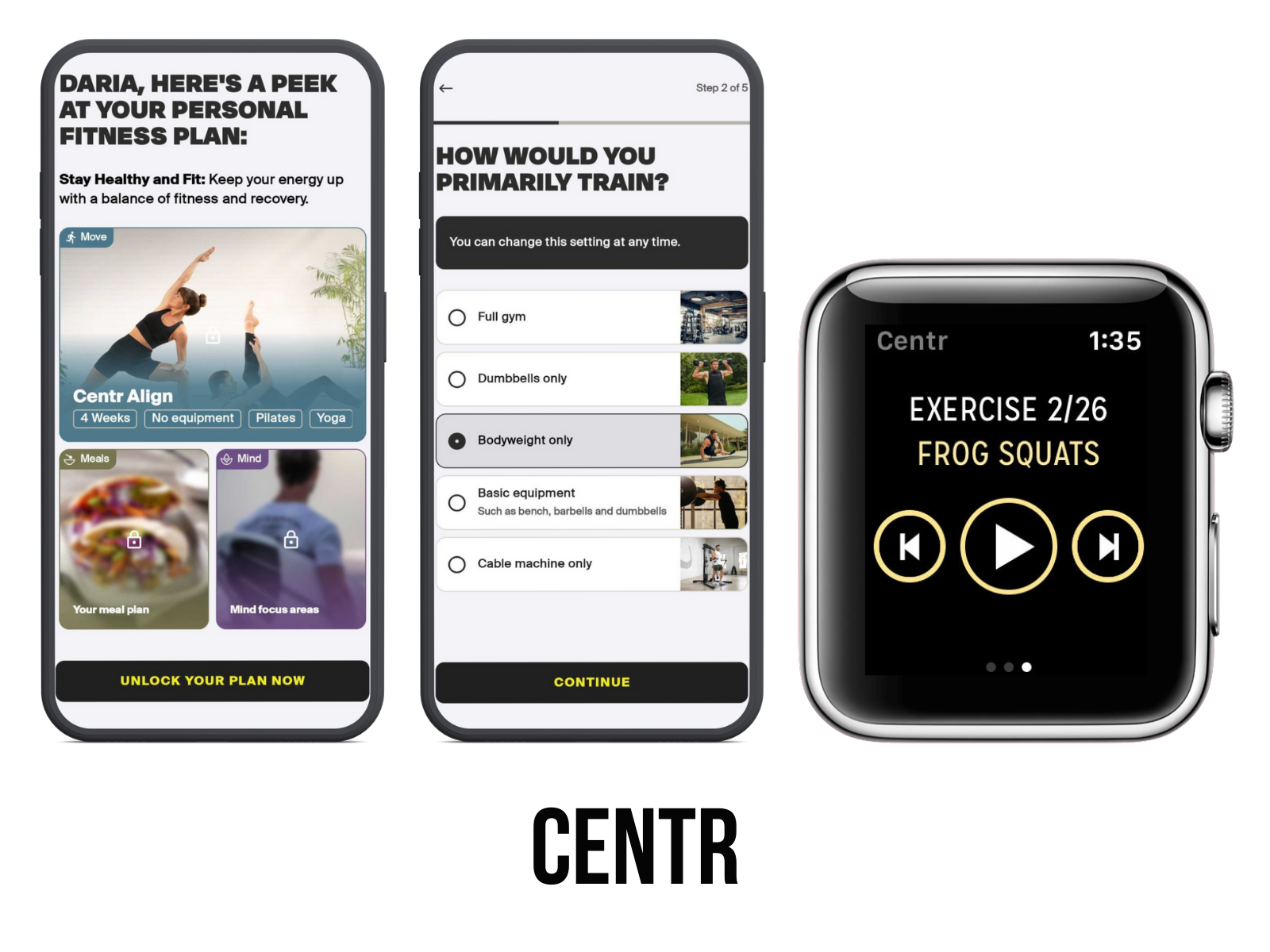
Centr, created by Chris Hemsworth, delivers structured, science-backed programs for strength, fat loss, muscle building and overall well-being. It combines guided workouts (home or gym), nutrition plans and mindfulness sessions led by elite coaches, with a strong focus on long-term habit building.
Main features:
- Wide variety of training styles: strength, HIIT, functional training, mobility, HYROX-certified programs, bodyweight
- Integrated meal plans with hundreds of recipes, plus mindfulness and recovery content
- Programs designed for home or gym, with optional pairing to Centr-branded equipment
Freeletics
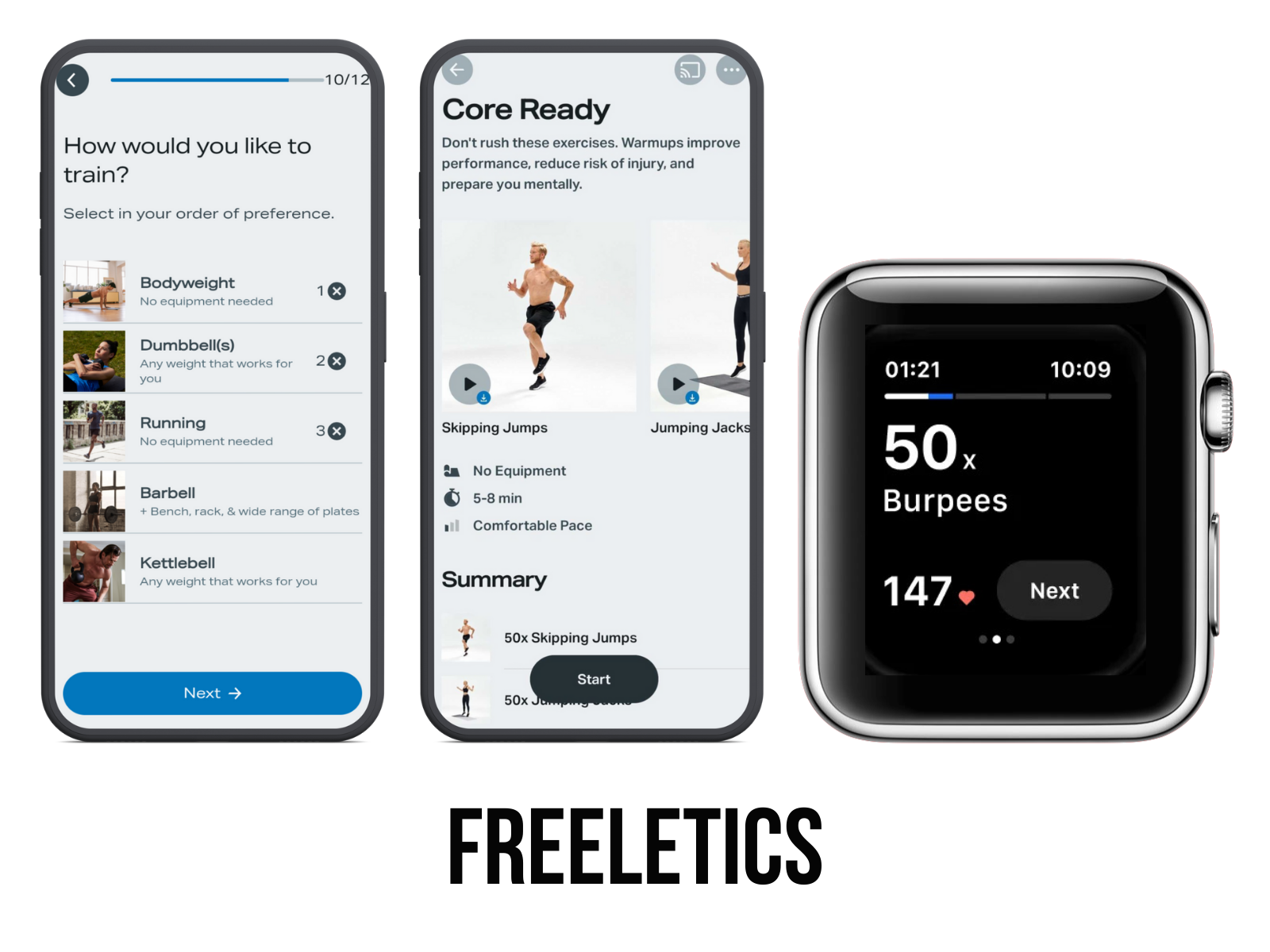
Freeletics focuses on equipment-free, AI-coached training, ideal for users who travel, work remotely, or prefer minimalist setups.
Freeletics offers a free version of the app that lets users access a selection of basic workouts and exercise routines without a paid subscription. This includes bodyweight sessions and standalone training content that you can start right away after downloading the app.
However, premium features such as the adaptive AI Coach, full personalized training plans, nutrition guidance, and advanced progress insights require a paid subscription.
Main features:
- AI-based bodyweight training plans
- Nutrition coaching add-on
- Offline workouts
- Sync with Android OS and Apple Health supported devices
Best Fitness Apps for Apple Watch
The Apple Watch is an interesting case, as it initially flopped, losing out to the more popular Fitbit. Luckily, the smart people at Apple redirected their marketing efforts to fitness, and the rest is history. The following two apps are Apple-exclusive.
Gentler Streak
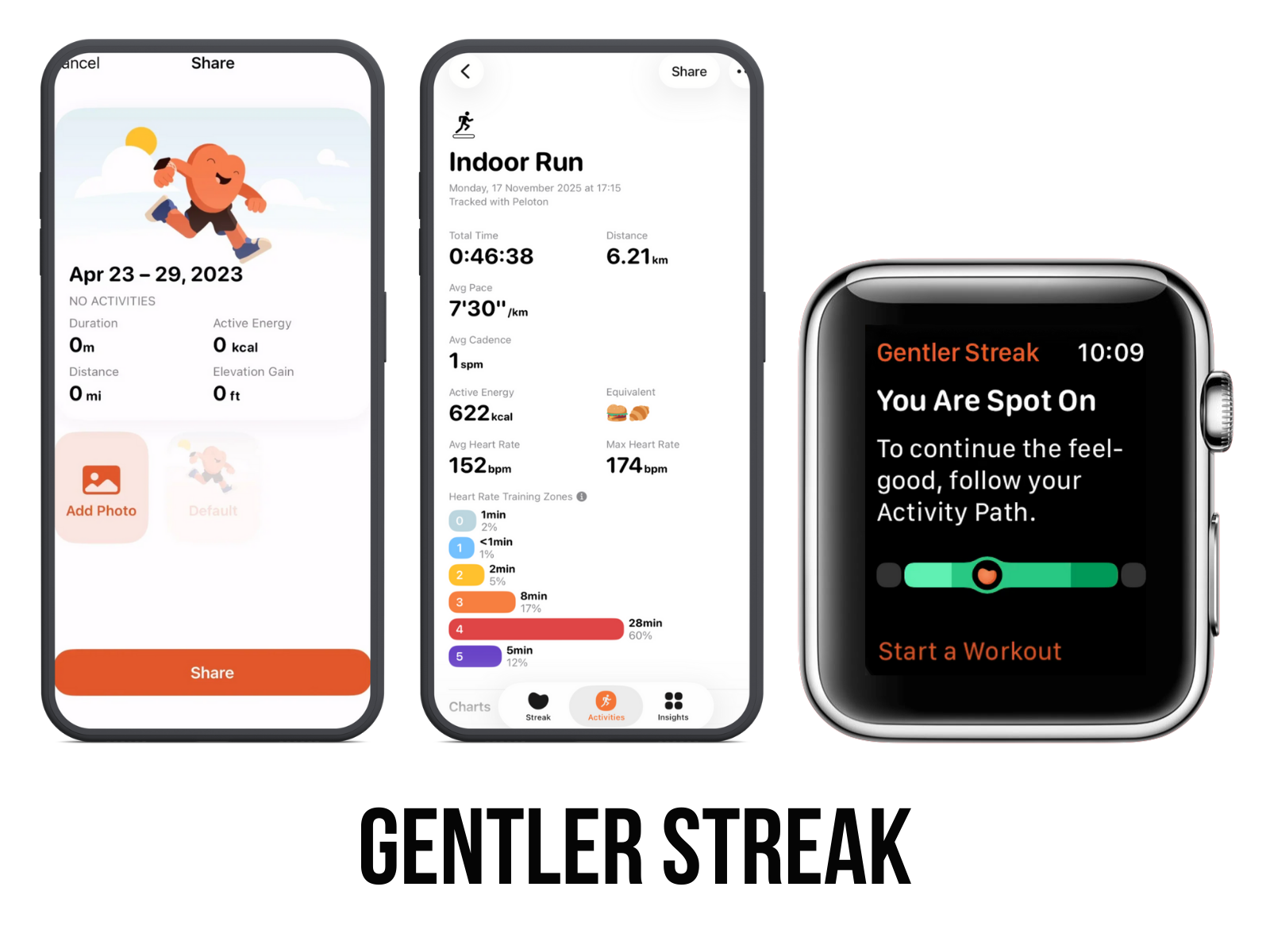
Gentler Streak is built around sustainable fitness. It actively tells users when not to work out, using recovery metrics and long-term trend analysis.
Main features:
- Overtraining and fatigue detection
- Activity recommendations based on readiness
- Apple Health deep integration
Endel Move
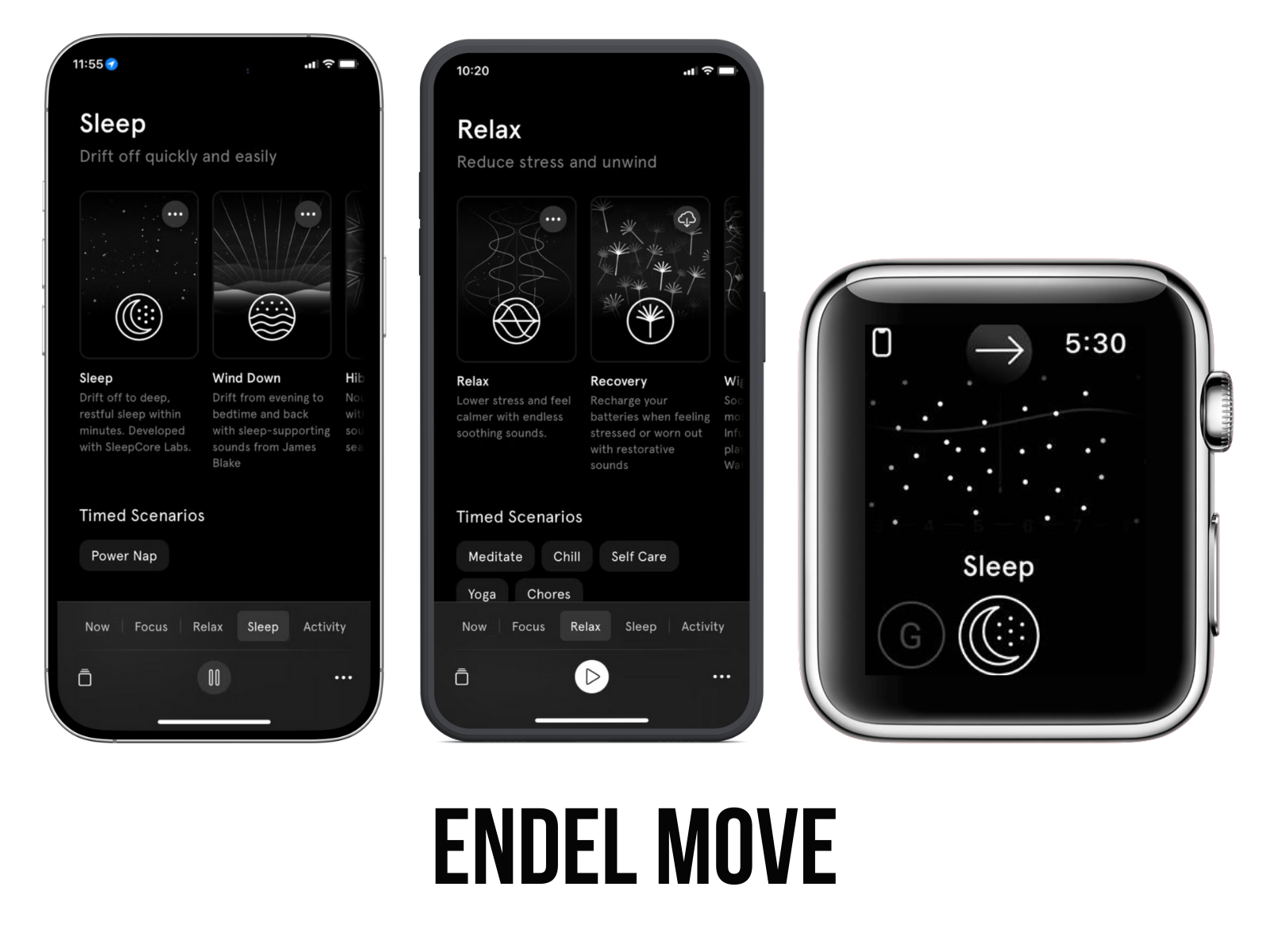
Endel bridges fitness, stress regulation, and sound therapy, generating adaptive sound environments based on heart rate, time of day, and activity.
Main features:
- AI-generated soundscapes for workouts & recovery
- Stress-aware movement sessions
- Apple Watch biometric input
- Focus, recovery, and movement modes
Jefit
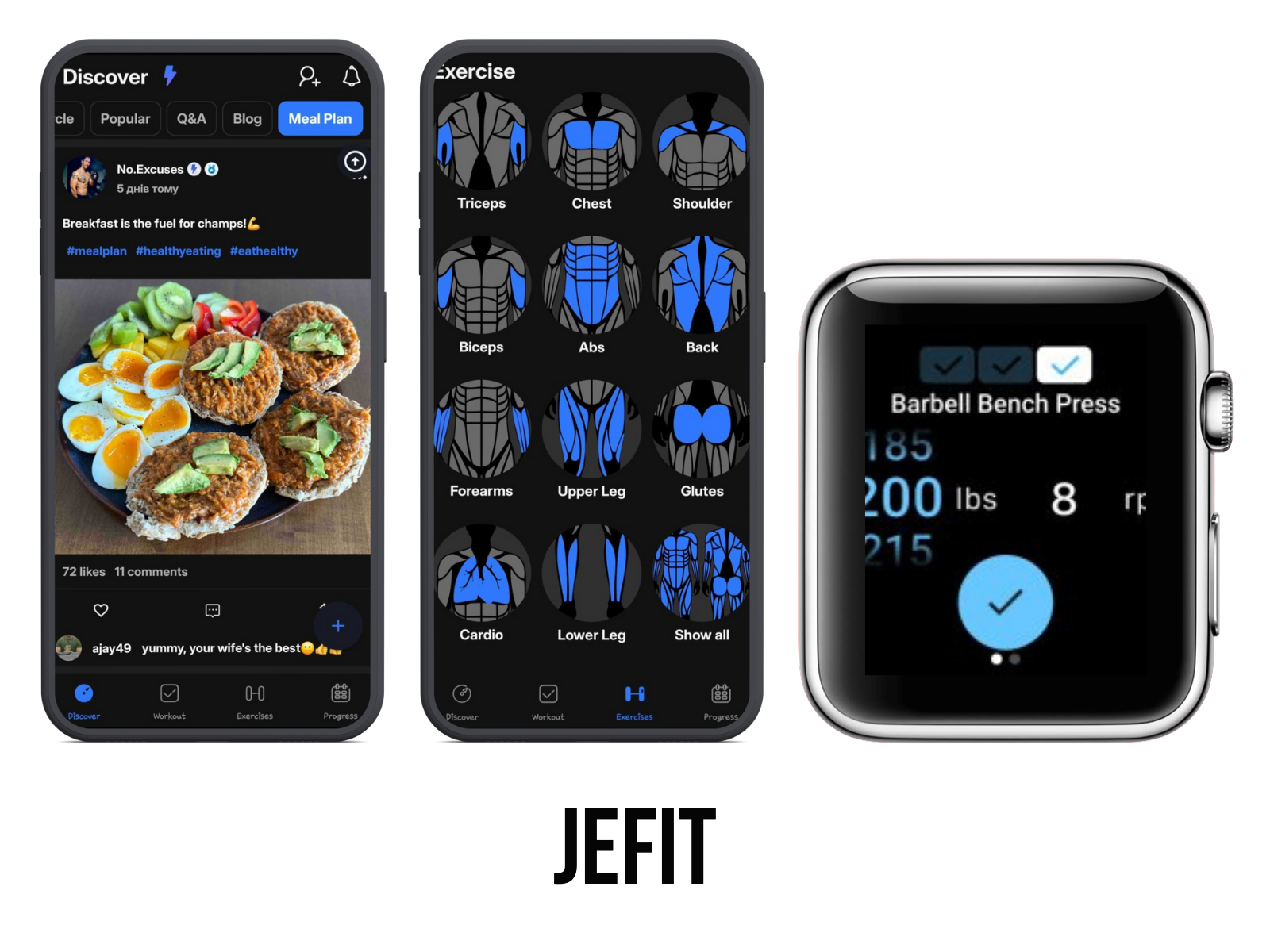
Jefit is a detailed workout planner and digital training log built for weightlifters and gym-goers. It excels at custom routine creation, precise set/rep/weight tracking and long-term progress analysis without video classes or social features.
Main features:
- Massive library of over 1,400 exercises with HD video demonstrations
- Custom workout builder to create and save personalized routines
- Community-shared plans and strong focus on data-driven improvement
- Custom workout builder to create and save personalized routines
The Fitness App Industry -- Outlook for 2026
Did you know that 80.69% of the world’s population uses smartphones?
According to statistics, the global fitness app market is set to reach 14.64 Billion by 2027. This figure reflects the growing interest in fitness and the continued growth of smartphone and wearable technology use worldwide.
In case you missed it, 2020 was a groundbreaking year for fitness apps. The App Annie Industry reports estimate that over 95,000 new health and fitness apps launched in 2026 (up 24% from 2025), with fitness app downloads soaring more than 35%.
So what’s it looking like for 2026 and beyond?
Well, in 2026, app downloads rose compared to 2025, but the growth rate moderated from the prior year's surge. compared to 2025, but the growth rate wasn’t nearly as high as it was from 2017 to 2025. Fitness apps keep drawing new users and subscribers, but one key shift over recent years is their pivot to AI-proofing. In 2027 and beyond, expect deeper AI coaching, adaptive wearables, and hyper-seamless integrations across apps and ecosystems.
The Secret Sauce Your Fitness App is Missing
All the best fitness apps mentioned in this review have integrations and synchronizations.
Why do we need to integrate and sync between apps, you may be wondering? Simple. There’s no single app that can cover everything a person needs.
For example, someone who wants to lose weight might prefer to track calories in Centr, but they rely on Freeletics or home strength sessions or Hevy for cycling classes and metrics. Without syncs, they'd manually enter data or grab a notebook.
The more data you can sync, the better. Data syncing and integrations allow users to seamlessly switch from app to app, making their lives easier and giving you an upper hand over the competition. Plus, with services like Jetfit and Freeletics, you get free advertising for your app since integration partners are listed on their websites.
If you want to integrate an app or service, but don’t know where to start, contact Brocoders, and we’ll help you out.
FAQ
The market is maturing. After huge gains during and right after the pandemic, most people who wanted a fitness app already have one or two. Growth now comes more from deeper engagement, subscriptions, and new features (like AI) rather than massive numbers of brand-new downloads.
The future focuses on AI-proofing — meaning apps are becoming smarter and harder to replace. Key developments include:
- Deeper AI-powered coaching (personalized plans that adapt in real time)
- More adaptive wearables integration
- Hyper-seamless connections between apps, devices, and ecosystems (Apple Health, Google Fit, wearables, nutrition trackers, etc.)
Strong integrations and data syncing with other apps and services. No single fitness app can cover every need (strength training + calorie tracking + cycling + yoga + recovery metrics). Without good integrations, users have to manually enter data or use multiple disconnected tools — which is frustrating and leads to drop-off.
Centr (great for calorie tracking and coaching), Freeletics (bodyweight & HIIT), Hevy (strength & gym logging), Jetfit (free classes and variety). These apps often sync with others and allow data to flow across platforms.
Absolutely. Even with moderating download growth, the market remains strong — users keep subscribing, AI features are raising the bar, and people want connected, personalized experiences. Apps that solve the “fragmented data” problem through great integrations have a clear edge.
Users are more likely to stick with your app when it plays nicely with others. You gain a competitive advantage over apps that remain “walled gardens.” Integration partners (like Jetfit and Freeletics) often list you on their websites → free cross-promotion and new user acquisition.