
Service businesses invested heavily in point solutions over the past five years — scheduling tools, CRM platforms, dispatch software, and customer support systems. These tools improved individual workflows, but they sit in silos. An AI agent crosses those silos. It reads a scheduling update, checks a CRM record, sends a technician notification, and logs the outcome — without a human orchestrating each step.
That shift from isolated tools to connected automation is why 79% of organizations now report some level of agentic AI adoption in 2026. The global AI agent market, valued at $5.25 billion in 2024, is projected to reach $199 billion by 2034. For service-based businesses, the question is no longer whether to invest. The question is how to find an AI agents development company that understands the specific workflows, integrations, and constraints of a service environment.
This guide covers the leading AI agent development companies, the platforms they build on, how to match a vendor to your situation, and the practical requirements that determine whether an AI agent deployment succeeds or stalls.
AI Agents in Service Businesses: What's Actually Being Deployed
AI agents in service contexts fall into four main deployment categories.
Customer-facing support agents handle inbound queries, resolve common requests from a knowledge base, qualify leads, and route escalations. Deployments in customer support consistently report 30–50% faster resolution times and significant deflection of routine tickets. For businesses running high-volume inbound — service inquiries, warranty claims, scheduling requests — this is typically the fastest path to measurable ROI.
Lead qualification and routing agents work across web chat, phone, and email channels. They ask qualifying questions, score leads against defined criteria, and route high-value prospects to the right sales rep or account manager — without a human handling every initial contact.
Scheduling and dispatch orchestration agents connect CRM data, technician availability, job requirements, and location data. These agents suggest optimal job assignments, send technician notifications, update job status, and flag scheduling conflicts — reducing the manual coordination load on dispatch teams. For field service businesses, this category carries the highest potential impact on daily operations. Our analysis of AI in field service management covers how this plays out in production deployments.
Internal copilots help coordinators, technicians, and back-office staff get answers faster, draft communications, generate reports, and move data between systems without switching tools. This category scales well in organizations with large distributed workforces where institutional knowledge is unevenly distributed.
Across all four categories, the data shows consistent returns. Companies report an average ROI of 171% from agentic AI deployments — rising to 192% for US enterprises — and 74% of organizations achieve that ROI within the first year. Gartner projects that 40% of enterprise applications will include task-specific AI agents by the end of 2026.
The organizations that reach those numbers are not running isolated experiments. They are deploying agents deeply integrated with the systems and data flows their operations already depend on.
What Operational Leaders Are Trying to Solve in 2026
The priorities of operational leaders have shifted significantly from 2024 to 2026. In 2024, the dominant question was "where should we experiment with AI?" In 2026, the dominant question is "why isn't this delivering measurable value yet?"
PwC's 2026 AI Predictions report notes that senior leadership is moving toward targeted investments in specific workflows where measurable payoffs are clear, with little tolerance for exploratory projects without defined success metrics. Deloitte's State of AI Enterprise report reinforces this: companies now evaluate AI investments the same way they evaluate any capital expenditure — against financial and operational outcomes.
Three priorities define the operational leader's agenda in 2026.
Moving from pilots to production. Most service businesses have run at least one AI proof-of-concept. The common failure mode is a pilot that works in isolation but cannot connect to the actual systems it needs to generate value. Production deployment requires integration depth, not just technical proof.
Orchestrating end-to-end processes. Automating a single task — sending a job confirmation SMS, for example — produces marginal value. Orchestrating the full workflow (job creation, technician assignment, customer notification, on-site documentation, invoice generation) compounds value across every job completed. IBM's 2026 technology guidance frames this as the central shift: from task automation to process orchestration.
Designing for human-AI collaboration. The highest-performing deployments do not remove humans from workflows — they redesign workflows so humans handle judgment-intensive decisions and agents handle execution. That requires an AI agents development company that understands process design, not just model deployment.
An AI agent development partner that scopes a project with only technical requirements — without mapping the existing workflow and the human decisions embedded in it — will build an agent that functions technically but underperforms operationally.
Top AI Agent Development Companies for Service Businesses
Choosing an AI agents development company for a service business requires looking beyond general AI capability. The companies below have production-verified case studies in environments relevant to service operations.
BotsCrew
BotsCrew specializes in enterprise-grade conversational AI and custom AI agents for complex, regulated operational environments. The company leads engagements with a structured discovery and proof-of-concept phase, builds on model-agnostic architectures, and prioritizes governance and access control — making them a strong fit for logistics, utilities, and large service organizations where compliance and integration complexity are high.
A recent case study documents BotsCrew building an internal AI assistant for Kravet, a global home furnishings company with more than 1,000 employees. The agent improved knowledge retrieval across sales, supply chain, operations, and HR — raising answer accuracy from 60% to nearly 90%. BotsCrew also operates its own enterprise chatbot and AI agent platform with generative AI capabilities, multi-channel deployment (web, WhatsApp, SMS), and a no-code builder rated approximately 4.8 on G2.
Best fit: Enterprise service organizations requiring robust governance, multi-system integration, and a structured delivery process.
LeewayHertz
LeewayHertz brings more than 15 years of experience across the full AI lifecycle, from data engineering to multi-agent orchestration. Recent case studies include an LLM-powered troubleshooting agent for a Fortune 500 manufacturer that guides technicians through equipment diagnosis using static machinery data and dynamic safety policies, as well as a medical AI assistant that simplifies diagnostic data gathering and analysis.
LeewayHertz's proprietary platform ZBrain / ZBrain Builder provides enterprise-grade agentic orchestration with support for multiple LLMs, built-in governance, monitoring, prompt management, and multi-agent coordination. Independent reviews cite a Clutch rating of approximately 4.7, with praise for technical innovation and occasional notes on POC-to-production timelines.
Best fit: Data-intensive service businesses and enterprises requiring multi-agent orchestration with formal governance requirements.
Appinventiv
Appinventiv (1,600+ staff) focuses on embedding AI agents inside digital products rather than building standalone systems. Their strength is AI agent development services where the agent is part of a customer-facing or internal product experience — mobile apps, web platforms, and SaaS applications.
The Mudra project is representative: an AI budgeting chatbot deployed in more than 12 countries that helps users manage finances through a conversational interface. The broader portfolio includes AI-enhanced job matching, media personalization, and platform operations agents. Appinventiv ranks in Clutch's 2025 Top 100 Fastest-Growing Companies with reported client satisfaction of 96.7%.
Best fit: Service businesses building or updating customer-facing digital products where AI agents are embedded in the product experience.
Intuz
Intuz (founded 2008) has built a reputation for cost-effective, production-ready AI solutions with more than 700 completed projects and approximately 50 verified Clutch reviews at a 4.8 rating. Their AI work is backend-heavy, focusing on agents that integrate with databases, APIs, and internal systems to automate operations.
A logistics-sector case study describes a custom AI agent for TransIQ, a large African transport company, that converts natural-language fleet and route questions into SQL — giving non-technical operations staff self-serve analytics without relying on a data team. Intuz's Agentic Framework moves organizations beyond single-task automation toward context-aware, multi-agent systems that analyze data, make decisions, and act across workflows. The company reports 20–40% cost reductions and 3× faster lead qualification in agentic deployments.
Best fit: Cost-conscious enterprises and mid-market service businesses automating backend operations, internal analytics, and cross-system data flows.
Ascendix Technologies
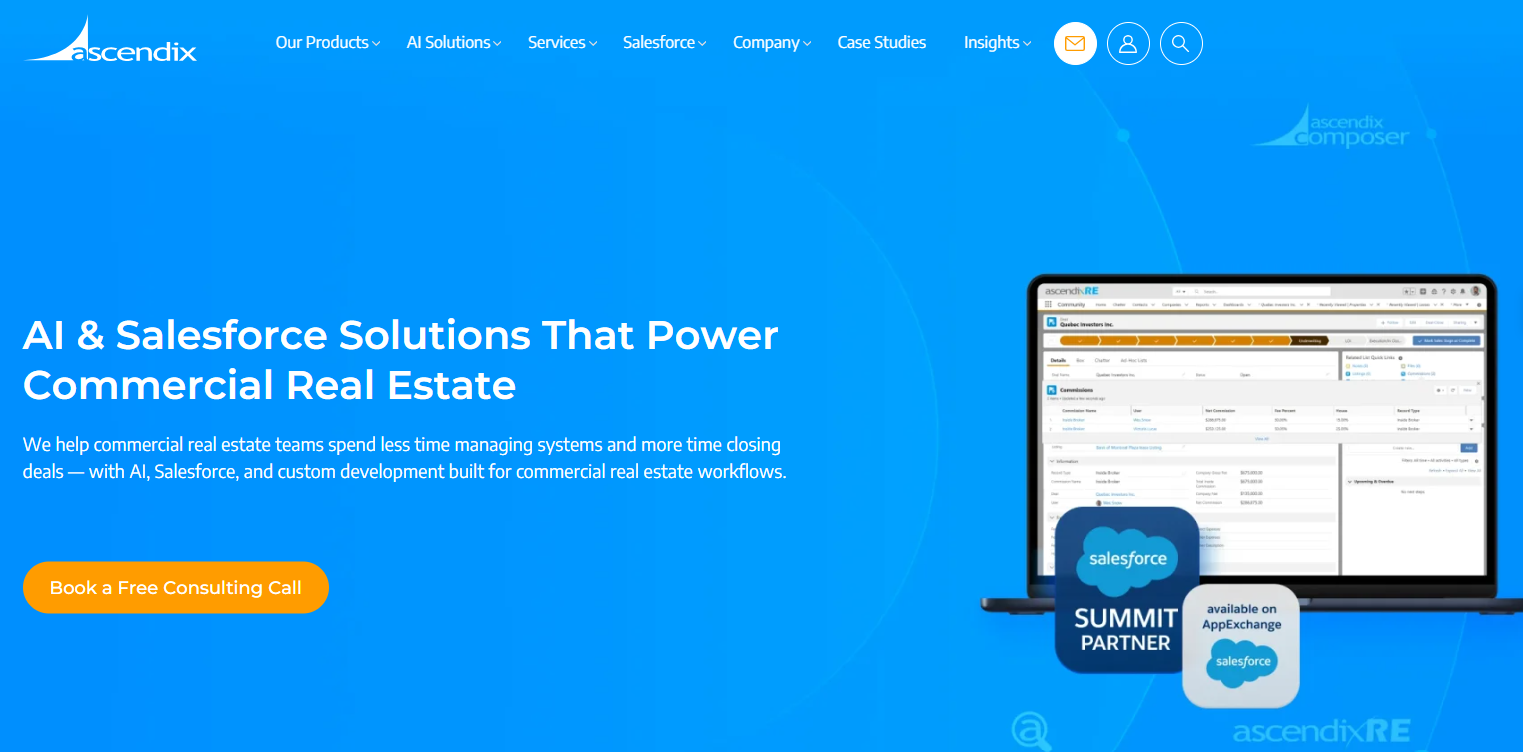
Ascendix Technologies is a real estate technology and AI company that has been building domain-specific software since 1996. One of the few AI development partners that already knows how workflows, records, and relationships are structured in document-heavy, relationship-driven industries including commercial real estate, capital markets, and property operations before the first conversation.
When AI arrived, Ascendix built it into its own product before offering it to any client, learning in production where models get terminology wrong, where workflows break on edge cases, and where adoption fails because a tool does not fit how people work. Those lessons now ship with every engagement. Ascendix builds AI agents that connect live operational data to ChatGPT and Claude, capture intelligence from emails and documents, and generate client-ready outputs from existing records. Salesforce Summit Partner, the highest tier.
Best fit: Document-heavy, relationship-driven companies across real estate, PropTech, capital markets that want AI agents grounded in their specific workflows.
Master of Code Global
Master of Code Global focuses on building AI agents and conversational AI systems that automate customer interactions, streamline business processes, and support enterprise-scale digital transformation. With more than 20 years in software development and over 1,000 successful projects delivered, the company works with organizations across finance, healthcare, eCommerce, automotive, and other sectors. Its AI solutions have helped clients achieve outcomes such as higher conversion rates, improved customer satisfaction, and increased revenue through intelligent automation and personalized experiences.
A key differentiator is the company's proprietary AI Pilot and LOFT framework, which accelerates AI implementation while reducing setup effort and long-term maintenance costs. Combined with partnerships across Google Cloud, AWS, Salesforce, Cohere, Infobip, and Voiceflow, Master of Code Global is well-positioned to deliver custom AI agent ecosystems that integrate seamlessly with existing enterprise infrastructure.
Best fit: Mid-sized and enterprise organizations looking to deploy AI agents, conversational AI, or multi-channel automation solutions that require deep customization, enterprise integrations, and measurable business impact.
Brocoders
Brocoders is a custom software and AI agent development company specializing in B2B SaaS and service operations. The team combines AI engineering, product design, and hands-on domain knowledge in field service, logistics, and contractor management — building agents scoped around the actual workflow, data model, and toolstack of a service business rather than a generic template.
Brocoders develops AI agents on Bridge, its proprietary platform built specifically for service-oriented agent deployments. Alongside Bridge, the team brings direct FSM domain expertise through Fieldera — an AI-powered platform that uses AI agents to configure field service modules for trade businesses — which means every agent engagement is grounded in a clear understanding of how dispatch, scheduling, and field coordination work in production. The company holds a 5.0 rating on Clutch and delivers production-ready MVPs in an average of 3.5 months.
Best fit: B2B SaaS companies and service businesses building AI agents into existing products or operational workflows, particularly in field service, logistics, and contractor-based service models.
Top Platforms for Building and Deploying AI Agents
The platform decision is separate from the vendor decision. An AI agents development company builds on a platform — and that platform determines integration depth, governance, and long-term scalability. Here are the five platforms most relevant to service businesses in 2026.
Intercom / Fin AI Agent
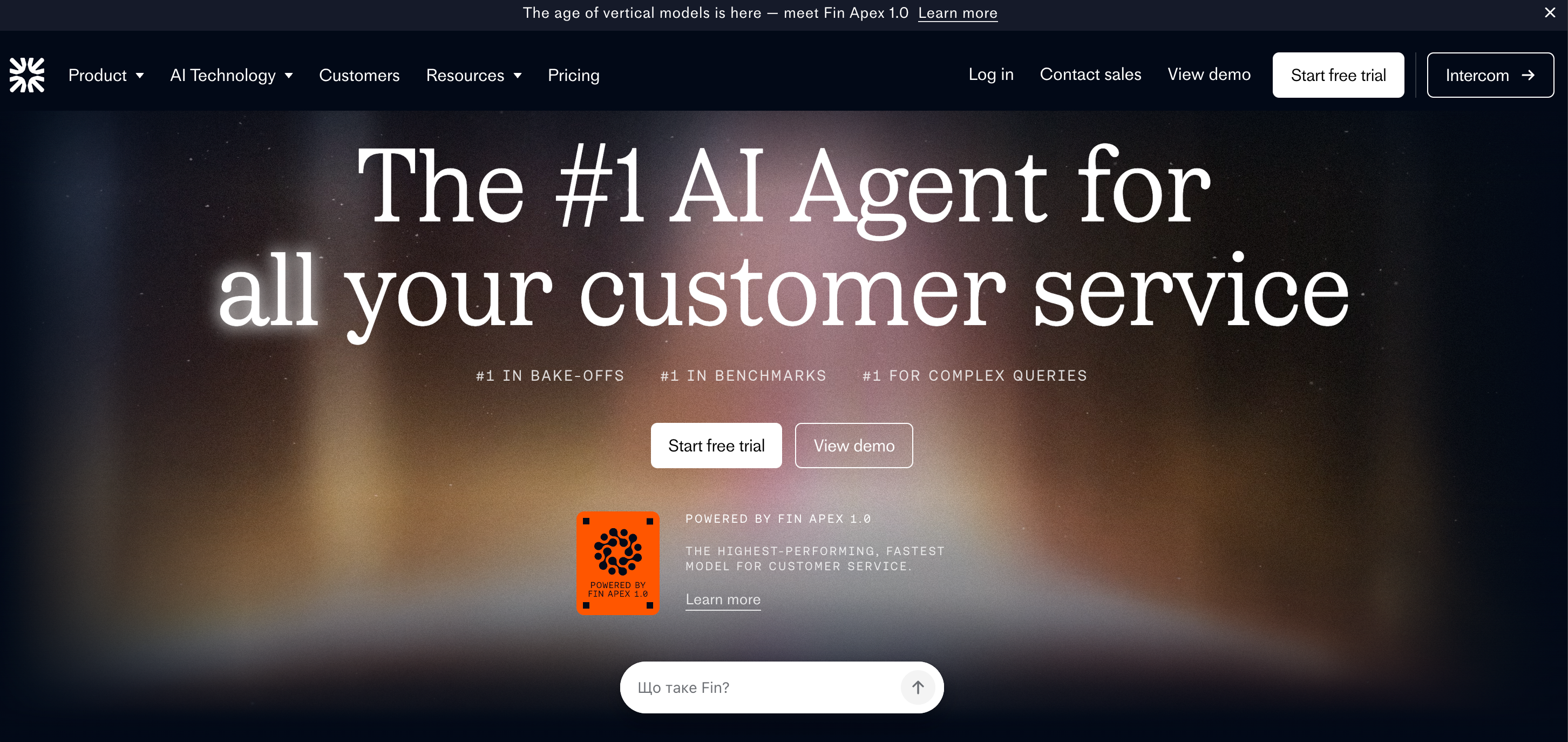
Intercom is an AI-first customer service platform combining an omnichannel helpdesk, its Fin AI Agent, and proactive messaging in a single system. Fin handles frontline support requests by pulling from help centers and content sources, resolving a significant share of inbound queries without human intervention. Lead qualification, routing, and in-app onboarding are strong additional use cases.
For service businesses, Intercom's value is in omnichannel communication management, shared customer context, and pre-built integrations with Salesforce, Jira, and analytics platforms. Development partners can embed AI agents built on Intercom's APIs into customer portals and technician apps to handle triage, FAQ resolution, and transactional flows. Fin ranks consistently highly in G2's AI Agent category.
Strongest fit: Customer-facing agents — support automation, lead qualification, in-app chat.
Microsoft Copilot Studio and Agent Builder
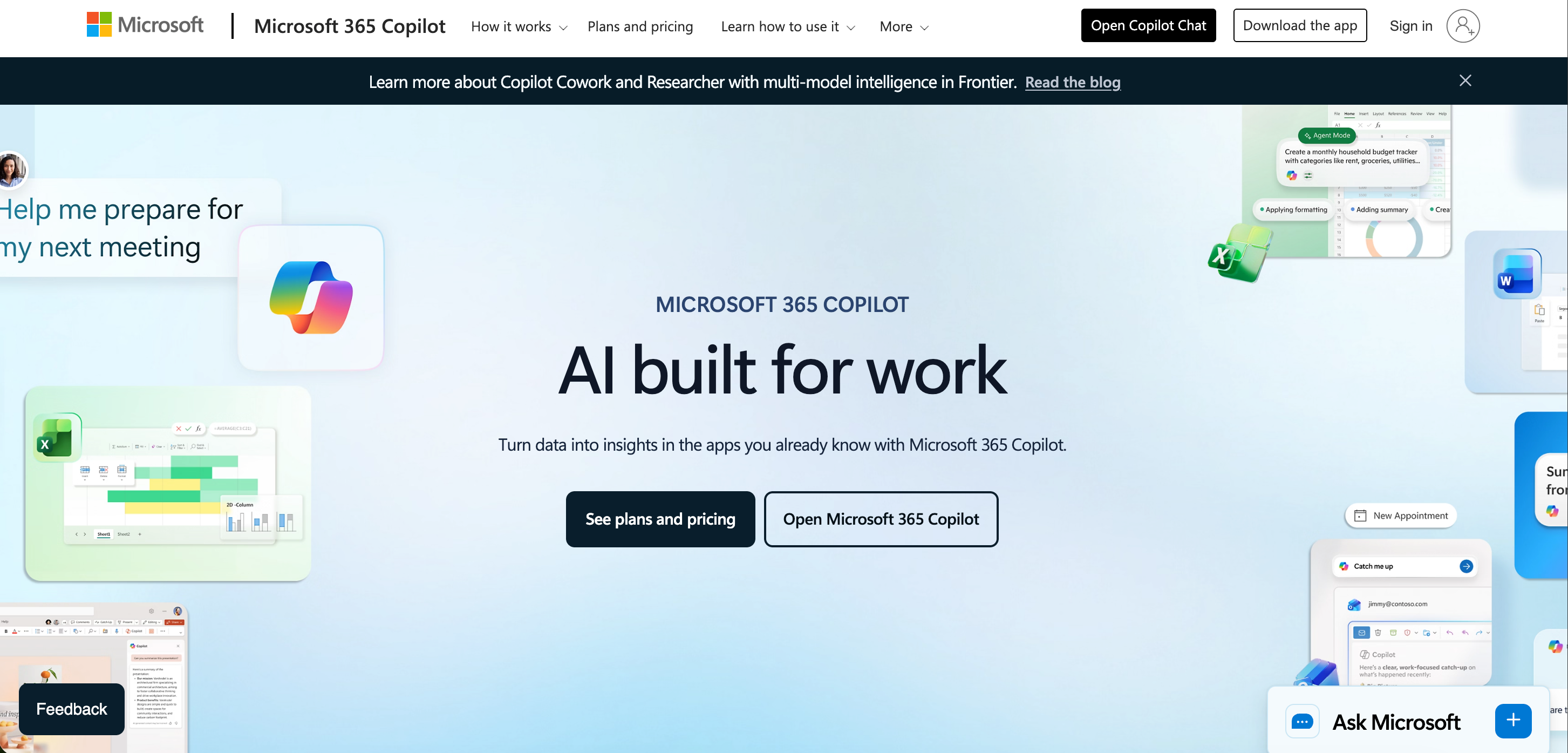
Microsoft Copilot Studio lets organizations build AI agents that connect directly into Microsoft 365, Dynamics 365, and more than 1,400 external systems via Power Platform connectors. Agents are built using natural-language instructions, templates, or low-code tools, then deployed into Teams, SharePoint, and other Microsoft applications where knowledge workers spend their time.
The multi-agent orchestration capability is particularly relevant for service operations: different agents handle specialized parts of a process — intake, document review, scheduling — and route work between each other. For teams standardized on Microsoft 365, this is often the lowest-friction path to internal ai workflow automation.
Strongest fit: Internal agents in Microsoft 365 / Teams environments; dispatch coordination, quote generation, job documentation.
Google Vertex AI Agent Builder
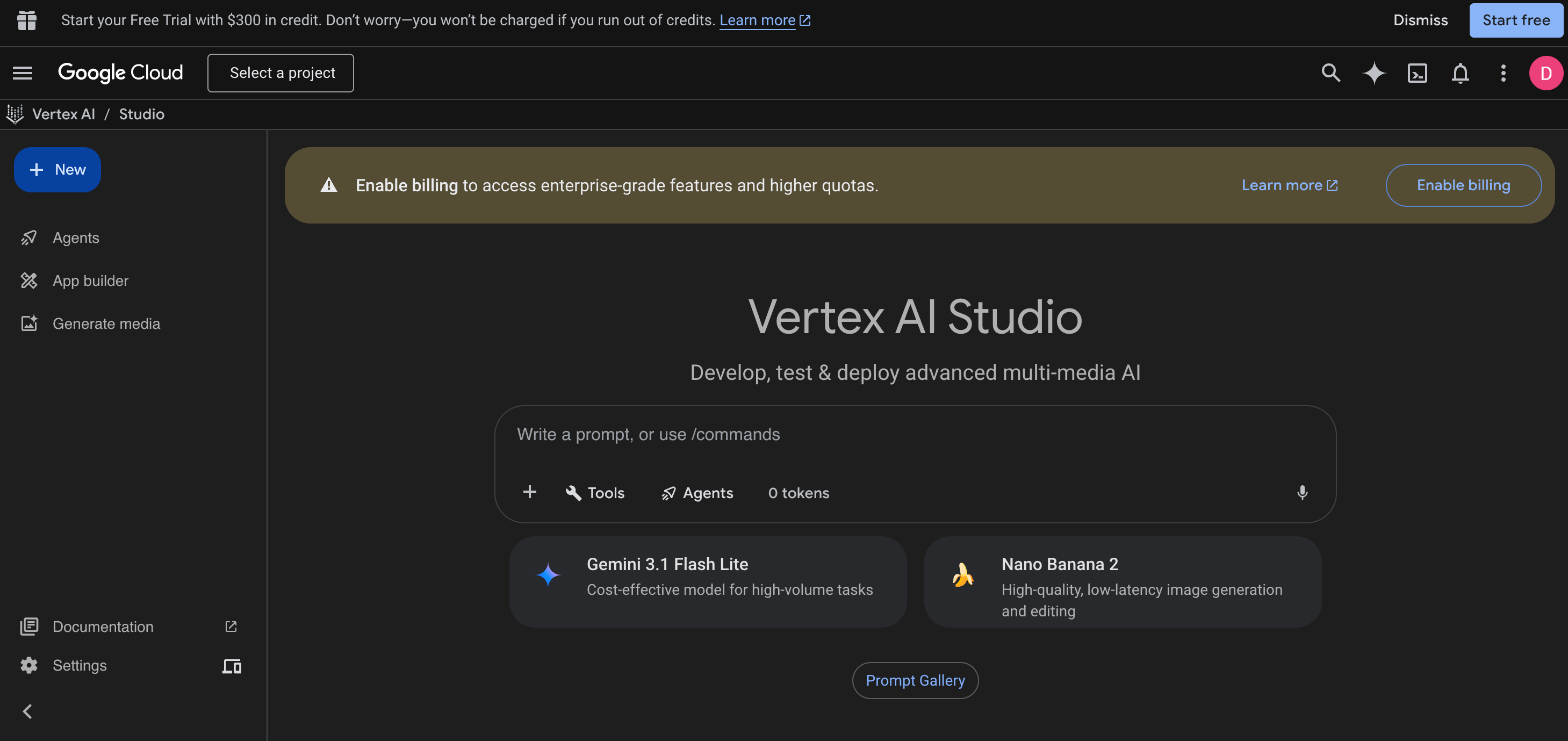
Vertex AI Agent Builder is Google Cloud's platform for building, scaling, and governing enterprise-grade AI agents grounded in organizational data. It supports code-first development via an Agent Development Kit (ADK) alongside lower-code console configuration, and integrates tightly with BigQuery, Dialogflow, Vertex Search, and other Google Cloud services.
The platform supports multimodal inputs through Google's Gemini models and includes built-in governance and observability for enterprise deployments. For field-heavy or IoT-oriented service businesses running on Google Cloud data pipelines, Vertex AI Agent Builder handles agents that need to join sensor data, logistics records, and customer information — then surface decisions through chat, dashboards, or mobile interfaces.
Strongest fit: Data-heavy multi-workflow automation; cloud-native architectures on Google Cloud.
Salesforce Agentforce
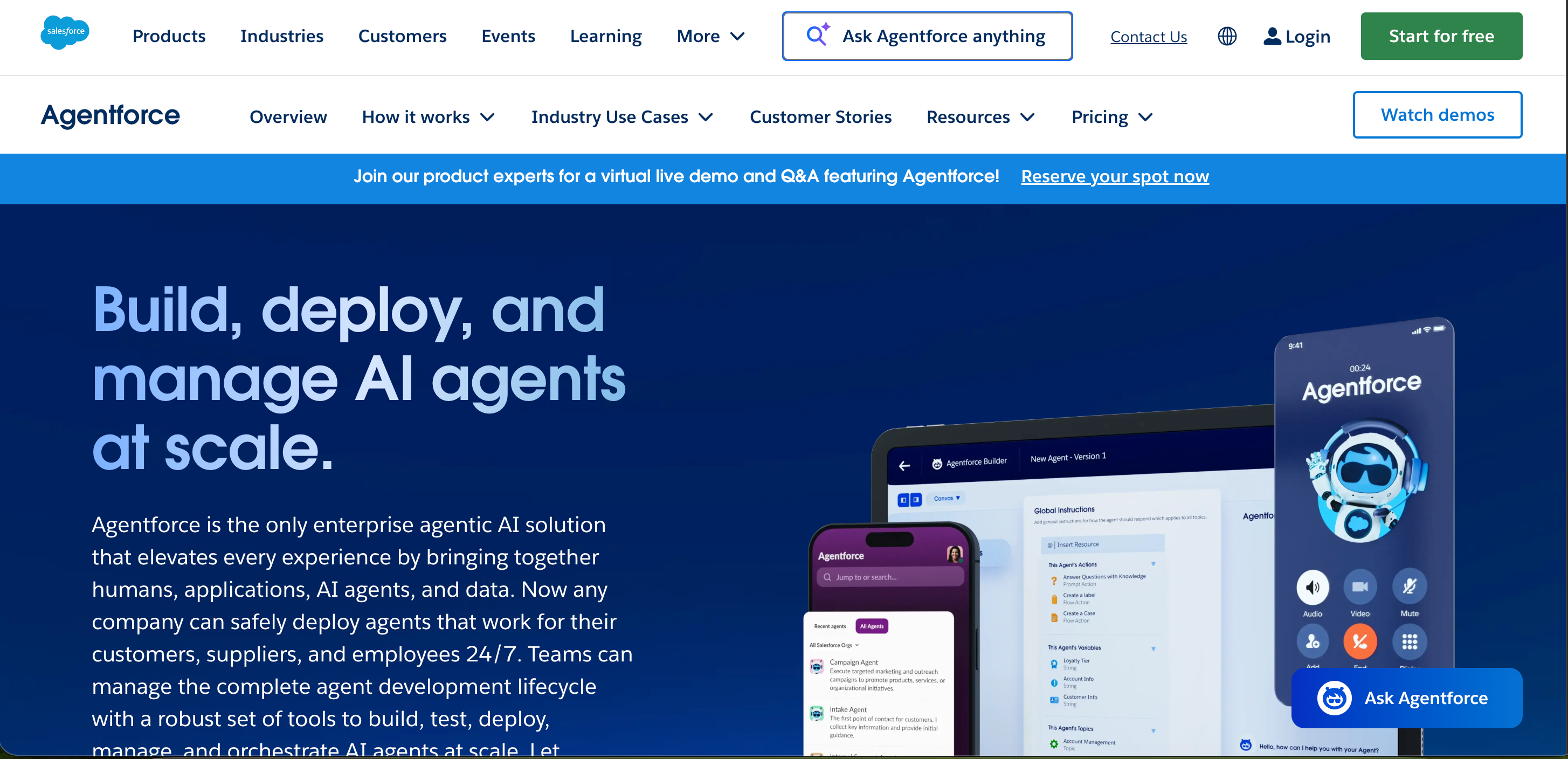
Agentforce adds autonomous AI agents directly on the Salesforce Platform, enabling agents to act on CRM data across sales, service, marketing, and commerce. Its low-code Agent Builder configures agents that can analyze data, make decisions, and take actions — resolving service cases, qualifying leads, or adjusting campaigns — without human prompting for each step.
Agentforce agents trigger on data changes, business rules, or API signals, making them particularly effective for service businesses where operations run on Salesforce. Out-of-the-box service agents automate Tier-1 tasks; custom agents address warranty workflows, maintenance plans, and on-site job scheduling.
Strongest fit: Businesses running CRM, service operations, and sales on Salesforce.
Amazon Bedrock Agents
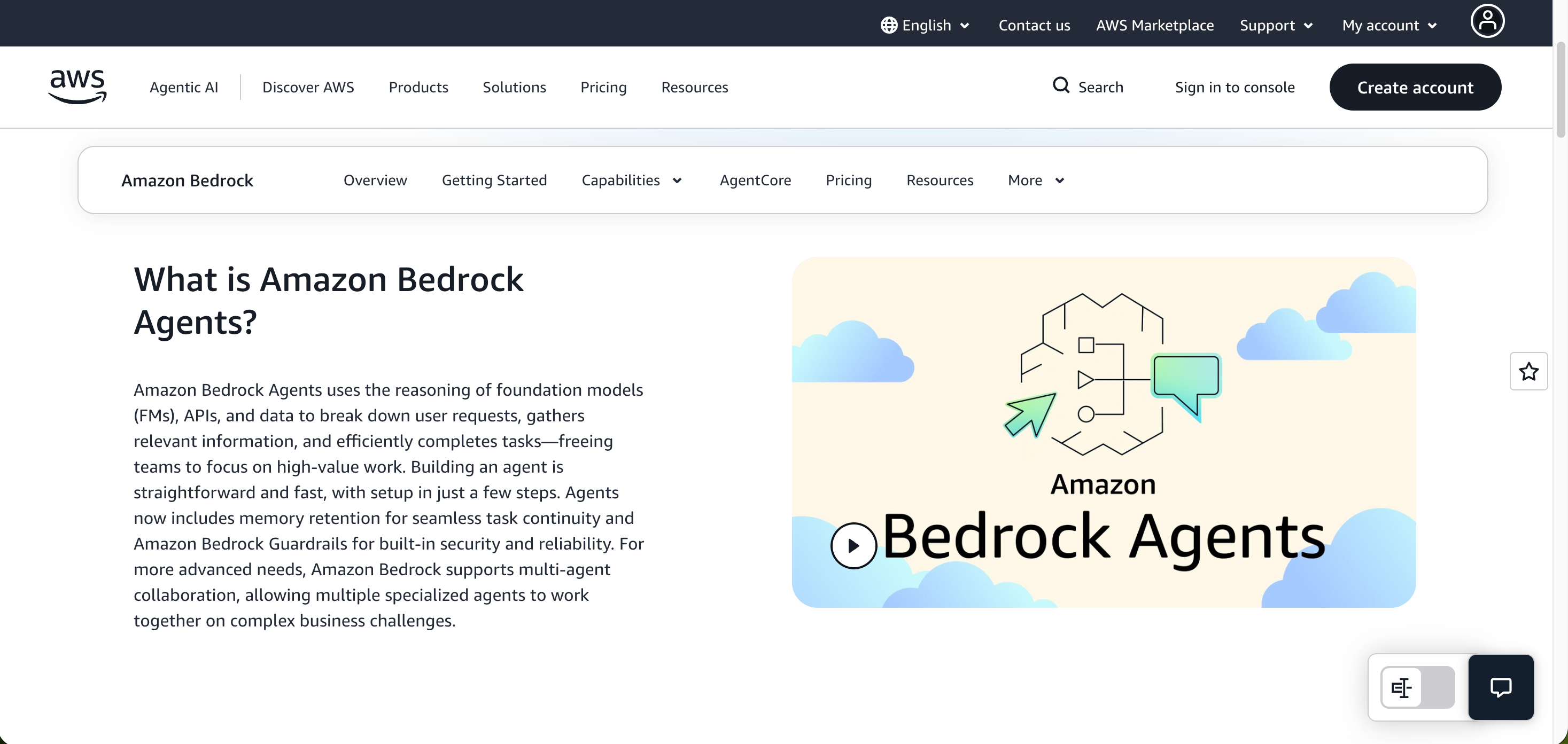
Amazon Bedrock Agents provides a developer-centric environment on AWS for building agents that call internal APIs and operate across company systems. Teams define agent instructions, connect to Lambda functions and data sources, and let the underlying foundation model break complex tasks into steps and invoke the right tools in sequence.
For service businesses with existing scheduling, inventory, or ERP backends on AWS, Bedrock Agents allows development partners to build deeply integrated agents that automate backend processes — job allocation, inventory checks, pricing, and reporting — surfaced through web, mobile, or chat interfaces. AWS security and observability infrastructure supports enterprise compliance requirements.
Strongest fit: Engineering-led teams building backend-integrated agents on existing AWS infrastructure.
How to Choose a Development Partner and Platform
Matching a vendor and platform to your service business requires three decisions.
First: where do your data and workflows live today? If customer communication and CRM are your core systems of record, Intercom or Salesforce Agentforce give agents direct access to the data they need. If internal collaboration and data pipelines are centralized in Microsoft or Google Cloud, Copilot Studio or Vertex AI Agent Builder are the natural choices. If the operational backend runs on AWS, Bedrock Agents provides the deepest integration path.
Second: where is the primary focus — customer-facing or back-office? Appinventiv and Aipxperts are strongest when AI agents need to be embedded inside end-customer mobile or web products. BotsCrew, LeewayHertz, and Intuz perform best in internal copilot, data-intensive, and cross-system orchestration scenarios.
Third: what are the budget and governance constraints? Intuz and Aipxperts deliver cost-effective, production-ready automation for teams without enterprise governance requirements. BotsCrew and LeewayHertz align with organizations that need formal discovery, compliance documentation, and robust access control.
Three scenario-based shortlists illustrate how this works:
-
SMB trade business (HVAC, home services) automating web support and basic internal workflows: Intercom for customer-facing agents plus a mid-market vendor like Aipxperts or Intuz to wire lead capture, FAQs, and scheduling into existing tools.
-
Mid-market field service company embedding AI agents into a SaaS product and mobile app: Appinventiv or BotsCrew for product-embedded agent development, Intercom for customer-facing flows, and Microsoft Copilot Studio or Vertex AI Agent Builder for internal ai workflow automation and analytics. Our piece on MCP-enabled AI agents for SaaS covers the integration architecture behind this approach.
-
Enterprise logistics or utilities company modernizing across multiple legacy systems: Intuz or LeewayHertz as core development partners, using Vertex AI Agent Builder or Bedrock Agents to orchestrate multi-system processes and deploying internal copilots via Teams, Slack, or custom consoles.
The combinations that produce the best outcomes share one characteristic: agents are integrated into the actual systems that drive operations, not added on top of an already-complex stack. For a broader view of how this fits into field service software selection, our guide on top on-demand app development companies provides additional context.
Brocoders' Perspective: What AI Agent Development Actually Requires
Brocoders builds custom AI agents for B2B SaaS companies and service-based businesses. The consistent observation from our project work is this: the primary failure mode in AI agent development is not technical capability. It is workflow mismatch.
An agent built without a detailed map of the existing dispatch logic, data model, and human decision points will technically function but operationally underperform. It handles the clean cases and fails on the edge cases that represent 30% of actual volume — the ones where a technician is rescheduled at the last minute, where a job note is missing, where a customer contacts two channels simultaneously.
Our approach to enterprise AI integration combines three elements that many development teams treat separately.
Workflow analysis before architecture decisions. We map the actual process — including exceptions, handoffs, and the informal rules that live in a coordinator's head — before selecting a platform, framework, or model. For service businesses, this step alone often reveals where automation creates genuine leverage versus where human judgment remains irreplaceable. Our field operations developer guide walks through what that analysis looks like in a contractor-based service environment.
Integration depth over feature breadth. AI workflow automation in service businesses produces value when agents act on real, current data: live CRM records, technician location, actual job history. Agents operating on stale or incomplete data produce recommendations that nobody trusts and coordinators learn to ignore. We prioritize building reliable, deep data connections with the systems that matter — whether that is a custom-built platform, an existing FSM, or a hub-and-spoke contractor management system.
Agile multidisciplinary teams. AI agent development requires product managers, UX designers, and domain specialists working alongside engineers. A scheduling agent for a field service company needs to reflect how dispatchers actually think, not just what the API technically supports. Brocoders develops AI agents on Bridge, its proprietary AI agent development platform built for service-oriented deployments. The team's domain knowledge in field operations is grounded in Fieldera — an AI-powered platform that uses AI agents to configure field service modules to each trade business's exact workflows. That operational depth informs how every agent engagement is scoped and built.
For companies building AI agents into their SaaS product, the AI agents in real estate SaaS case shows how integration and product design decisions compound across the user experience. And for companies evaluating how AI fits into field service operations more broadly, our analysis of global field service management trends for 2026 provides the sector context.
The outcome of getting this right is not a demo that impresses a leadership team. It is an agent that dispatchers, coordinators, and technicians use without prompting — because it reduces friction on work they were already doing.
Frequently Asked Questions (FAQ)
AI agent development companies provide custom conversational agents, virtual assistants, and end-to-end ai workflow automation for both customer-facing and internal workflows. Services typically include requirements discovery, architecture design, agent development and testing, integration with CRMs and field management tools, and post-launch model optimization. Ongoing maintenance and retraining are often included as part of a managed services arrangement.
Service industries with high volumes of repetitive processes and time-sensitive customer interactions see the most immediate returns. HVAC, home services, field service, logistics, insurance, healthcare, and B2B SaaS support functions all fit this profile. The common thread is structured data — job records, customer history, schedules — combined with repetitive decision-making — routing, qualification, status updates — that agents handle consistently at scale.
AI agents reduce the coordination overhead that accumulates across high-volume service operations. Scheduling agents cut manual dispatch time. Support agents resolve routine inquiries without queuing for a human. Internal copilots give coordinators faster access to job history and customer records. The combined effect is faster response times, fewer errors in data entry and communication, and staff spending more time on work that requires judgment rather than execution.
The primary factors are solution complexity, the number and depth of integrations required, the volume of training data available, and whether the project starts with a low-code platform or a custom build. A focused single-workflow agent with clean existing data and standard integrations can move from scoping to production in six to ten weeks. A multi-agent system with custom CRM integration, exception handling across several workflow branches, and enterprise security requirements will take considerably longer. Post-launch retraining and optimization add to the total cost of ownership and should be budgeted from the start.
Enterprise-grade AI agent deployments address security through platform-level and architectural controls. These include on-premises or private cloud deployment options to keep data within organizational boundaries, role-based access control for agent permissions, encryption in transit and at rest, audit logging for agent actions, and architectural choices that minimize sensitive data exposure to external model APIs. For regulated industries, compliance requirements such as GDPR, HIPAA, or SOC 2 should be part of the scoping conversation with any ai agents development company before architecture decisions are made.
Brocoders builds custom AI agents for B2B SaaS companies and service businesses that need automation grounded in their actual workflows, data, and operational model. Our team combines AI engineering, product design, and domain knowledge in field service, logistics, and SaaS. Bridge, our proprietary AI agent development platform, and Fieldera, our AI-powered platform for configuring field service modules for trade businesses, are built on the same principles we apply to every client engagement.
If you are evaluating enterprise AI integration for your service operations or building AI agents into a product, we are ready to map your workflows and scope a solution. Talk to the Brocoders team to start the conversation.