
Written by the Brocoders content team. Brocoders is included on this list; see the disclosure note in the methodology section.
If you're shortlisting a vendor to build an LMS, a K-12 tool, a corporate training app, or a gamified learning product, you've probably opened five tabs already and they all describe themselves the same way. This list skips that.
Nine companies made this list: Vention, N-iX, ScienceSoft, Simform, Netguru, Miquido, Cleveroad, Geniusee, and Brocoders. Each one has a public, verifiable edtech delivery history, not just a services page that mentions education as a vertical.
TL;DR
- This list covers 9 companies with documented edtech app delivery, ranging from enterprise generalists to product-focused mid-size studios.
- Selection is based on public delivery history and named clients, not review-site rankings alone. Full methodology below.
- Brocoders is included at #9, with disclosed self-interest and the same evaluation bar applied to every entry.
- The Three-Role Test, a framework for checking whether a vendor understands learner, educator, and admin as three separate user roles, runs through the whole article.
Research methodology
We started from public listicles, Clutch-adjacent roundups, and company practice pages, then cut anyone without a verifiable edtech portfolio. An agency that lists "education" among 12 industries on a homepage, with no named client and no case study, didn't make the cut.
Nine companies cleared that bar. We excluded agencies with no public edtech portfolio, even if they rank well for the keyword.
Brocoders is one of the nine, and we're the publisher of this article. Brocoders is included here with the same evaluation criteria and disclosed self-interest. Judge the fit based on the same evidence you'd expect from an unbiased source. The case for inclusion rests on documented, named, reviewed edtech delivery, five projects spanning elementary education, K-12 curriculum, corporate training, and higher-ed talent platforms. You can see the underlying work in our edtech case studies.
Quick comparison table
| Company | HQ | Team size | Edtech focus | Best fit for |
|---|---|---|---|---|
| Vention | New York, USA | 3,000+ | Enterprise builds, multi-industry | Large, funded edtech companies |
| N-iX | Ukraine (EU delivery) | 2,500+ | Dedicated edtech practice, LMS/adaptive learning | Scaling edtech SaaS needing a dedicated pod |
| ScienceSoft | Texas, USA | 700+ | 35+ years, education software practice | Established institutions wanting enterprise history |
| Simform | California, USA (India delivery) | 700+ | Cloud-ready eLearning architecture | Companies prioritizing scale and architecture |
| Netguru | Poland | 700+ | Design-forward edtech UI | Founders prioritizing design and UX |
| Miquido | Poland | 250+ | Multimedia-rich, AI personalization | Mobile-first, video-heavy edtech |
| Cleveroad | Estonia (Ukraine delivery) | 200+ | LMS, tutoring, school management | Mid-size Europe-based team, broad LMS portfolio |
| Geniusee | Estonia/Ukraine | 150+ | SaaS and learning-adjacent products | Seed-stage founders wanting a senior-heavy team |
| Brocoders | Estonia | 60-70 | Elementary, K-12, corporate training, higher-ed, AI-native learning | Founders wanting shipped edtech proof plus AI-native delivery |
1. Vention
Vention has been building software since 2002, and its edtech work sits inside a much broader multi-industry practice that also covers fintech and healthtech.
Vention's client list, PayPal, IBM, PwC, isn't edtech-specific, but it signals the kind of enterprise delivery capacity that large, regulated buyers need. That's also the honest limit here: you're buying into a generalist bench, not a team that lives and breathes learning products.
Founded / HQ: 2002, New York, USA. Team: 3,000+ engineers. Pricing: enterprise-tier, typically six figures and up. Best fit: large, funded edtech companies that need enterprise-scale engineering capacity and compliance maturity, not early-stage founders.
Unity-Based Interactive Kiosk for Cranbrook Institute of Science
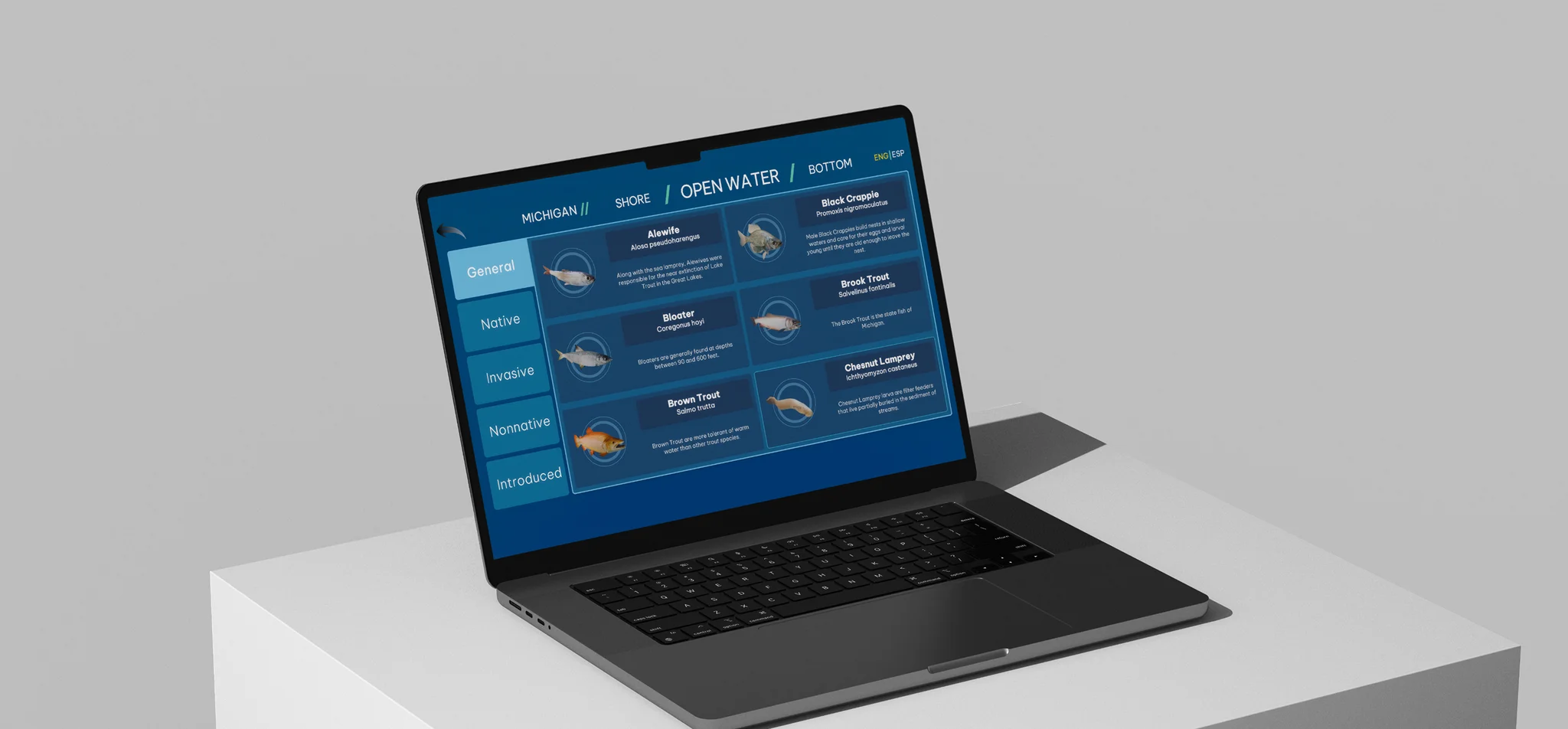
For Cranbrook Institute of Science, Vention stepped in mid-project to deliver a Unity-based interactive kiosk that lets museum visitors explore the ecosystems of Michigan’s Great Lakes. The solution features a touch-screen control interface paired with a large display of real-time 3D-animated aquatic life, allowing users to select lakes, layers, and individual species while viewing educational information cards. In just three months a six-person team rigged, animated, and enhanced 73 aquatic models across five lakes, upscaled low-quality textures, and produced a polished, museum-ready exhibit. The result is a flexible educational tool that supports both visitor self-exploration and guided instructor sessions.
Honest weakness: no edtech-specific case study is public. You're trusting a general enterprise track record to translate into a learning product, which isn't guaranteed.
2. N-iX
N-iX runs a named edtech software development practice, which already puts it ahead of vendors that treat education as one line on a services menu.
The practice page covers LMS builds, adaptive learning, and content management, and N-iX has public case studies to back at least some of that. With 2,500+ engineers across Ukraine and EU delivery centers, it can staff a dedicated pod rather than rotating generalists onto your project.
Founded / HQ: 2002, Ukraine, with EU delivery centers. Team: 2,500+ engineers. Pricing: mid-to-enterprise, typically $150K+. Best fit: scaling edtech SaaS companies that need a dedicated engineering pod, not a first MVP.
Modernizing a Legacy LMS with Microservices
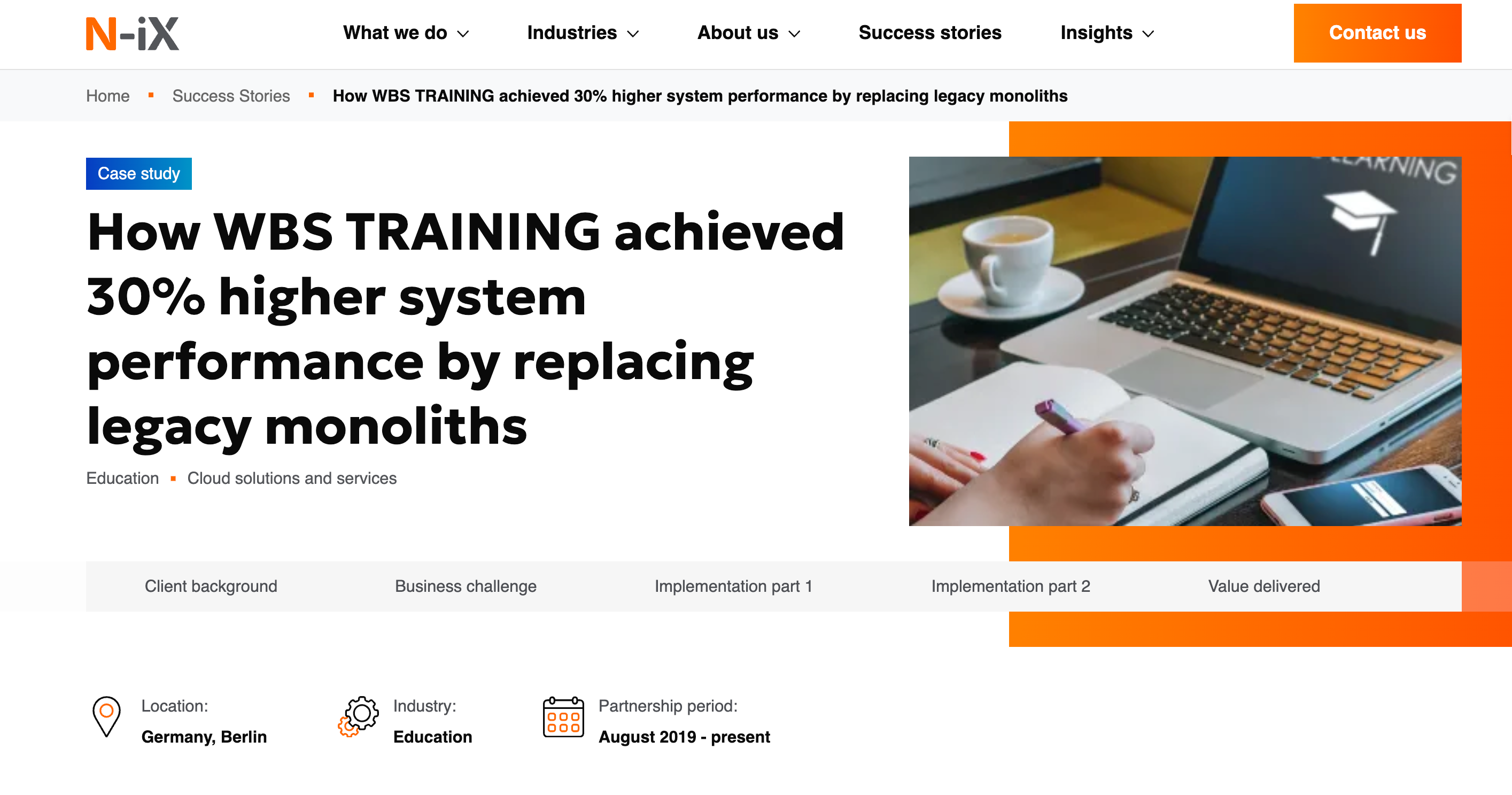
For WBS TRAINING, a major German provider of professional training services, N-iX replaced a legacy monolithic LMS and student-management desktop app with a modern microservices architecture. The team built more than 10 domain-driven microservices, introduced OpenID-based single sign-on, and migrated hundreds of thousands of records, cutting page response times from over five minutes to under half a second. A new web-based student-management application further reduced load times from 7–10 minutes to about one second and lifted overall system performance by 30 %. The result is a unified, flexible platform that improves both employee productivity and the learning experience for students.
Honest weakness: the $150K+ entry point prices out most seed-stage founders before the first call.
3. ScienceSoft
ScienceSoft has been in IT since 1989, and it runs a named education software practice with a long track record in LMS, virtual classroom, and assessment tools.
That history is the pitch. ScienceSoft has worked with Fortune 500 clients and can point to decades of enterprise software delivery, which matters if your buyer is a school district or a large training organization with procurement requirements.
Founded / HQ: 1989, McKinney, Texas, USA. Team: 700+. Pricing: enterprise-tier. Best fit: established education institutions or corporations that want a vendor with decades of enterprise software history.
Award-Winning Text-to-Speech Travel Apps and Language Learning Portal
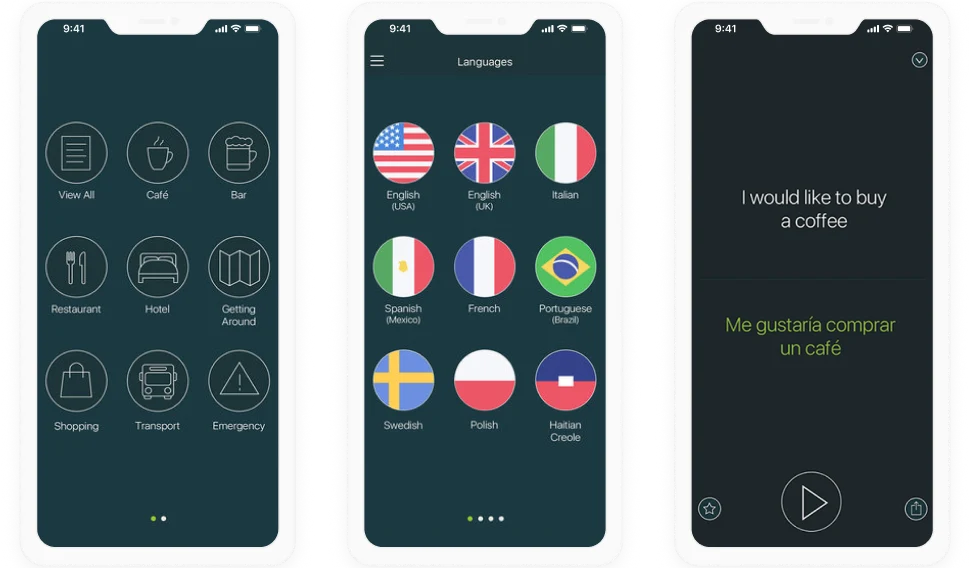
For an American language-learning company, ScienceSoft built a complete solution of native iOS and Android travel phrasebook apps plus a companion web portal. The apps support eight languages, let users search standard phrases or assemble custom ones with phonetic guidance, and deliver native-speaker text-to-speech audio while staying under 40 MB thanks to a CDN. The learning portal extends the experience with personal accounts, rich media lessons, exercises, and progress tests, all managed through a flexible admin panel. The mobile apps went on to win multiple education and travel awards and rank as the #1 education app in more than ten countries.
Honest weakness: enterprise gravitas usually comes with enterprise process. If you need to ship an MVP in six weeks, this isn't that vendor.
4. Simform
Simform builds modular, cloud-ready eLearning architectures, and its public portfolio includes adaptive learning platforms and collaborative digital classroom tools.
The pitch here is scale. Simform is US-headquartered with delivery in India, and it publicly cites a $50 to $150 per hour range, which is broad enough to cover both mid-tier and near-enterprise engagements depending on team composition.
Founded / HQ: 2010, California, USA, with delivery in India. Team: 700+. Pricing: mid-tier, $50-$150 per hour publicly cited. Best fit: edtech companies prioritizing cloud architecture and large-user-base scalability.
Scalable GenAI Platform to Accelerate Research
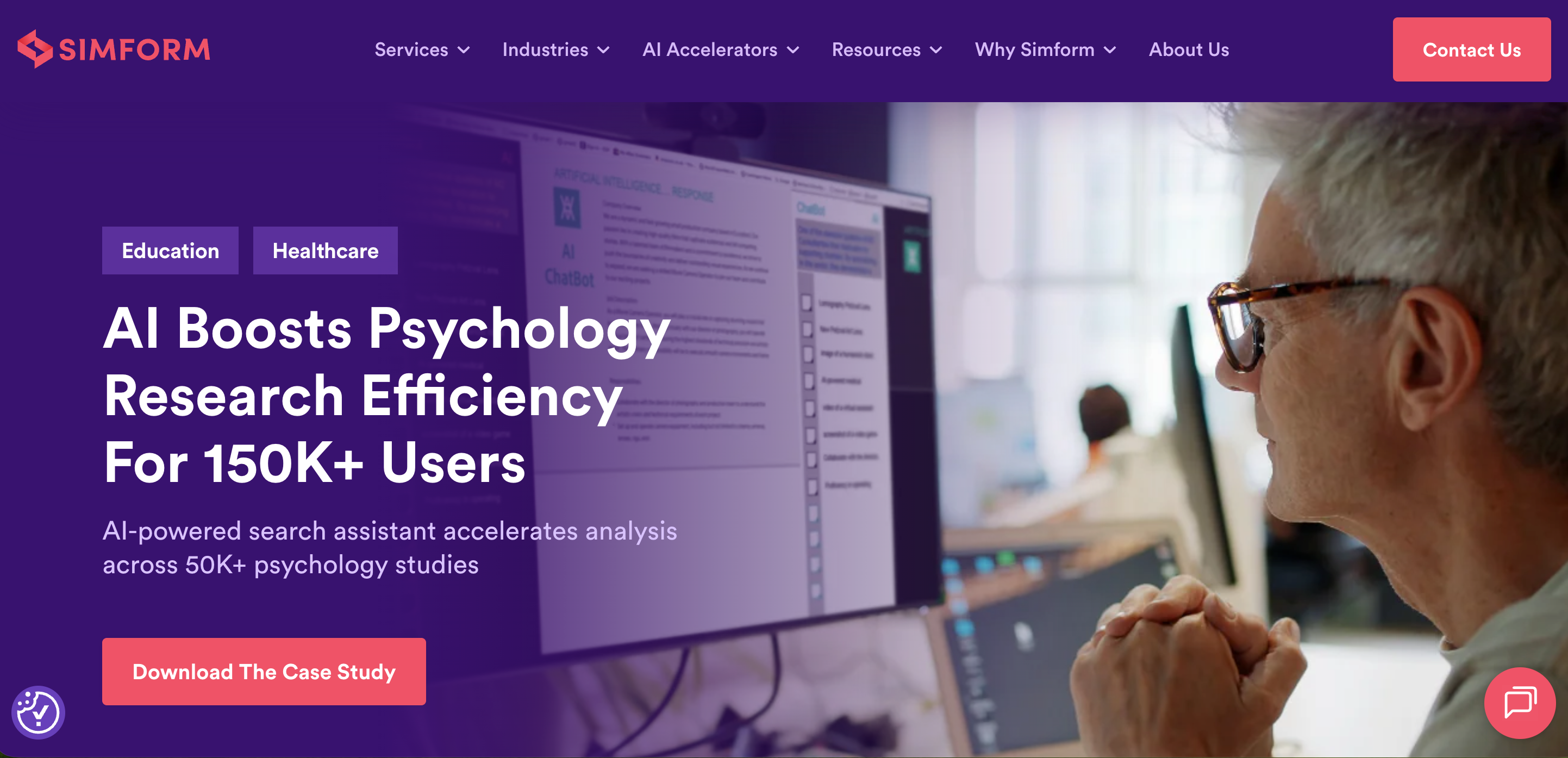
For a major psychology professional association serving over 150,000 members, Simform built an advanced generative AI research platform. The solution uses Azure OpenAI and vector search to deliver fast, contextual answers across more than 50,000 studies, supports multi-turn conversations that retain context, and enforces bias-free, inclusive language standards. Researchers can now refine queries conversationally and retrieve relevant insights in seconds instead of combing through fragmented repositories. The platform achieved 50% faster research, 40% better context retention, and 99% uptime for its large user base.
Honest weakness: architecture-first positioning doesn't say much about pedagogy or the day-to-day workflow of a teacher or student. You'll need to press for edtech-specific references, not just cloud references.
5. Netguru
Netguru leads with design. Its edtech portfolio favors intuitive UI and gamified progress tracking over raw feature count, and that shows in the interactive, polished tools it publicly references.
Poland-based since 2008, Netguru sits in the mid-to-high pricing tier, publicly cited at $50 to $99 per hour. If your product lives or dies on how it feels to use, this is a reasonable place to look.
Founded / HQ: 2008, Poland. Team: 700+. Pricing: mid-to-high tier, $50-$99 per hour publicly cited. Best fit: founders who want design quality and UX polish as the primary differentiator.
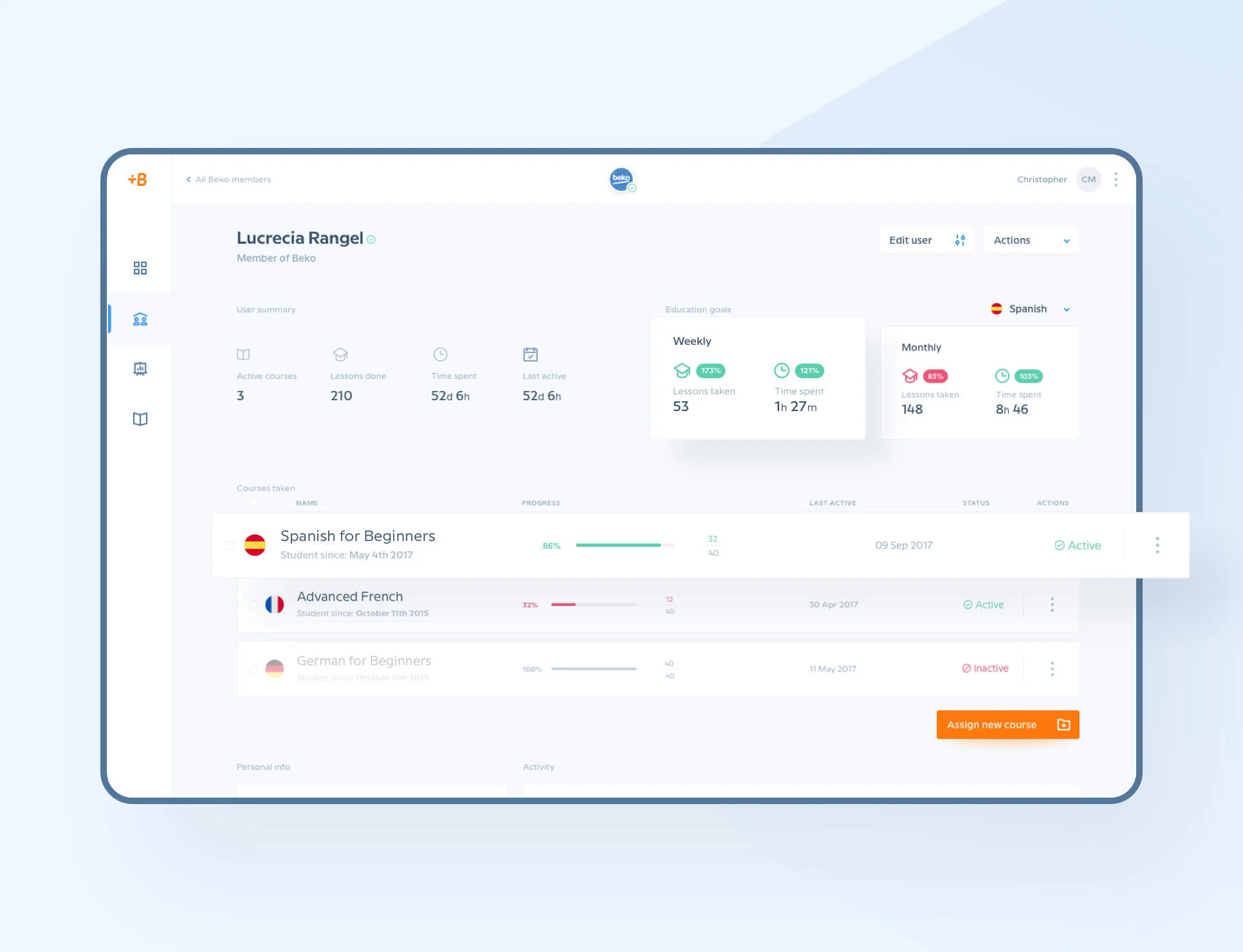
Expanding a Language Learning Platform for B2B
For language-learning platform Babbel, Netguru designed and developed a dedicated B2B admin dashboard that lets organizations manage team licenses, track employee usage and progress, and handle bulk invoicing. The module was built to match Babbel’s existing brand and style guide while scaling to large corporate user bases. Using React.js on the frontend and Ruby on Rails on the backend, the team delivered an intuitive, high-performance interface that supports everything from startups to major enterprises. The solution enabled Babbel to expand successfully into the corporate market and serve clients such as Hyundai, Paramount, and Acer.
Honest weakness: design-forward positioning can undersell backend complexity. Multi-role permissions and offline sync aren't design problems, they're architecture problems, and it's worth asking Netguru directly how those get handled.
6. Miquido
Miquido builds multimedia-rich learning apps, mobile platforms with video lessons, quizzes, and analytics dashboards, and it markets AI-driven personalization engines on top.
Founded in Poland in 2011, Miquido sits at 250+ people, smaller than the enterprise players on this list but still sizeable enough to run parallel workstreams. Mobile-first, content-heavy edtech products are the clearest fit.
Founded / HQ: 2011, Poland. Team: 250+. Pricing: mid-tier. Best fit: mobile-first edtech products with heavy multimedia content and AI personalization needs.
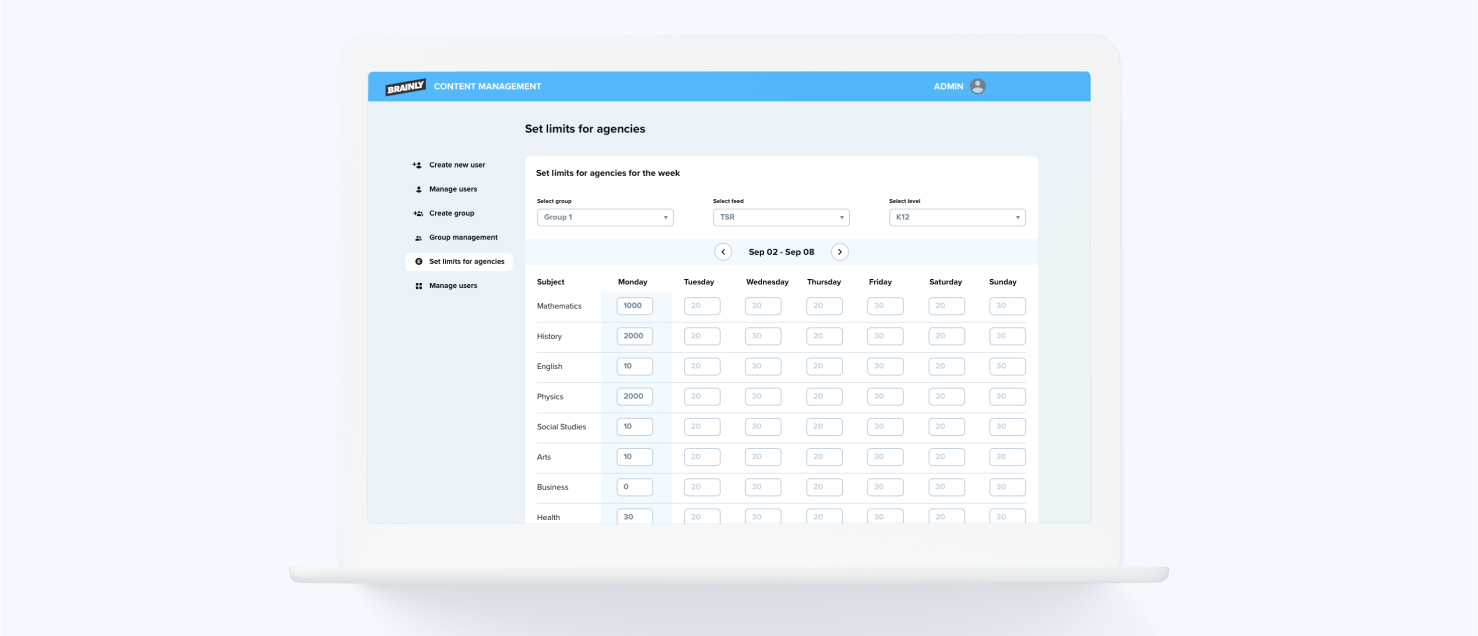
Mobile-First Learning Platform for Brainly
For Brainly, the knowledge-sharing platform used by 150 million students and experts, Miquido built the Brainly Content Tool — a web platform that manages answer requests and optimizes expert workloads. Delivered in just three months using Golang and React, the tool streamlines task distribution, time tracking, and workflow monitoring for answer providers. Results included 50% of questions answered within 24 hours, a benefit rate twice the target, and three hours of weekly work time saved per user. The project demonstrated strong agile collaboration and continuous value delivery from the first sprint.
Honest weakness: "AI-driven personalization" shows up on a lot of agency homepages right now. Ask Miquido for a specific example of a personalization engine they built and shipped, not a slide describing the concept.
7. Cleveroad
Cleveroad publishes its own recurring "top edtech companies" listicle series, which is a slightly odd position to be in when you're also the subject of someone else's. It's also a signal: Cleveroad knows this space well enough to write about it repeatedly.
Founded in 2011, headquartered in Estonia with delivery in Ukraine, Cleveroad builds LMS platforms, tutoring apps, and school management software, and it's cited at $25 to $49 per hour, the lowest publicly cited range on this list.
Founded / HQ: 2011, Estonia, delivery in Ukraine. Team: 200+. Pricing: mid-tier, $25-$49 per hour publicly cited. Best fit: founders wanting a mid-size, Europe-based team with a broad LMS portfolio.
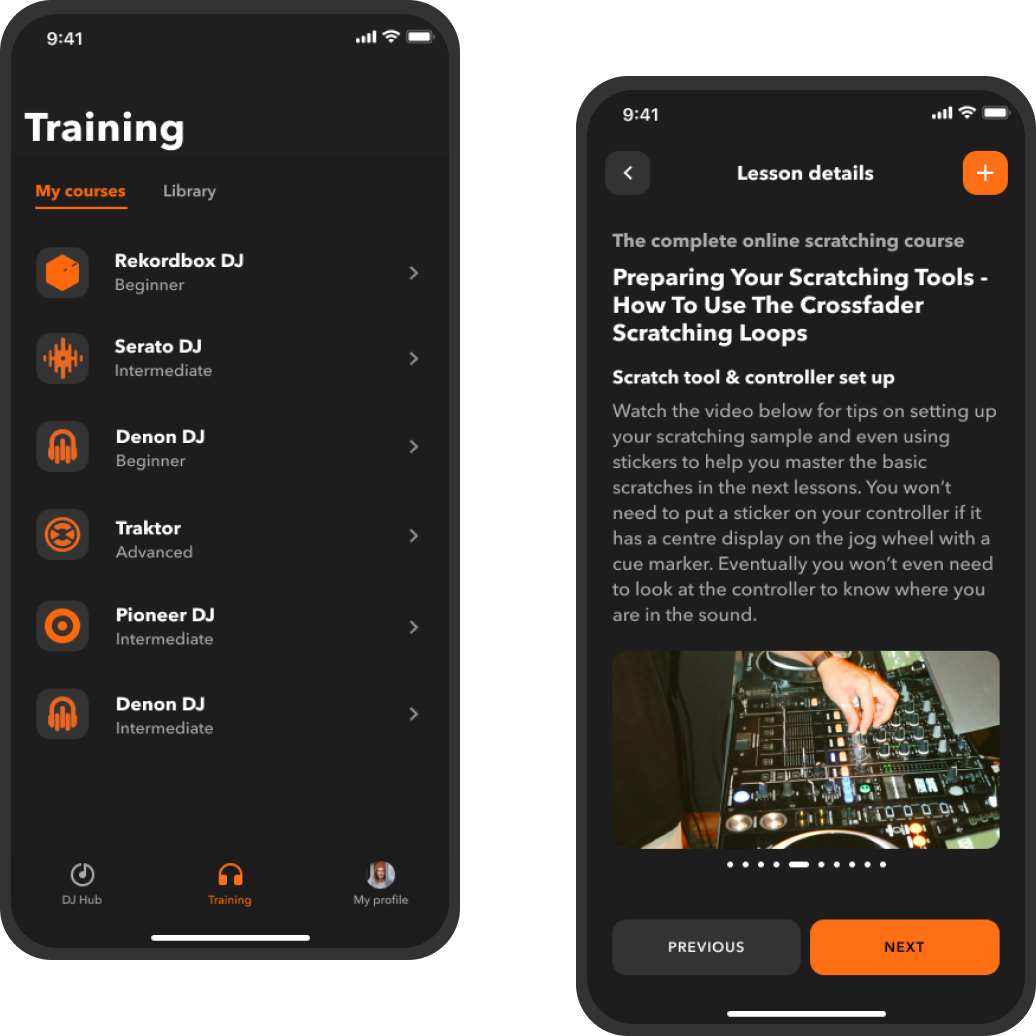
Digital Educational Platform for DJs
For Crossfader, a UK-based DJ education platform with over 5,000 users, Cleveroad modernized the entire product by replacing an inflexible WordPress setup with a custom web app, a native iOS app featuring offline mode, and a new admin panel. The solution introduced the DJ Hub — a subscription-based community and content space for both novice and experienced DJs — while migrating the existing user base and preserving SEO rankings. Admins can now easily create and manage courses, premium articles, payments, and community features. The platform gained a new revenue stream through monthly and annual subscriptions and improved accessibility across web and iOS devices.
Honest weakness: broad LMS portfolio can mean broad, not deep. Ask which of their listed projects Cleveroad actually built end-to-end versus contributed to as one vendor among several.
8. Geniusee
Geniusee keeps showing up in 2026 Clutch-adjacent edtech roundups, which is its main public proof point. The company is smaller, 150+ people, and its case studies lean SaaS and learning-adjacent rather than purely education-native.
Founded in 2016 with an Estonia/Ukraine base, Geniusee positions itself as more senior-heavy per engagement than the larger enterprise names on this list.
Founded / HQ: 2016, Estonia/Ukraine. Team: 150+. Pricing: mid-tier. Best fit: seed-stage edtech founders wanting a smaller, more senior-heavy team than the enterprise players above.
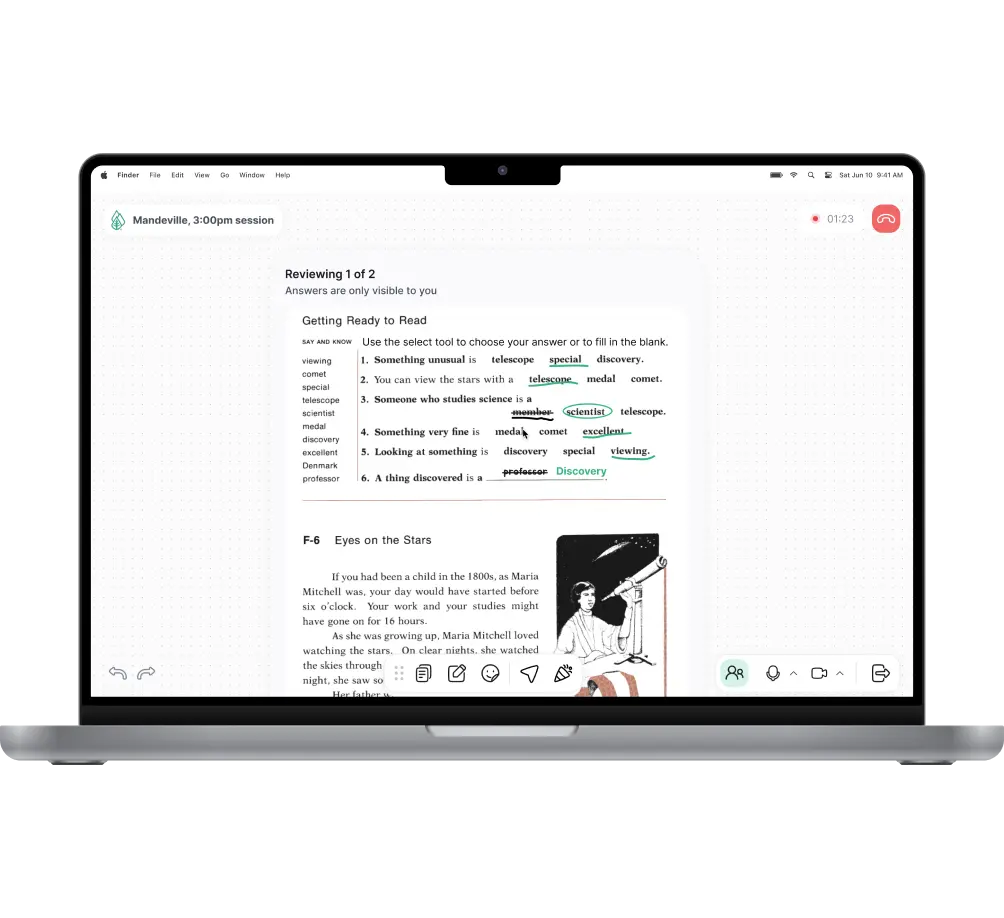
AI-Enabled Virtual Classroom for Personalized Tutoring
For a long-established U.S. K-12 education provider specializing in personalized tutoring and test prep, Geniusee developed a secure, AI-enabled custom virtual classroom platform. The solution includes a unified LMS with chatbot support, real-time audio/video sessions via a custom MediaSoup SFU, an interactive Fabric.js whiteboard for collaborative drawing and annotation, and WebSocket-powered live updates. An admin panel streamlines session management, user tracking, and prioritization, while the overall architecture prioritizes low latency, scalability, and a distraction-free learning environment. Delivered under NDA with Scrum practices, the platform modernizes workflows and supports both in-center and online individualized learning.
Honest weakness: "learning-adjacent" case studies aren't the same as pure-play edtech. Confirm which of Geniusee's referenced projects were actually education products before assuming direct experience.
9. Brocoders
We're the publisher of this list, so here's the disclosure again, plainly: judge this entry by the same evidence you'd want from anyone else here, and weigh it against the eight companies above it.
Brocoders is not an edtech specialist agency. We're a general SaaS, MVP, and AI product development company, based in Estonia since 2011, that has repeatedly delivered in edtech across four sub-segments. 99math is a gamified math-practice platform for elementary education, where we scaled the team to 6 specialists and earned a 5.0 review from CEO Timo Timmi. Kiddom is a K-12 digital curriculum platform, also 5.0-reviewed, by Head of Product Jordan Feldstein. Kedzoh was a mobile-first corporate training platform with an award history across Startup Chile, Startup Brazil, and French Tech Ticket. Casers is a higher-ed and HR-adjacent talent acquisition platform via case championships, 5.0-reviewed by founder Eugen Ursalov, with a published case study. We've also built in early childhood education (Kivity, Parenteam) and AI-native learning tools, including an AI-based learning platform we built for sales and marketing training.
That's more documented edtech delivery volume, five real, named, reviewed projects, than several companies ranking ahead of Brocoders on other public listicles today.
Founded / HQ: 2011, Estonia. Team: roughly 60-70 people, about 60% senior engineers. Pricing: $80K+ typical MVP floor, discovery-first entry. Best fit: edtech founders at MVP-to-scaling stage who want an AI-native delivery team and proof the vendor has actually shipped in this vertical before.
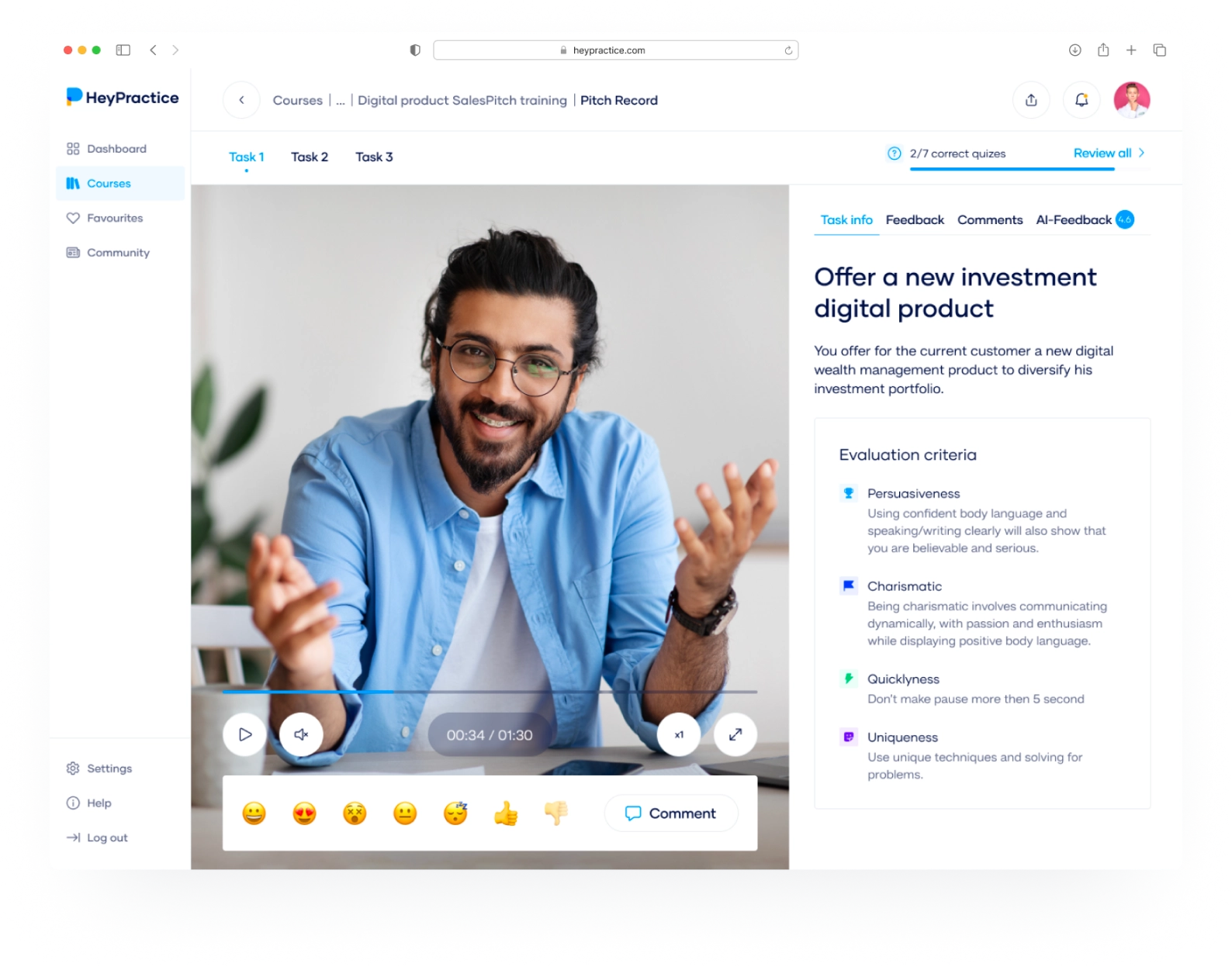
AI Learning Platform for HeyPractice
For HeyPractice (formerly PeterPitch), a German VC-backed EdTech company, Brocoders rebuilt and scaled an interactive AI-powered learning platform for sales and marketing training. Starting from a technical audit of the existing MVP, the team rewrote the backend in Node.js, built a modern React frontend, and integrated AI units for speech-to-text transcription, keyword analysis, and facial emotion recognition so users receive instant automated feedback on recorded pitches. The solution runs on AWS with full CI/CD, supports both standalone and LMS-compatible modes, and complies with strict GDPR and security standards. Delivered in phases through 2022 and still ongoing, the engagement earned a 5.0 Clutch review from CEO David Neuendorf for rapid team setup and high technical quality.
Our approach to this vertical, and to edtech development services generally, comes from having built for four different edtech buyer types, not from a single template.
Honest weakness: we're not an edtech-only shop. If you want a vendor whose entire brand and hiring pipeline is built around education software specifically, ScienceSoft or Cleveroad have narrower, longer-tenured positioning in that exact space than we do.
How to evaluate an edtech app development company, stage by stage
Start here, before you look at a single portfolio: does the vendor understand that an edtech product has three distinct users, learner, educator, and admin, with different permissions, screens, and offline needs from day one? We call this the Three-Role Test. Most edtech app failures trace back to a vendor treating an LMS build like a generic CRUD app instead of a three-role system, and it shows up six months in as a permissions rewrite nobody budgeted for.
- Define the three roles first. Before any wireframe, write down what a learner, an educator, and an admin each need to see and do. If a vendor skips this step, that's the whole evaluation right there.
- Shortlist by verified edtech delivery, not general portfolio. A homepage that lists education among 10 industries isn't the same as a named, referenceable edtech client.
- Request named client references. Ask to speak with someone who actually used the product, not just the person who signed the contract.
- Test offline and accessibility handling explicitly. Don't accept "we can add that later." Ask how it's architected now.
- Confirm ownership and code portability. You should own the repository, the infrastructure, and the ability to walk away.
- Pilot with a paid discovery phase. A short, paid discovery phase (validation, architecture plan, estimate) tells you more about a vendor's judgment than any pitch deck.
- Check AI capability honestly, not as a checkbox. Ask for one specific example of an AI feature they shipped, not a paragraph about AI strategy.
- Confirm the post-launch support model. Who fixes a bug at 11pm the week before a school district's back-to-school launch, and what does that cost?
Criteria that actually matter
Multi-role permissions come first. A learner shouldn't be able to see admin-only grading tools, and an educator shouldn't need IT support to reset a class roster. Get this wrong at the architecture stage and it's expensive to fix later.
Offline mode is treated as a nice-to-have by most agencies quoting edtech builds. In practice, it's often the deciding factor for K-12 and rural or international deployments where connectivity is unreliable. Kedzoh's mobile-first design had to account for this from day one, corporate training happens on shop floors and in warehouses, not just offices.
WCAG accessibility compliance is a real evaluation criterion, not a nice-to-have add-on for public-sector or district buyers. Ask any vendor how they test for it, not just whether they claim to support it.
AI personalization done honestly means asking what the model actually does, recommend the next lesson, flag a struggling student, generate a quiz, rather than accepting "AI-powered" as a feature in itself. An AI-based learning platform we built used AI for realistic practice scenarios in sales and marketing training, a specific mechanism, not a marketing label.
Corporate training platforms and K-12 platforms look similar on a feature list, and fail for opposite reasons. Corporate tools die from low completion rates, nobody is forcing an employee to finish a course on their own time. K-12 tools die from teacher onboarding friction, not student engagement, a teacher who can't figure out how to assign a lesson in under two minutes will quietly stop using the tool. Design for the failure mode that matches your buyer.
How to choose
Tie your decision back to the Three-Role Test and your specific segment.
If you're building for elementary or K-12, prioritize teacher onboarding speed and offline reliability over feature breadth. If you're building corporate training, prioritize completion-rate design, nudges, gamification, manager visibility, over raw content volume. If you're building for higher-ed or HR-adjacent use cases, prioritize the credentialing and verification flow, since that's usually the trust mechanism the whole product depends on. If you're building for early childhood education, prioritize parent-facing trust signals, verified profiles, transparent communication, over admin-side reporting.
Whichever segment you're in, ask each shortlisted vendor to walk through how they'd handle the three roles in your specific product, live, in the call. Vendors who've actually done this before answer in under two minutes. Vendors who haven't will start talking about their process instead.
Cost and pricing
| Tier | Typical range | Represented by |
|---|---|---|
| Entry / seed-stage | $80K-$150K for an MVP | Brocoders, Geniusee |
| Mid-tier | $150K-$300K+ | Cleveroad, Netguru, Miquido, Simform, N-iX |
| Enterprise | Six figures and well beyond, often $300K+ | Vention, ScienceSoft |
These are directional, not quotes. Team composition, region, and scope shift the number fast. Brocoders' own floor is $80K+ for a typical edtech MVP, and every engagement starts with a paid discovery phase rather than a fixed quote off a feature list.
Why trust this page
We selected these 9 companies from public delivery history, verifiable named clients, and an active edtech practice, and we excluded agencies with no public edtech portfolio even where they rank well for this keyword. Brocoders is the publisher of this article and is included at #9 with disclosed self-interest, evaluated against the same criteria as the other 8 entries: verified delivery history, named clients, and honest weaknesses.
Team sizes, pricing signals, and portfolio claims for external companies are drawn from public sources as of July 2026 and may have changed. Verify directly before engaging any vendor. Last updated July 2026.
Sources: company practice pages and public portfolios (Vention, N-iX, ScienceSoft, Simform, Netguru, Miquido, Cleveroad, Geniusee), Brocoders' own case studies knowledge base and published client reviews (99math, Kiddom, Kedzoh, Casers).
Conclusion
None of the nine companies above are wrong choices in the abstract. They're right or wrong for a specific stage, budget, and segment, which is why the Three-Role Test matters more than any single company's logo wall.
If you're an edtech founder past validation and weighing a build partner who's actually shipped in this vertical, that's the conversation we're set up to have. Here in Brocoders, we've built for elementary education, K-12 curriculum, corporate training, and higher-ed talent platforms, and we'll tell you plainly if we're not the right fit for your specific segment.
Frequently Asked Questions
It designs and builds the software behind a learning product, an LMS, a K-12 tool, a corporate training app, or a gamified learning platform, covering everything from the three user roles (learner, educator, admin) to content delivery, progress tracking, and often AI-driven personalization.
A seed-stage MVP typically starts around $80K to $150K with a smaller, senior-heavy team. Mid-tier engagements with established agencies run $150K to $300K, and enterprise-scale builds with compliance and Fortune 500-grade delivery teams often exceed $300K.
An LMS is a pre-built, configurable system designed to manage courses, enrollment, and grading across a range of use cases. A custom edtech app is built around your specific workflow, your specific user roles, and your specific business model, which matters if a generic LMS doesn't fit how your learners or trainers actually work.
A focused MVP with a clear scope typically takes 8 to 16 weeks, depending on how many of the three roles need full functionality at launch and whether offline mode or AI personalization is in scope from day one.
In-house makes sense if you already have a senior engineering team and edtech is your core, ongoing product. Hiring a development company makes sense if you need to move fast, need specialized experience across the three user roles, or don't want to carry a full engineering headcount before you've validated the product.
Ask how they'd handle the three user roles in your specific product, ask for a named reference you can actually call, ask how they test for WCAG accessibility, and ask for one specific example of an AI feature they've shipped, not a paragraph about AI strategy.
It's increasingly standard for personalization, recommendation, and practice-scenario generation, but the honest answer is that "AI-powered" is also overused as a label. Ask what the model specifically does before treating it as a differentiator.