
Why This List Is Different and What Most Rankings Miss
Most "top SaaS development companies" lists rank vendors by logo count, team size, or how many Clutch badges they've collected. This list evaluates companies on criteria that actually predict whether a vendor will ship your product successfully, not just look good in an RFP.
We started with 30+ agencies that appear across multiple independent SaaS development rankings, then applied a five-factor scoring framework against verified Clutch review data collected in March–April 2026. Companies were included only if they met a minimum evidence threshold: a verifiable Clutch or G2 profile, a published SaaS development service page, and at least one documented case study or client portfolio item.
Nine companies passed this threshold. Several well-known names did not make the final list. EPAM Systems, Thoughtworks, and BairesDev were evaluated but excluded because their primary focus is enterprise transformation and staff augmentation at scale, not SaaS product development for startups and growth-stage companies. Ciklum and Andersen were excluded for similar reasons: their positioning and minimum engagement sizes target large enterprise modernization programs, not SaaS MVP builds or product scaling work.
Research Methodology
Data collected: March–April 2026 Companies evaluated initially: 30+ Companies that met inclusion threshold: 9 Total reviews analyzed: 244 verified Clutch reviews across all included vendors Evaluation sources: Clutch (primary), company websites, published case studies, Glassdoor employer ratings
Scoring framework:
| Evaluation factor | Weight | What we measured |
|---|---|---|
| Client review quality | 35% | Review volume, rating consistency, recurring complaint patterns (turnover, budget surprises, timeline slippage, communication gaps) |
| Delivery reliability | 25% | On-time rates mentioned in reviews, post-launch support evidence, incident handling |
| AI engineering maturity | 20% | AI in product features AND in engineering workflow (code generation, test automation, MLOps), not just marketing claims |
| Team stability | 10% | Glassdoor employer ratings, attrition signals, personnel consistency across long engagements |
| Post-launch support | 10% | SLA documentation, on-call commitments, warranty terms, post-mortem evidence |
Inclusion criteria: Minimum 10 Clutch reviews OR documented case studies from named clients; active SaaS development service page; verifiable headquarters and team size.
Editorial note: "Best for" assessments and overall editorial judgments in each company entry are our interpretations based on review patterns and service positioning. They are not verified by the companies listed.
Quick Comparison: 9 SaaS Development Companies
| Company | Clutch Rating | Reviews | Hourly Rate | Min. Project | Founded | Best For |
|---|---|---|---|---|---|---|
| Brocoders | 5.0 | 38 | $50–$99/hr | $10K+ | 2014 | Startups and mid-market SaaS, AI-integrated products |
| Netguru | 4.8 | 74 | $50–$99/hr | $50K+ | 2008 | Design-led MVPs, scale-ups with UX requirements |
| Upsilon | 4.8 | 15+ | $35–$55/hr | $20K+ | 2015 | Rapid MVP development, early-stage startups |
| Intellectsoft | 4.9 | 43 | $50–$99/hr | $50K+ | 2007 | Regulated industries: fintech, healthcare, legal |
| ScienceSoft | 4.8 | 41 | $25–$49/hr | $5K+ | 1989 | Budget-accessible enterprise SaaS, diverse verticals |
| Railsware | 4.9 | 18 | $100–$149/hr | $50K+ | 2010 | Quality-first B2B SaaS, Ruby on Rails |
| Simform | 4.9 | 30+ | $25–$49/hr | $25K+ | 2009 | Cloud-native DevOps, AWS-heavy architectures |
| Intellias | 4.9 | 30 | $50–$99/hr | $50K+ | 2002 | Large-scale enterprise, microservices, cloud migration |
| ELEKS | 4.9 | 20+ | $50–$99/hr | $50K+ | 1991 | Data-driven SaaS, ML and BI integration |
📥 Free download: SaaS Vendor Evaluation Scorecard Use our weighted RFP scorecard to evaluate shortlisted agencies against the same 5-factor framework used in this article. Includes: discovery sprint checklist, red flag question bank, AI maturity assessment rubric, and SLA negotiation guide. Download the scorecard →
1. Brocoders: Agile AI-Driven SaaS Development for Rapid MVP and Scale
| Clutch Rating | Hourly Rate | Min. Project | Team Size | Founded | Headquarters |
|---|---|---|---|---|---|
| ⭐ 5.0 / 5 (38 reviews) | $50–$99/hr | $10,000+ | 50–249 | 2014 | Tallinn, Estonia |
Sources: Clutch profile | brocoders.com | Case studies
Brocoders is an Estonia-based software development agency specializing in SaaS product development, MVP delivery, and AI integration. The team embeds product strategists with engineers to compress discovery-to-launch cycles and align scope to traction goals. Core technology stack includes React, Node.js, and Python/Django on AWS/GCP with PostgreSQL, structured for cloud cost efficiency, resilience, and data privacy compliance. AI integration covers both product-level features (recommendations, predictions, automation) and engineering-level workflow acceleration (code generation, test creation, infrastructure-as-code).
What 38 Clutch reviews show: Brocoders holds a 5.0 rating across 38 reviews, the highest review score in this dataset. Across review patterns, clients most frequently mention on-time delivery, fast onboarding, and proactive handling of time-zone differences. Communication practices described across multiple reviews include weekly demos, Jira and Slack-based workflows, and early identification of scope risks before they become delays. We found no reviews citing budget surprises, personnel turnover, or timeline slippage in the dataset collected for this analysis.
- HeyPractice (ex PeterPitch) (Germany): AI-based Interactive Learning Platform for Sales and Marketing — re-build MVP of their interactive learning platform.
With Brocoders, we were able to set up a highly skilled IT team in the shortest amount of time. — David Neuendorf, CEO, HeyPractice.com
Feedback Summary:
The app has resulted in increased end-customer satisfaction, meeting the client’s expectations. Brocoders communicates effectively, establishing a seamless workflow. The team provides high-quality work in a timely manner. Their organizational skills and positive attitude are hallmarks of their work.
Verified AI evidence: Brocoders publicly documents AI-assisted development practices, including use of GitHub Copilot and custom LLM tooling, on their engineering blog. Published case studies include AI-based account automation software and an AI-powered communication agent (Bridge Assistant), confirming AI integration in shipped products rather than just marketing positioning.
Published case studies: Lake.com vacation platform rebuild; Telehealth Platform delivered in 6 weeks; AI-based Account Automation Software; Event Production Solution for Backbone International; Route Management Software; Bridge Assistant AI communication agent.
Ed-Tech SaaS App Development
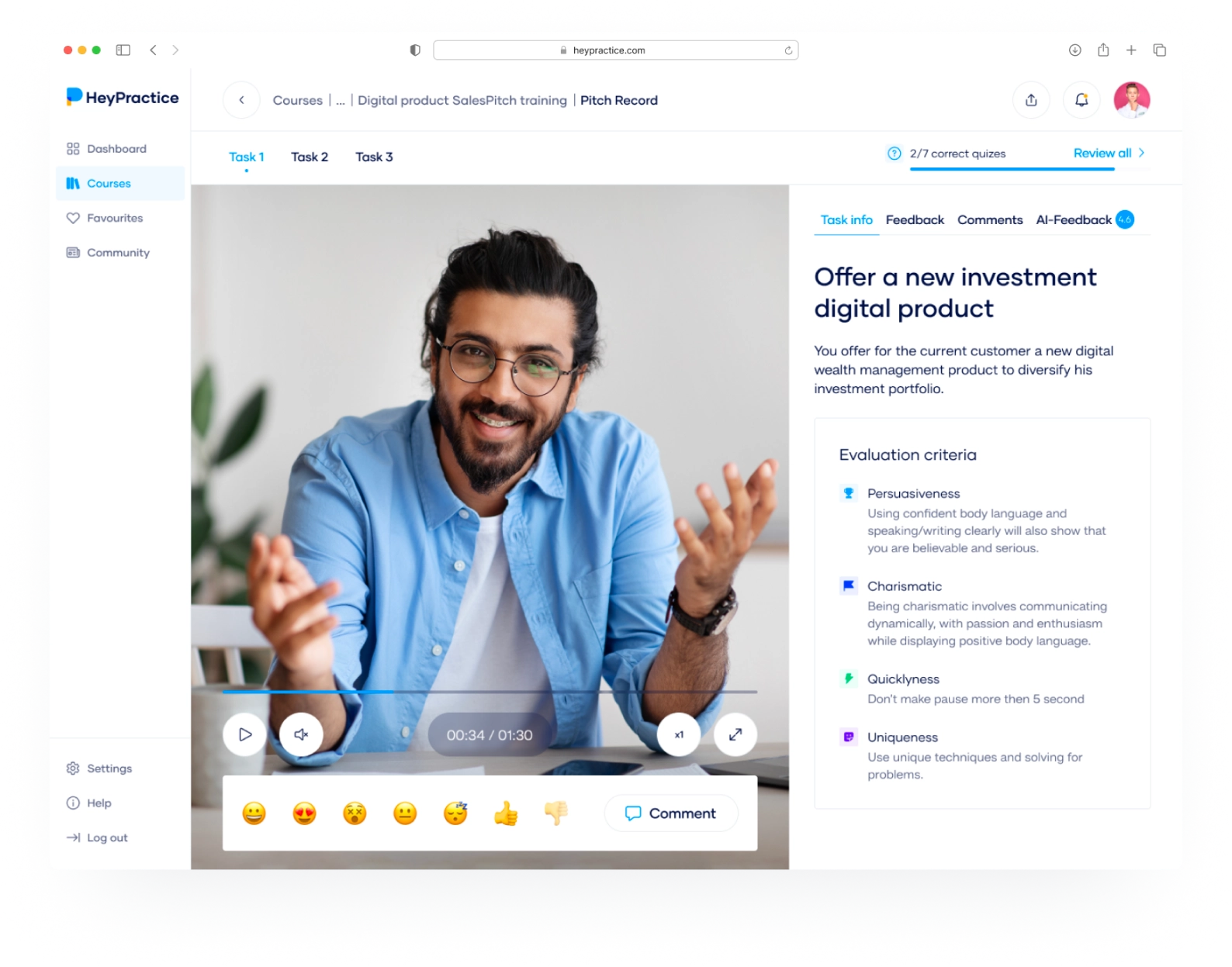
Brocoders partnered with a fast-growing EdTech SaaS company to build a modern web application from scratch. The team delivered both frontend and backend solutions, enabling the client to launch a scalable platform that significantly boosted end-user satisfaction and streamlined internal operations. Through clear communication, agile practices, and strong technical execution, the project maintained perfect alignment with deadlines and evolving requirements.
Limitations: At 50–249 employees, very large concurrent engagements may require careful resourcing planning. International brand recognition is lower than Netguru or ScienceSoft. The public portfolio skews toward $10K–$200K engagement sizes rather than large-scale enterprise builds.
Best for: Startups and mid-market companies in SaaS, fintech, healthtech, logistics, and event tech where speed-to-market and AI integration are priorities. Typical engagement range: $10K–$200K.
2. Netguru: Design-First Approach to Investor-Ready SaaS MVPs
| Clutch Rating | Hourly Rate | Min. Project | Team Size | Founded | Headquarters |
|---|---|---|---|---|---|
| ⭐ 4.8 / 5 (74 reviews) | $50–$99/hr | $50,000+ | 250–999 | 2008 | Poznań, Poland |
Sources: Clutch profile | netguru.com | Case studies
Netguru is recognized for design-led MVPs that help startups and scale-ups validate quickly and present investor-ready products. Core stack centers on React, React Native, Ruby on Rails, Node.js, and AWS. Notable published clients include Volkswagen, Philips, and Solarisbank.
What 74 Clutch reviews show: With 74 reviews, Netguru has the largest review dataset in this comparison, which itself signals process consistency across a wide client base. Across review patterns, clients most frequently describe organized, deadline-driven delivery with strong attention to detail and proactive project management via Slack, Jira, and Figma. Reviewers commonly describe the Netguru team as operating as an extension of in-house staff rather than as an external contractor.
- SaaS solutions provider (USA): Web App Redesign for EdTech SaaS Solutions Provider — required a redesign of its UI/UX and a revamp of its technology stack.
The consistent and very high quality of professionalism displayed by all levels of the Netguru team. — Anonymous, CTO, TransACT Communications
Web App Redesign for EdTech SaaS Solutions Provider
Netguru partnered with a US-based EdTech SaaS provider to modernize a 20-year-old educational platform. The team delivered a full UI/UX redesign and tech stack migration from legacy Microsoft solutions to Node.js + Vue, while implementing flexible reporting and ensuring WCAG 2.1 AA accessibility. The result: a polished, responsive MVP delivered in just 6 months that helped the client secure a major state contract.
Limitations: Several reviews (approximately 8–10% of the dataset) mention that initial budget expectations were larger than originally scoped, or that cost transparency could have been established earlier in the engagement. A smaller number mention personnel changes over longer projects. A majority of reviewers do not share concrete performance metrics in their reviews, which limits results-based evaluation from public data alone.
Best for: Mid-to-large enterprises and scale-ups in fintech, edtech, healthcare, and retail requiring polished, UX-first products and investor-presentation quality. Typical engagement size: $50K–$999K.
Editorial note: Verify AI implementation in both product and engineering workflows before signing, as public case studies emphasize design and delivery speed rather than AI-native development practices.
3. Upsilon: Digital Product Studio for Startup SaaS MVPs
| Clutch Rating | Hourly Rate | Min. Project | Team Size | Founded | Headquarters |
|---|---|---|---|---|---|
| ⭐ 4.8 / 5 (15+ reviews) | $35–$55/hr | $20,000+ | 10–49 | 2015 | US-headquartered, distributed delivery |
Sources: Clutch profile | upsilonit.com | Portfolio
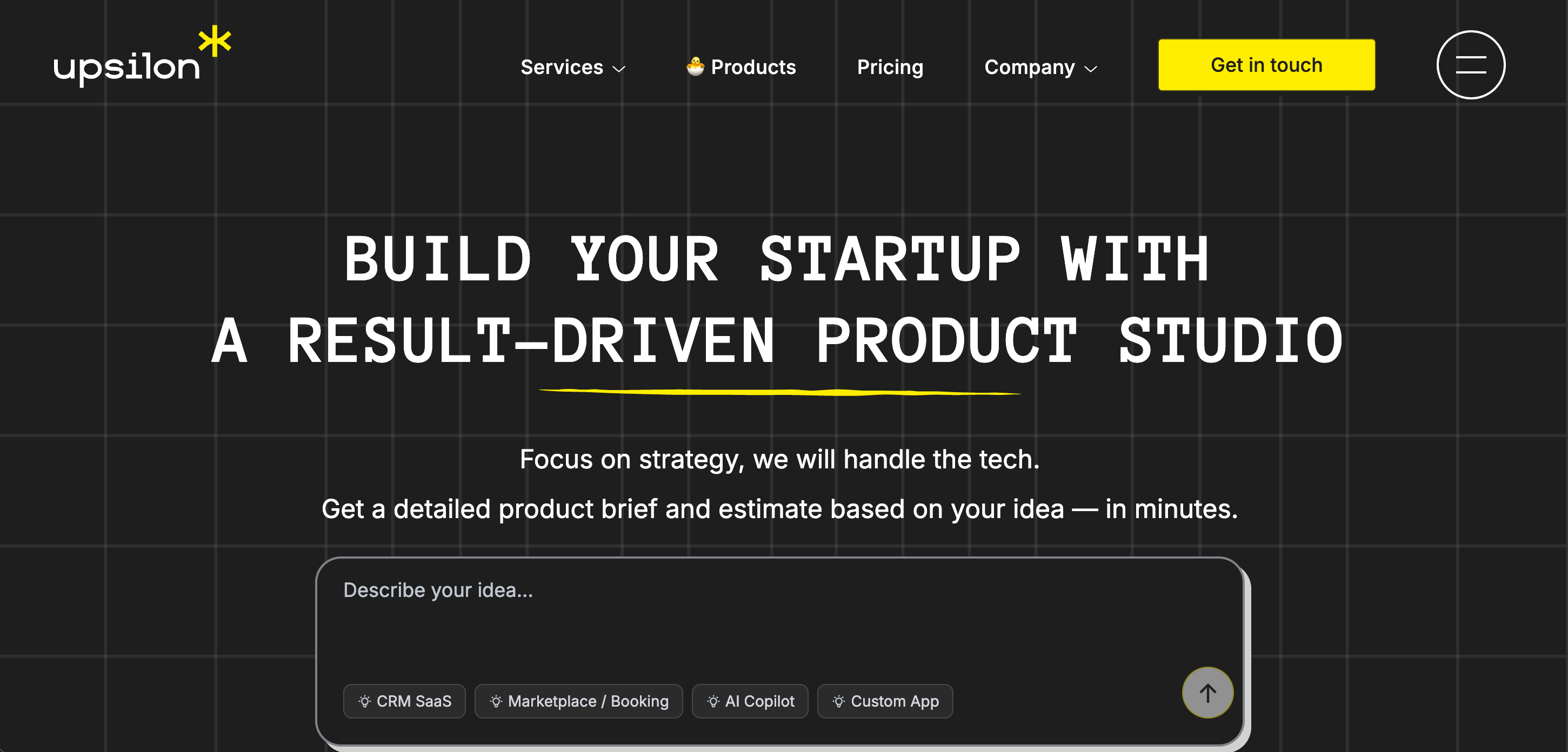
Upsilon helps startups and growth-stage companies accelerate SaaS product launches through rapid MVP development. The team positions around 10+ years of experience and 25+ documented product launches. Delivery model focuses on scalable, cloud-based SaaS MVPs with core functionality ready for real-world validation in approximately three months.
What Clutch reviews show: Clients across multiple reviews describe Upsilon as a reliable technology partner that integrates into existing workflows and maintains consistent communication throughout the engagement. Recurring themes include professionalism, collaborative approach, and ability to provide technical guidance beyond the original brief.
AI-Powered Proposal Building SaaS Platform
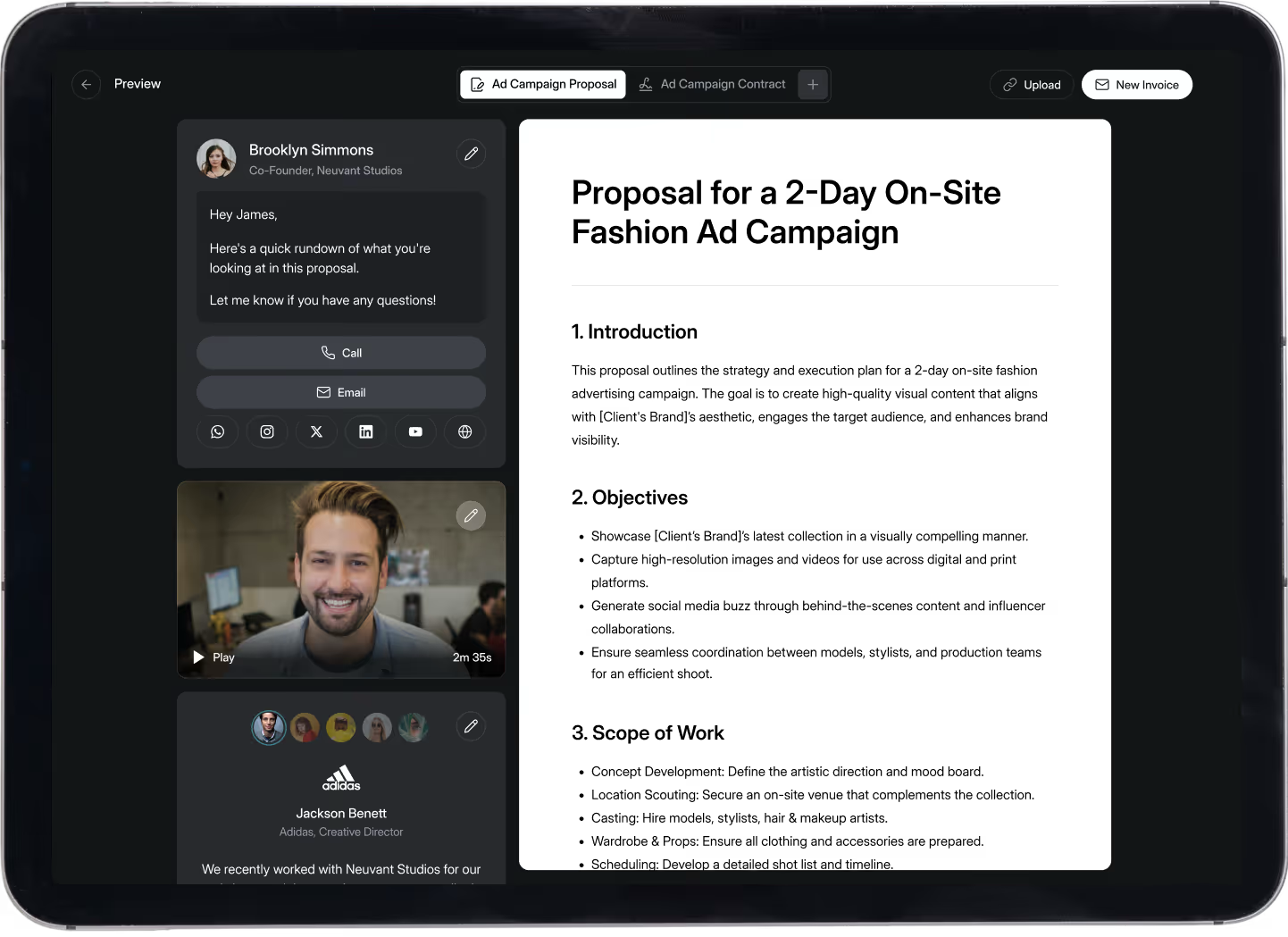
An AI-powered proposal building platform that helps freelancers and small teams create, customize, price, and send professional B2B proposals in minutes. The solution features a fine-tuned AI model, seamless document-to-contract flow, embedded videos/testimonials, and real-time collaboration — dramatically reducing proposal preparation time while keeping every output on-brand.
Limitations: Some client reviews note less established processes for enterprise-grade compliance, security documentation, and governance. Upsilon's team size (10–49) limits ability to rapidly scale for large concurrent or urgent needs.
Best for: Early-stage startups and scaling SaaS companies that need rapid MVP development and iterative product delivery. Typical engagement range: $20K–$150K.
4. Intellectsoft: Complex SaaS Platforms for Regulated Industries
| Clutch Rating | Hourly Rate | Min. Project | Team Size | Founded | Headquarters |
|---|---|---|---|---|---|
| ⭐ 4.9 / 5 (43 reviews) | $50–$99/hr | $50,000+ | 50–249 | 2007 | US-headquartered, distributed delivery |
Sources: Clutch profile | intellectsoft.net | Case studies
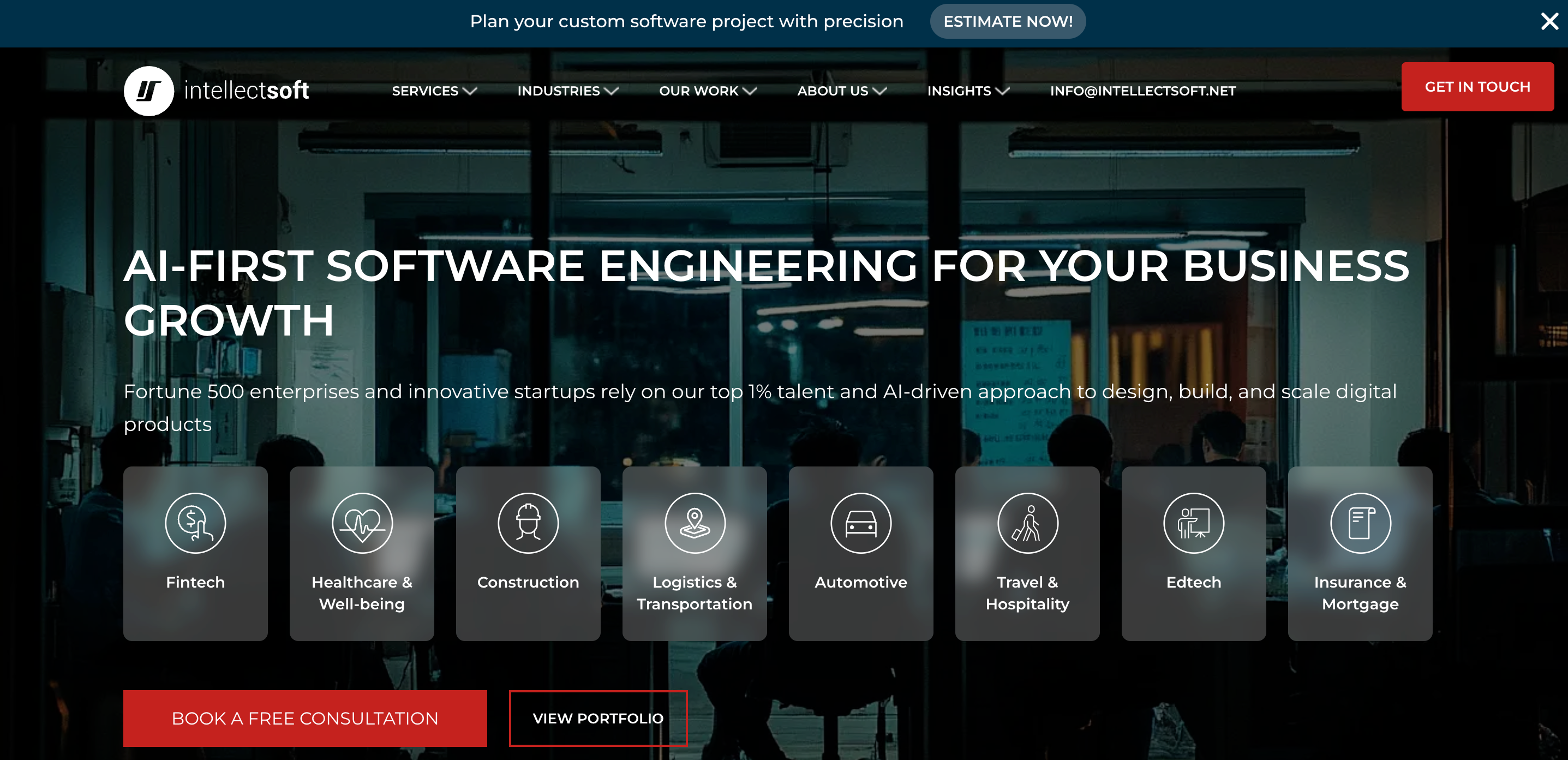
Intellectsoft serves complex, regulated SaaS initiatives across fintech, healthcare, and compliance-intensive domains. Core technology stack includes React, Node.js, .NET, AWS, and blockchain, enabling auditable systems with documented compliance controls. Published clients include Eurostar, Harley-Davidson, Jaguar Land Rover, Ernst & Young, and Guinness.
What 43 Clutch reviews show: Clients across the review dataset most frequently describe the Intellectsoft team as functionally integrated with the client's internal team, referencing seamless onboarding and adapted workflows. Multiple reviews highlight fast MVP delivery timelines, strong test coverage, and consistent release adherence. The team receives positive mention for adapting to changing scope requirements and time-zone differences.
- Deltanger (Norway): Web App Development for Events Registration Portal — build and test the new features for a B2B communications platform.
They deliver very high-quality results. — Frode Lervik, CEO, Deltager
Verified compliance evidence: Intellectsoft's service page documents SOC 2, ISO 27001, and GDPR compliance practices. The $50K minimum and premium rate band reflect the overhead of maintaining documented compliance controls rather than delivery speed alone.
Events Registration Tool
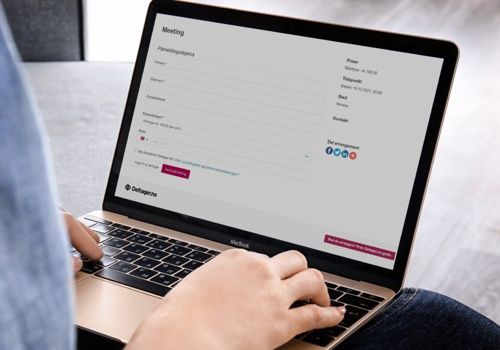
Intellectsoft revitalized Deltager AS's event registration portal by migrating it from legacy .NET to modern Angular. The enhanced platform delivers streamlined event setup, seamless registrations and payments, improved UX, and easier participant feedback management for Nordic event organizers.
Limitations: Multiple reviews cite premium pricing relative to other vendors, though most reviewers acknowledge the quality offsets the cost. One review in the dataset mentions QA processes taking longer than expected on a multi-phase platform build. The $50K minimum makes Intellectsoft inaccessible for pre-seed or bootstrapped founders.
Best for: Enterprises and funded scale-ups in regulated industries (fintech, healthcare, legal, government) where documented compliance controls and audit-readiness are requirements. Typical engagement range: $50K–$500K+.
5. ScienceSoft: Large-Scale SaaS Solutions for Regulated Industries
| Clutch Rating | Hourly Rate | Min. Project | Team Size | Founded | Headquarters |
|---|---|---|---|---|---|
| ⭐ 4.8 / 5 (41 reviews) | $25–$49/hr | $5,000+ | 250–999 | 1989 | McKinney, TX, USA |
Sources: Clutch profile | scnsoft.com | Case studies
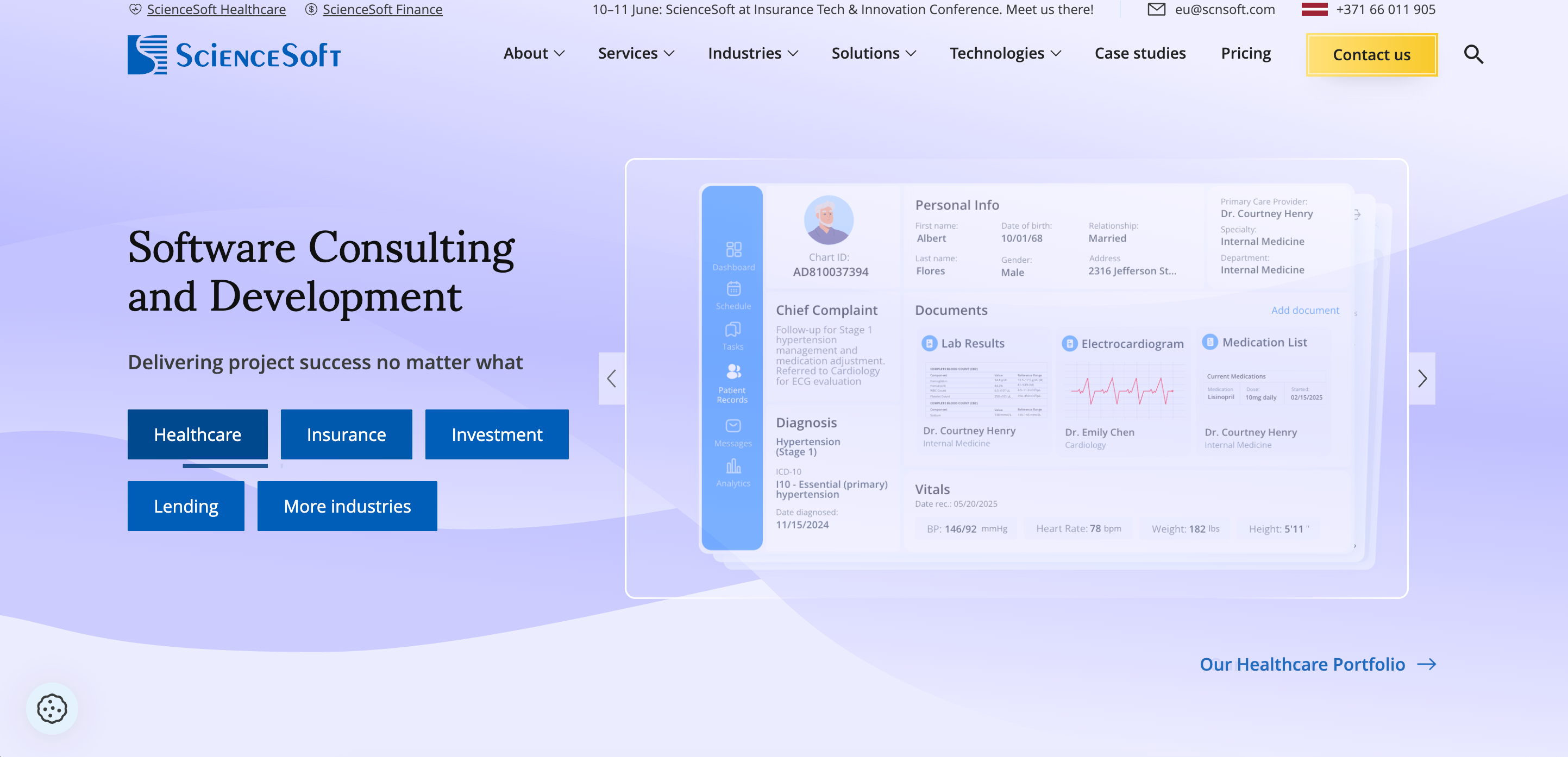
ScienceSoft brings over three decades of delivery maturity for high-scale, long-lived SaaS platforms. Core technology strengths include .NET, Java, Salesforce, React, and Azure/AWS with documented QA and maintenance practices. Published clients include T-Mobile, BBC, and Deloitte-acknowledged banking applications. The $5,000 minimum project is the lowest entry threshold among enterprise-tier vendors in this comparison.
What 41 Clutch reviews show: Clients across the review dataset cite a wide capability range covering cybersecurity, mobile, web, SharePoint, ServiceNow, Salesforce, and healthcare IT. Response time is the most frequently mentioned positive signal: reviews across multiple verticals describe 24-hour or faster communication. The review dataset spans a notably diverse client base, suggesting ScienceSoft works effectively across verticals rather than only in one domain.
- GreenLight Fitness (USA): Customer Support for SaaS Platform — customer support for a SaaS platform that offered youth physical fitness assessments.
I was impressed with their great team leadership; they were very genuine. — Breanna Palmeiro, VP Operations, GreenLight Fitness
Loan Management System
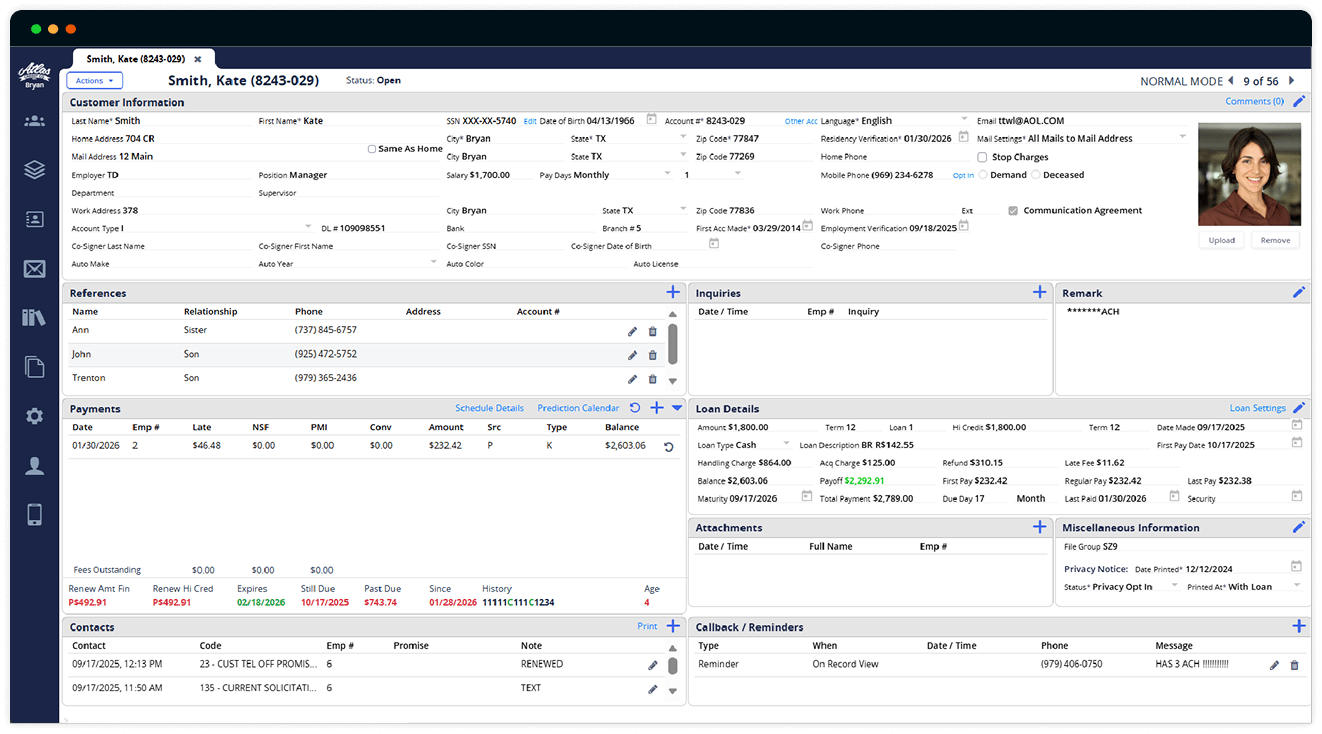
ScienceSoft developed a custom loan management system for Atlas Credit, a Texas-based consumer lender. The solution fully automated lending operations — from application processing and underwriting to servicing, collections, and compliance reporting — and was recognized as Best-in-Class Loan Management System at the Global FinTech Innovation Awards 2025.
Limitations: One review in the dataset notes that penetration testing was less thorough than expected. A ServiceNow-focused review mentions variability in junior developer seniority across team members. Clients with highly specialized needs in a narrow domain may find more focused vendors that concentrate exclusively on that vertical.
Best for: Healthcare, fintech, government, telecom, education, and retail organizations that need broad capability coverage and value budget accessibility. ScienceSoft's $5K+ minimum is a genuine differentiator at this quality tier.
6. Railsware: Engineering-Quality B2B SaaS on Ruby on Rails
| Clutch Rating | Hourly Rate | Min. Project | Team Size | Founded | Headquarters |
|---|---|---|---|---|---|
| ⭐ 4.9 / 5 (18 reviews) | $100–$149/hr | $50,000+ | 50–249 | 2010 | Distributed, product-focused culture |
Sources: Clutch profile | railsware.com | Portfolio
Railsware specializes in fast, capital-efficient SaaS products built on Ruby on Rails, with a selective engagement model and published work for GitLab, Calendly, Google, SendGrid, and Buffer. Their practice documentation explicitly covers agile delivery discipline, code review processes, and engineering ownership culture.
What 18 Clutch reviews show: With 18 reviews and a 4.9 rating, Railsware's review dataset is smaller than others in this comparison, which reflects their selective intake rather than low demand. Across reviews, clients most frequently describe code quality as third-party validated and well-documented. Multiple reviewers note the team challenges assumptions and takes genuine product ownership beyond the defined scope. Several reviews reference agile process discipline as a standout characteristic.
- Enterprise SaaS Company (USA): Software & Mobile App Dev for Enterprise SaaS Co. — full-stack development for a web and mobile app.
We initially engaged them to support our product’s functionalities, but they have become part of our core team. — Anonymous, CEO, Enterprise SaaS Company
Scalable Platform for Calendly
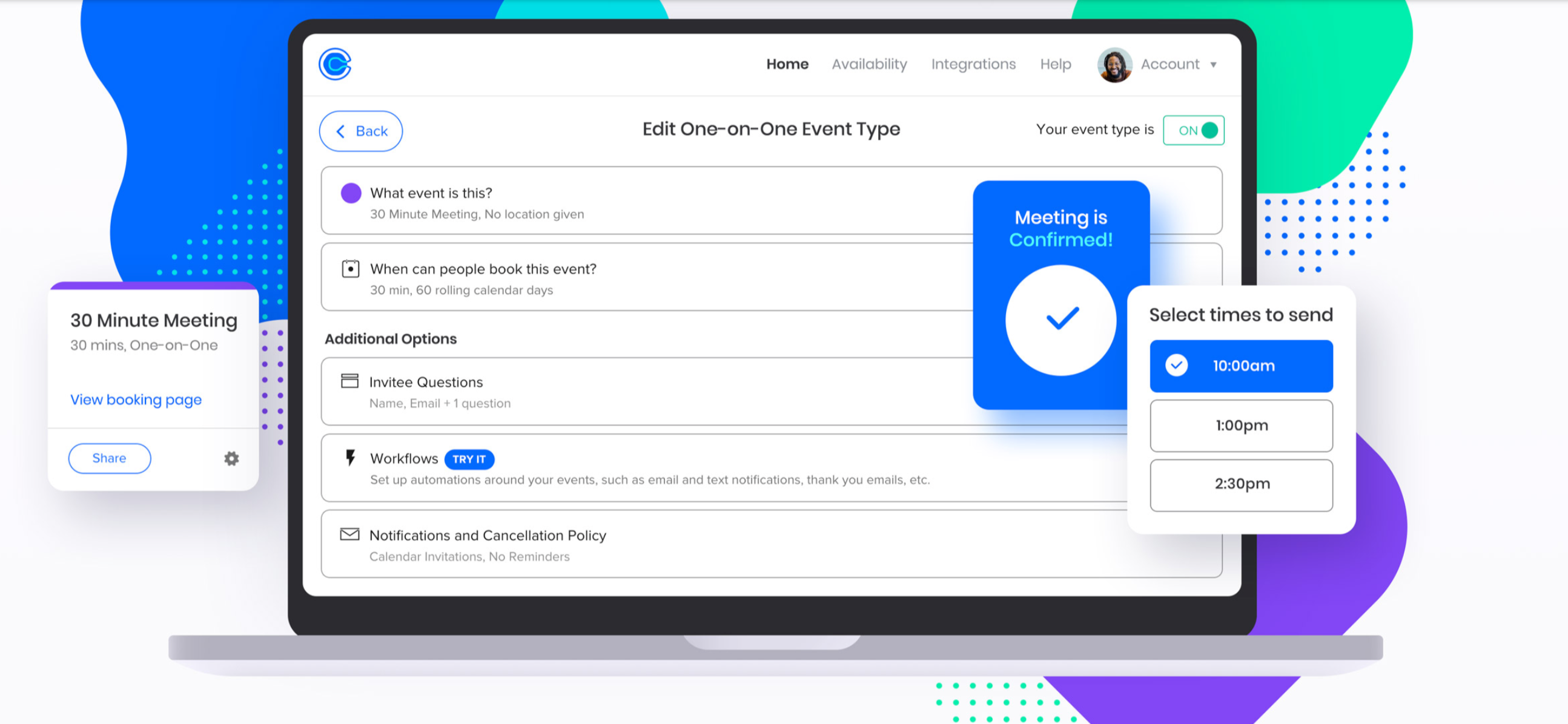
Railsware has been supporting Calendly from its early ideation through its growth into a multi-billion-dollar scheduling platform. Starting with a focused Inception (BRIDGeS) session to validate and sharpen the product vision, the team delivered the initial working version and continued to scale the product through iterative development, frontend and backend enhancements, integrations, and ongoing support.
Limitations: At $100–$149/hr, Railsware is the most expensive vendor in this comparison, limiting accessibility for cost-sensitive engagements. The smaller review dataset (18 reviews) provides less statistical confidence than vendors with 40+ reviews. Portfolio and technology focus is concentrated in SaaS/B2B and Rails/React, which limits fit for hardware-adjacent, mobile-first, or non-web contexts.
Best for: B2B SaaS companies and tech startups where engineering quality and codebase maintainability are prioritized over cost efficiency. Typical engagement range: $50K–$999K.
Editorial note: Railsware's selective approach to clients means they will decline engagements they consider a poor fit. Budget discovery conversations may be shorter than with larger agencies.
7. Simform: Cloud-Native Engineering and DevOps for Scalable SaaS
| Clutch Rating | Hourly Rate | Min. Project | Team Size | Founded | Headquarters |
|---|---|---|---|---|---|
| ⭐ 4.9 / 5 (30+ reviews) | $25–$49/hr | $25,000+ | 1,000–9,999 | 2009 | Ahmedabad, India and San Jose, CA, USA |
Sources: Clutch profile | simform.com | Case studies
Simform positions as a US-based engineering partner with AWS Partnership status, strong cloud-native expertise, and DevOps automation for scalable SaaS platforms. Core published strengths include resilient cloud architectures, infrastructure-as-code (IaC), and CI/CD pipeline automation that shorten release cycles while maintaining uptime targets. Team size of 1,000+ employees enables rapid scaling for large or urgent engagements.
What Clutch reviews show: Clients across the review dataset most frequently describe Simform as delivering strong technical depth in AWS architectures and DevOps toolchain configuration. Multiple reviews reference the ability to scale team size on short notice as a practical differentiator. Communication practices cited include dedicated project managers and structured sprint cadences.
- Enterprise SaaS Company (USA): SaaS Platform Design & Development for Startup — designed a SaaS platform for a startup.
Everything has been pretty solid. — Chris Branham, Product Director, SmartBran LLC
Resident experience platform for Ed-Tech SaaS Company
Simform partnered with an ed-tech SaaS provider to build the front- and backend of their core application from scratch. The team delivered a well-organized, high-quality solution with strong communication and consistent adherence to deadlines, resulting in increased end-customer satisfaction and a seamless workflow.
Verified infrastructure evidence: Simform holds AWS Advanced Consulting Partner status, which requires documented delivery competencies and client satisfaction benchmarks across AWS infrastructure engagements. Published case studies document cloud migration projects, microservices implementations, and CI/CD pipeline builds for named clients.
Limitations: Simform's primary public positioning is infrastructure and DevOps rather than product development or UI-heavy SaaS. For AI-enabled products specifically, confirm whether their practice covers MLOps (model registries, feature stores, automated rollbacks) rather than infrastructure automation alone. Ask for specific examples of AI-driven automation before scoping.
Best for: SaaS companies scaling cloud infrastructure, running complex DevOps transformations, or requiring AWS-heavy architectures with large team capacity. Typical engagement range: $25K–$500K+.
8. Intellias: High-Load Microservices and Cloud Migrations for Enterprise SaaS
| Clutch Rating | Hourly Rate | Min. Project | Team Size | Founded | Headquarters |
|---|---|---|---|---|---|
| ⭐ 4.9 / 5 (30 reviews) | $50–$99/hr | $50,000+ | 1,000–9,999 | 2002 | Lviv, Ukraine (global offices in Europe and USA) |
Sources: Clutch profile | intellias.com | Case studies
Intellias focuses on high-load microservices architecture and complex cloud migrations for enterprise SaaS at scale. Published expertise spans AWS/GCP architectures, data platforms, and AI/ML integrations. Notable published clients include Philip Morris, Omio, PTV Group, and EveryMatrix. Team size of 1,000–9,999 enables Intellias to staff multiple scrum teams simultaneously, making them a practical choice for large concurrent workstreams.
What 30 Clutch reviews show: The review dataset for Intellias most frequently cites the team's ability to scale staffing quickly and cover specialized technical domains. Multiple reviews describe consistent delivery quality across long-term engagements. Specific operational mentions across reviews include near-zero production incidents, structured Jira-based project management, and pragmatic problem-solving under evolving requirements.
- Pointly GmbH (Germany): Custom Software Dev for SaaS Company — delivering a scalable SaaS platform.
Intellias is the perfect partner when it comes to software development projects. — Chris Branham, Product Director, SmartBran LLC
High-Load Platform Modernization for Global Enterprise
Intellias partnered with a leading global enterprise to modernize its core high-load systems through microservices architecture and large-scale cloud migration. The engagement focused on building resilient, scalable platforms on AWS and GCP, integrating advanced data platforms, and embedding AI/ML capabilities to support complex business operations across multiple regions. This delivered significantly improved system reliability with near-zero production incidents, faster time-to-market for new features, and seamless handling of growing data volumes and concurrent workloads.
Limitations: One review in the dataset notes that deliverables were not consistently on time for operational (non-project) engagements, though the reviewer cited cost savings as an offsetting factor. At 1,000–9,999 employees, the engagement structure can feel less personalized for smaller teams or individual product builds. With projects beginning at $50K and many in the $200K–$9.9M range, Intellias targets mid-to-large organizations rather than early-stage products.
Best for: Enterprise and mid-market clients in automotive, fintech, telecom, manufacturing, and travel tech needing long-term platform development, staff augmentation, or complex cloud migration. Typical engagement range: $50K–several million.
9. ELEKS: Data-Driven SaaS with Machine Learning and BI Integration
| Clutch Rating | Hourly Rate | Min. Project | Team Size | Founded | Headquarters |
|---|---|---|---|---|---|
| ⭐ 4.9 / 5 (20+ reviews) | $50–$99/hr | $50,000+ | 1,000–9,999 | 1991 | Lviv, Ukraine (offices in UK, USA, Germany, Poland) |
Sources: Clutch profile | eleks.com | Case studies
ELEKS brings deep data analytics and machine learning capabilities to SaaS platforms, with 2,100+ professionals and a delivery history dating to 1991. Published specializations include ML model deployment, business intelligence integration, and predictive analytics for fintech, logistics, and enterprise software verticals. ELEKS documents AI/ML as a core practice area rather than an add-on service, with dedicated ML engineering teams.
What Clutch reviews show: Clients across the review dataset most frequently describe ELEKS as technically strong in complex data and analytics workstreams. Multiple reviews reference the team's ability to deliver on ML-heavy requirements where other vendors declined. Published case studies document measurable business outcomes including conversion uplift and operational efficiency gains tied to deployed ML features.
- SKYNAV (USA): Security Audit & Software Development for SaaS Platform — a full audit and security review of a SaaS platform.
Their level of communication surpassed all our expectations. — Ty Downing, COO, SKYNAV
Advanced SaaS solution for Xyleme

ELEKS modernized Xyleme’s content management platform with scalable microservices, improved CI/CD pipelines, and implemented analytics-driven search, reducing content delivery times and increasing platform stability. The engagement combined full-stack development, DevOps, and data engineering to support Xyleme’s enterprise customers and accelerate release cycles.
Verified AI/ML evidence: ELEKS maintains a published AI and ML service page with documented MLOps practices, including model governance and performance monitoring. Engineering blog posts and case studies reference specific ML frameworks (TensorFlow, PyTorch, Spark MLlib) used in client projects.
Limitations: For teams evaluating ELEKS for standard SaaS product development without significant ML or BI requirements, their positioning and minimum engagement size may not match the scope. Ask for case studies with measurable performance uplift (conversion lift, churn reduction) tied to specific deployed ML features before scoping. Confirm how ELEKS uses AI-native development tools for engineering acceleration beyond the product-level ML work.
Best for: SaaS products where ML, BI, or predictive analytics are core to the value proposition, rather than optional features. Strongest fit in fintech, logistics, and enterprise data platforms. Typical engagement range: $50K–$1M+.
10. Appkodes: Modular, AI-Ready SaaS Product Engineering and Consulting
| Rating | Hourly Rate | Min. Project | Team Size | Founded |
|---|---|---|---|---|
| ⭐ 2.5 / 5 (2 reviews) | $25–$49 / hr | $1,000+ | 50–249 | 2008, India-based |
Appkodes focuses on modular, component-based SaaS builds and flexible consulting for rapid customization, with 2,000+ projects across 280+ clients. They emphasize platform engineering and reusability to reduce time-to-value.
What Clutch reviewers consistently say: One reviewer notes the existing dashboard and scripts are well-structured for clone-based products. The positive reviewer found updates consistent and the PM helpful. The $25–$49/hr rate and $1K minimum are the lowest on this list.
Honest weaknesses — and a red flag: A CEO reported receiving outdated code that wasn't fit for a live market, calling the engagement a "waste of time and money." With only 2 reviews and a 2.5 rating, there is insufficient evidence to recommend Appkodes for serious SaaS development work. All portfolio items are explicit clones of existing platforms (Airbnb, Tinder, Tophatter, Periscope), suggesting limited custom development capability.
Best for: Solo entrepreneurs building clone-based platforms on minimal budgets. Not recommended for B2B SaaS or enterprise-grade development.
Key Takeaway: Verify documentation, upgrade paths, and extension points to avoid vendor lock-in. Appkodes is included in this list as a cautionary contrast — low price alone is not a selection criterion.
11. Scalable Systems Inc.: DevOps-First Automation and High-Availability Architectures
Scalable Systems Inc. is a Denver-based specialist in DevOps automation and high-availability cloud architectures. Founded in 2014 with a 50–249 team and an average ~4.9 Clutch rating, they design always-on SaaS platforms using CI/CD, IaC, and cloud observability.
Ask about AI in automation pipelines — policy-as-code, auto-remediation, and test impact analysis — as these reduce toil and speed releases. For mission-critical SaaS, require SLOs, chaos testing, and multi-AZ rollouts. Confirm incident runbooks, on-call SLAs, and post-mortem discipline to ensure reliability as you scale from MVP to thousands of tenants.
Key Takeaway: Confirm incident runbooks, on-call SLAs, and post-mortem discipline for mission-critical reliability.
How to Evaluate a SaaS Development Company at Every Stage — Not Just Before You Sign
Most buyers do their vendor analysis once: they read case studies, compare rates, and pick the agency with the best pitch deck. Then the problems start — slow responses, vague estimates, no technical input until week six, invoices that don't match what was delivered.
The truth is that every stage of working with a development partner is a signal. Here's what to watch for — and what good looks like — from first contact through to bug fixing.
Stage 1: Sending a Request
What most buyers do: Send a detailed RFP and wait. Or worse — book a call with no context and expect the agency to lead.
What actually works: A call request with a short, structured agenda attached. You don't need a full brief yet — that's what discovery is for. But you do need to give the vendor enough to show up prepared. A good pre-call message includes: one paragraph on what you're building, your rough timeline, a budget range, and two or three specific questions you want answered on the call. You can also request NDA on this stage.
What to analyze at this stage:
- Time to first response. A vendor who takes four days to reply to an inbound lead will take four days to reply to a production incident. Response time to a sales inquiry is a proxy for operational responsiveness. Good benchmark: under 24 hours on business days, with a proposed call time rather than a generic "let's connect."
- Quality of pre-call questions. Did they ask anything back — about your stack, your constraints, your existing team? Or did they just confirm the calendar slot? A vendor who asks clarifying questions before the call is a vendor who will ask clarifying questions before building the wrong feature.
- Who responds. A sales coordinator booking a call is fine. A founder, technical lead, or account manager who adds a sentence of genuine context is better.
Red flags: Auto-replies only. No proposed agenda. A generic capabilities deck sent as the only response.
Stage 2: Intro Call
What most buyers do: Listen to a pitch, look at logos, ask about tech stack, and schedule a follow-up.
What actually works: Treat the intro call as a diagnostic. You're not evaluating their portfolio — you've already done that. You're evaluating how they think. The best vendors don't wait to be asked good questions. They ask them.
What to analyze at this stage:
- Do they ask about business goals, not just features? A vendor who opens with "what do you want to build?" is transactional. A vendor who opens with "what does success look like in 12 months?" is a partner. The difference shows up in scope decisions, tradeoff conversations, and what gets prioritized when time runs short.
- Do they challenge scope or suggest cuts? A vendor who agrees with everything you've described in a 30-minute call either hasn't thought about it deeply or is afraid to lose the deal. The best technical partners push back — not to be difficult, but because they've seen similar projects and know where scope creep hides.
- Do they reference similar past projects unprompted? Relevant pattern recognition — "we built something like this for a client in logistics, here's what surprised us" — is worth more than a case study PDF. It signals they're already mapping your problem to prior experience rather than treating you as a blank slate.
- Is there a technical lead in the room, not just a sales rep? A CTO, senior engineer, or solutions architect on the intro call is a meaningful signal. It means the vendor values technical fit over deal velocity, and it gives you a real conversation rather than a presentation.
- Proactiveness beyond the brief. The clearest signal of a great vendor is when they identify something you didn't ask about. During Brocoders' intro call with Lake.com, founder Andrey suggested speaking directly with the API provider before scoping began — to validate feasibility before a single hour was estimated. That single move compressed weeks of potential rework into a pre-scope conversation. Read the full Lake.com case study →
Red flags: They talk for 45 of 60 minutes. No technical person present. They've never heard of your industry. They quote a price range before asking a single question about your constraints.
What most buyers do: Skip it, or accept a free "discovery call" as a substitute. Then wonder why the estimate doesn't match reality.
What actually works: A paid, timeboxed discovery sprint — typically 2–4 weeks — with explicit deliverables defined upfront. Paying for discovery is not a cost; it's the cheapest risk mitigation available. A $5,000–$15,000 discovery sprint that surfaces a wrong assumption saves you from a $150,000 rebuild six months later.
What to analyze at this stage:
- Are deliverables defined before discovery starts? You should know exactly what you'll receive at the end: system architecture diagram, user story map, technical risk register, third-party integration audit, team composition recommendation, and a phased roadmap with effort estimates per phase. If the vendor can't tell you what you'll get, discovery is not a process — it's a placeholder.
- Do they audit third-party dependencies? APIs, payment gateways, identity providers, data suppliers — anything your product depends on should be validated for rate limits, pricing at scale, documentation quality, and integration complexity before a single line of code is written.
- Do they define acceptance criteria, not just features? A vendor who writes user stories is doing the minimum. A vendor who writes user stories with testable acceptance criteria is building the foundation for a QA process that will save you in month four.
- Does the technical lead change between discovery and build? Continuity matters. The engineer who participated in discovery should ideally be the one building. If the discovery team is separate from the delivery team, ask explicitly how knowledge transfer happens.
- Do they produce a risk register? The most valuable discovery output is not the roadmap — it's the list of things that could go wrong. A vendor confident enough to document risks before the build starts is a vendor you can trust during the build.
Red flags: Discovery is free and takes one week. No written deliverables. You receive a proposal with line items but no architecture decision rationale. The word "scalable" appears without any definition of what scale means for your product.
Stage 4: Estimation
What most buyers do: Compare total price and pick the lowest number that still feels credible.
What actually works: Compare the composition of the estimate, not just the total. Two vendors quoting 800 hours for the same scope can represent wildly different realities — depending on whether those hours assume AI-assisted development, ready-made boilerplates, or fully custom code written from scratch.
What to analyze at this stage:
- Ask vendors to disclose their development accelerators. There are two primary sources of legitimate hour reduction in modern SaaS development: AI-assisted coding (GitHub Copilot, Cursor, custom LLM tooling) and production-grade boilerplates. Both compress time-to-working-code significantly. A vendor who doesn't use either is asking you to pay for work that has already been done — by someone else, for another client, years ago.
- Compare hour counts by module, not just total. Ask for a breakdown: authentication, user management, API integrations, admin panel, notifications, payments, DevOps setup. A vendor quoting 120 hours for auth from scratch, when a boilerplate handles it in 20, is either inexperienced or billing you for reinvention. Brocoders' BC Boilerplates are a public example of this philosophy: production-ready starting points for common SaaS modules that eliminate the "build from zero" tax on common patterns.
- Watch for AI mentioned in product features but not in engineering. Many agencies now list "AI integration" as a capability — meaning they'll add a ChatGPT API call to your product. That's not the same as using AI to accelerate their own development workflow. Ask directly: "Do your engineers use AI coding assistants? Which ones? How does that affect your hour estimates?"
- Does the estimate include DevOps setup as a line item? Provisioning infrastructure, configuring CI/CD pipelines, setting up monitoring and alerting — this work is invisible until it's missing. A vendor who doesn't itemize it either includes it silently (good) or doesn't plan to do it properly (bad). Ask explicitly.
- Is the estimate phased? A single 2,000-hour estimate for a full product is a red flag. A phased estimate — MVP scope in phase one, growth features in phase two — signals a vendor who understands that requirements change and that you shouldn't sign off on 12 months of scope before you've validated month three.
Example comparison framework:
| Module | Vendor A (no tooling disclosed) | Vendor B (AI + boilerplates) | Delta |
|---|---|---|---|
| Auth & user management | 80 hrs | 20 hrs | −75% |
| Admin panel | 120 hrs | 40 hrs | −67% |
| API integrations | 160 hrs | 90 hrs | −44% |
| Payment processing | 60 hrs | 25 hrs | −58% |
| DevOps & CI/CD | Not listed | 40 hrs | — |
| Total | 420 hrs | 215 hrs | −49% |
Same deliverable. Vendor B is not cutting corners — they're not charging you for solved problems.
Red flags: A single total number with no breakdown. No mention of tooling or accelerators. Estimate delivered within 24 hours of receiving your brief (no one can scope accurately that fast). DevOps not mentioned anywhere.
Stage 5: Development Process
What most buyers do: Approve the estimate, sign the contract, and wait for updates.
What actually works: Agree on the collaboration structure before day one. The development process should feel like a shared rhythm, not a black box that occasionally produces deliverables.
What to analyze at this stage:
- Sprint cadence and demo structure. Two-week sprints with a live demo at the end of each cycle is a reasonable baseline. Each demo should include working software in a staging environment — not slides about what was built.
- How are scope changes handled? Requirements change. The question is not whether they'll change, but what the process is when they do. A good vendor has a lightweight change request process: scope is documented, impact on timeline and budget is estimated, and you approve before work begins. No surprises.
- Who is your day-to-day contact? A dedicated project manager or tech lead who owns communication is not a luxury — it's a prerequisite for accountability. If the answer is "the team will reach out when there's something to share," that's a problem.
- How are blockers surfaced? The best vendors surface blockers before they become delays. Ask: "How do you handle a situation where a third-party API doesn't behave as documented?" A good answer involves proactive communication and a proposed workaround timeline. A bad answer is silence until the sprint review.
Stage 6: Reporting
What most buyers do: Accept a monthly email summary and assume everything is on track until it isn't.
What actually works: A layered reporting structure that combines async updates for day-to-day visibility and live touchpoints for course corrections.
Best practice cadence:
- Weekly async update (Loom video or Slack summary): What was completed this week, what's in progress, any blockers, what's planned for next week. Takes 10 minutes to produce, saves hours of "can you give me a status update?" messages.
- Weekly or biweekly live demo + Jira board review: Working software in staging, sprint velocity, open bugs, upcoming decisions that require your input. This is where course corrections happen — not in retrospect.
- Milestone-based reporting tied to invoicing: Each invoice should correspond to a defined milestone with documented deliverables. You should never receive an invoice without knowing exactly what was delivered against it.
What to ask vendors: "Can you show me an example of a weekly update you've sent to a current client?" A vendor with a strong reporting culture will have a template ready. A vendor who struggles to answer this question will struggle to keep you informed.
Red flags: Reporting is "available on request." No access to the project management tool. Updates only happen when something is wrong.
Stage 7: Invoicing
What actually works: A hybrid model — fixed price for discovery, time and materials for the build — balances predictability where it's achievable with flexibility where it's necessary.
Why hybrid:
- Fixed-price discovery gives you a defined output (architecture, roadmap, risk register) at a predictable cost before committing to build.
- T&M for the build acknowledges that SaaS product requirements evolve. Forcing fixed-price on a dynamic scope either inflates the estimate (vendor protects margin) or causes scope disputes mid-project.
What to analyze:
- Is each invoice tied to a milestone or sprint? An invoice for "development services — March" is not accountable. An invoice tied to "Sprint 4–5: auth module, admin panel MVP, staging environment deployed" is.
- What is the payment schedule? Avoid paying more than 30% upfront. A vendor who requires 50%+ before work begins is either cash-flow constrained or has experienced too many clients disappearing — neither is reassuring.
- What happens if a sprint underdelivers? Ask explicitly. The answer reveals how the vendor thinks about accountability.
- Are T&M hours logged and accessible? You should have real-time or weekly access to logged hours against tasks in the project management tool. If you're paying hourly, opacity is not acceptable.
Red flags: Large upfront payment required. Invoices with no line-item breakdown. No milestone definitions in the contract. "We'll invoice at the end of the project."
Stage 8: Bug Fixing
What most buyers do: Assume bugs will be fixed as they appear and don't define terms upfront.
What actually works: Define bug severity tiers and SLA commitments in the contract before signing — not after the first critical incident.
Best practice framework:
| Severity | Definition | Expected response | Expected resolution |
|---|---|---|---|
| Critical | Platform down or data loss | 1 hour | 4 hours |
| High | Core feature broken, no workaround | 4 hours | 24 hours |
| Medium | Feature degraded, workaround exists | 24 hours | 72 hours |
| Low | Cosmetic or minor UX issue | 72 hours | Next sprint |
What to ask vendors:
- "What is your warranty period after launch?" (Reasonable range: 30–90 days of free bug fixing for issues in delivered scope.)
- "How do you distinguish between a bug and a new feature request?" This question surfaces assumptions before they become billing disputes.
- "Who is on call for critical issues, and what is the escalation path?" A vendor without an answer to this question should not be running your production infrastructure.
Red flags: No post-launch support period defined. Bug fixing billed at the same hourly rate as new features with no distinction. No severity tiers in the contract.
The Criteria That Actually Matter When Evaluating a SaaS Development Company
Standard vendor selection processes evaluate agencies at a single point in time — usually during the sales cycle. But the stages outlined above reveal that every interaction, from first response time to how an invoice is formatted, is diagnostic data. Alongside the per-stage signals above, here are the five foundational criteria to apply across the entire relationship:
- Transparent portfolio review with similar SaaS case studies
- Live code and deployment demos with repo and pipeline views
- Discovery sprint (2–4 weeks) with explicit acceptance criteria
- Phased contract with milestones and SLA-backed guarantees
- Security and compliance posture mapped to SOC 2/ISO/GDPR
Quick vendor comparison:
| Company | Rating | Reviews | Hourly Rate | Min. Project | AI in Product | AI in Engineering | Best For |
|---|---|---|---|---|---|---|---|
| Brocoders | 5.0 | 38 | $50–$99 | $10K+ | ✅ Explicit | ✅ Explicit | Startups, mid-market SaaS |
| Netguru | 4.8 | 74 | $50–$99 | $50K+ | ✅ Yes | ⚠️ Verify | Design-led MVPs |
| Upsilon | 4.8 | — | $35–$55 | $20K+ | ⚠️ Verify | ⚠️ Verify | Startups & scaling SaaS, rapid MVP |
| Intellectsoft | 4.9 | 43 | $50–$99 | $50K+ | ✅ Yes | ⚠️ Verify | Regulated enterprise SaaS |
| ScienceSoft | 4.8 | 41 | $25–$49 | $5K+ | ⚠️ Verify | ⚠️ Verify | Budget-conscious enterprises |
| Railsware | 4.9 | 18 | $100–$149 | $50K+ | ⚠️ Verify | ✅ Strong QA | Quality-first B2B SaaS |
| Intellias | 4.9 | 30 | $50–$99 | $50K+ | ✅ Yes | ✅ Yes | Large-scale enterprise |
| ELEKS | N/A | N/A | N/A | N/A | ✅ ML/BI native | ⚠️ Verify MLOps | Data-driven SaaS |
| Simform | N/A | N/A | N/A | N/A | ⚠️ Verify | ✅ DevOps/IaC | Cloud-native DevOps |
| Scalable Systems Inc. | ~4.9 | N/A | N/A | N/A | ⚠️ Verify | ✅ DevOps-first | Mission-critical SaaS |
| Appkodes | 2.5 | 2 | $25–$49 | $1K+ | ❌ Clone-only | ❌ | ⚠️ Not recommended |
The 5 Criteria That Actually Matter When Evaluating a SaaS Development Company
Most vendor selection processes overweight portfolio logos and underweight the factors that predict real delivery outcomes. Here's a short list of criteria worth applying to every agency on your shortlist:
-
Clutch review pattern analysis, not just star rating. A 4.9 with 10 reviews is weaker evidence than a 4.8 with 70. More importantly, read the negative reviews — recurring patterns around communication gaps, personnel turnover, or budget surprises are far more predictive than the overall score.
-
AI integration in both product AND engineering. Any vendor can claim "we build AI features." The meaningful differentiator is whether they use AI in their own engineering workflow — code generation, test automation, infra-as-code, CI/CD acceleration. This indicates delivery speed and quality, not just product capability.
-
Team culture as a delivery proxy. High Glassdoor ratings, low attrition, and a people-first culture are leading indicators of engineering consistency. Developers who stay longer build more context. Context reduces bugs and rework. This matters more on 12+ month engagements than any stack preference.
-
Discovery sprint discipline. A vendor who rushes from sales call to contract is optimizing for deal close, not your outcome. Require a 2–4 week paid discovery sprint with explicit acceptance criteria before signing a full engagement. It's the fastest way to evaluate how a team actually thinks.
-
Post-launch support maturity. Ask for incident runbooks, on-call SLA terms, and examples of post-mortems from past production incidents. Many agencies are excellent at building; far fewer are excellent at operating what they've built. This distinction only matters after launch — which is too late to learn it.
If you want to build a scalable SaaS product without common pitfalls, our SaaS development team can help you choose the right architecture and accelerate your growth.
FAQ
Most rankings sort vendors by team size, logo count, or aggregate Clutch score. This list cross-references verified Clutch review patterns — specifically what clients complained about, not just their star rating — with AI engineering maturity, Glassdoor culture signals, and honest minimum project fit. The goal is to predict delivery success, not to reflect marketing spend or SEO authority.
It depends on the vendor tier and engagement model. The companies on this list range from $25–$149 per hour. A typical MVP engagement runs $50,000–$200,000 depending on scope and team composition. The more useful question is not "what does it cost?" but "what am I paying for?" — a vendor using AI-assisted development and production-grade boilerplates may quote fewer hours at a higher rate and deliver faster than a cheaper vendor building from scratch.
Yes. A paid discovery sprint — typically 2–4 weeks and $5,000–$15,000 — is the single highest-ROI investment in any SaaS project. It produces a technical architecture, risk register, phased roadmap, and validated assumptions before you commit to build costs. Skipping discovery is how companies end up six months in with a product that solves the wrong problem, built on the wrong stack.
Don't compare totals — compare composition. Ask each vendor to break down hours by module (auth, admin panel, API integrations, payments, DevOps setup) and to disclose whether they use AI-assisted development tools or production-ready boilerplates. A vendor quoting 420 hours with no tooling disclosed may be slower and more expensive than a vendor quoting 215 hours with AI coding assistants and reusable SaaS modules. Same deliverable, very different value.
A hybrid model works best: fixed price for discovery, time and materials for the build. Fixed-price discovery gives you a predictable cost for a defined output. T&M for the build accommodates the reality that SaaS requirements evolve. Each invoice should be tied to a specific sprint or milestone with documented deliverables — never a generic "development services" line item.
Ask two separate questions: "How does AI appear in your product features?" and "How does AI appear in your engineering workflow?" The first is about what you get; the second is about how fast and reliably they build it. A vendor who can only answer the first question is an integrator, not an accelerator. Look for specific tools (GitHub Copilot, Cursor, custom LLM pipelines), and ask how AI tooling affects their hour estimates on comparable projects.
The quality of their questions, not the quality of their pitch. A vendor who asks about your 12-month business goals, challenges your scope assumptions, references a relevant past project unprompted, and brings a technical lead to the call — not just a sales rep — is demonstrating exactly how they'll behave during the build. Proactiveness before the contract is the best predictor of proactiveness after it.
Three things: a warranty period (30–90 days of free bug fixing for issues within delivered scope is standard), a severity tier table with defined response and resolution SLAs, and a clear definition of what distinguishes a bug from a new feature request. These terms are easy to agree on before signing and nearly impossible to resolve fairly after a dispute starts.
More than most buyers account for. Developer attrition is one of the most common causes of knowledge loss, quality degradation, and timeline slippage on long-term engagements. A vendor with strong Glassdoor ratings, low turnover, and a documented people-first culture is more likely to assign you engineers who stay on the project — and who care enough about the outcome to flag problems early. Culture is a delivery variable, not a soft metric.
If your product requires more than two or three specialized roles (e.g., frontend, backend, DevOps, QA) and you need to move faster than a sequential in-house hiring process allows, a development partner almost always compresses time-to-market more cost-effectively. The break-even point is typically around $150,000–$200,000 in total project spend — below that, a development partner is usually faster and cheaper than building a team from scratch. Above it, a hybrid approach (vendor for build, in-house for operations) tends to work best.