
Most construction teams that "tried AI" opened ChatGPT, pasted in a spec, and asked it a question. That's usually where it ends.
TL;DR: Most construction firms haven't adopted AI in any real sense. Less than 1% use it organization wide, and generic chatbots are a big reason why: they can't read your specs, plug into Procore or your ERP, or trace an answer back to a source. AI that works in construction is built around your documents and systems, not bolted on top of them. We break down where AI actually pays off in 2026 and what to check before you buy or build anything.
The industry norm: "add ChatGPT" as an AI strategy
For the past two years, the advice to construction firms has been roughly the same: turn on ChatGPT, use it to draft RFIs, summarize meeting notes, answer worker questions. Treat conversational AI as the entry point into construction's digital future.
It's not wrong that generative AI changed what's possible. It's wrong that a general purpose chatbot is what makes it work on a jobsite.
The data backs this up. According to the RICS 2025 AI in Construction survey of 2,200+ professionals worldwide, 45% of construction organizations have implemented no AI at all, and another 34% are stuck in early pilots. Fewer than 1% have reached organization-wide adoption.
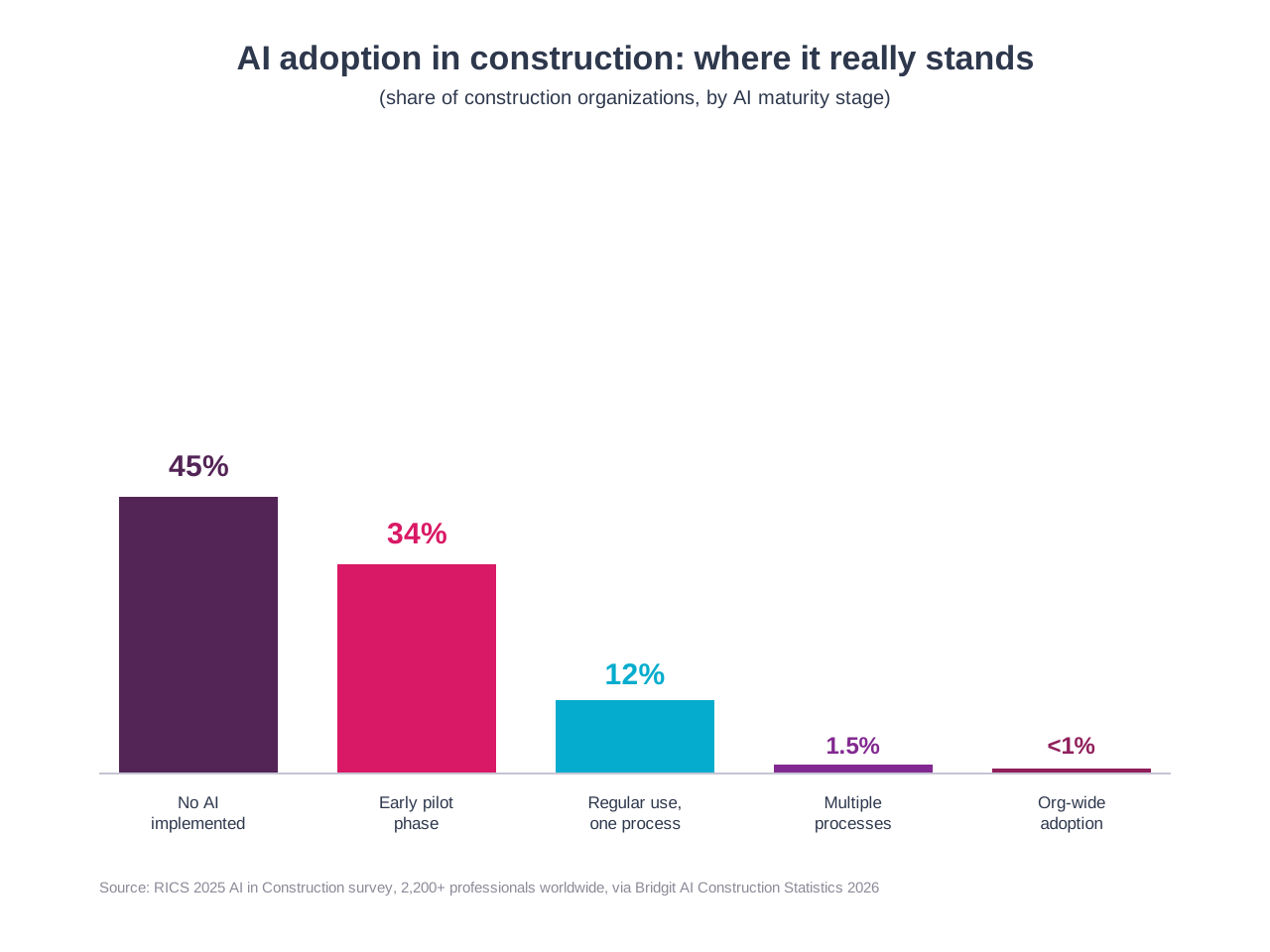
That gap between the hype and the reality isn't a mystery once you look at what's actually being deployed. Most of it isn't construction-aware AI. It's ChatGPT with a construction-flavored prompt on top.
Why a general chatbot stalls on a construction site
A general chatbot is trained on the open internet. It doesn't know your spec book, your submittal log, or which version of a drawing is current. Ask it something specific and it will still answer, confidently, sometimes wrong.
That's expensive in construction, where a bad answer on a submittal or a code requirement isn't a minor inconvenience. It's rework, or worse.
Crunch IS, which builds AI tools for general contractors, put it plainly when describing a document-processing agent it shipped for a US contractor: the hard part wasn't the AI model, it was "understanding Procore's data model, the specific document types and SLA structures that govern construction project communication, and the failure modes, version conflicts, misclassified submittals, broken audit trails, that create real business risk on active sites."
That's the pattern across the industry's own data too. Up to 85% of AI project failures trace back to poor data quality, and construction is a particularly bad starting point: bad data caused an estimated $1.8 trillion in global construction losses in 2020, with 14% of avoidable rework tied directly to it, according to Construction Dive's reporting on industry data quality.
A chatbot doesn't fix a bad data foundation. It just gives you a confident-sounding answer sitting on top of one. Doing this properly looks more like building an application on top of your own indexed data than prompting a chat window.
The construction AI readiness framework
Before you buy or build anything labeled "AI for construction," check it against four signals. We use this internally when scoping AI integration work for operations-heavy clients, construction or otherwise.
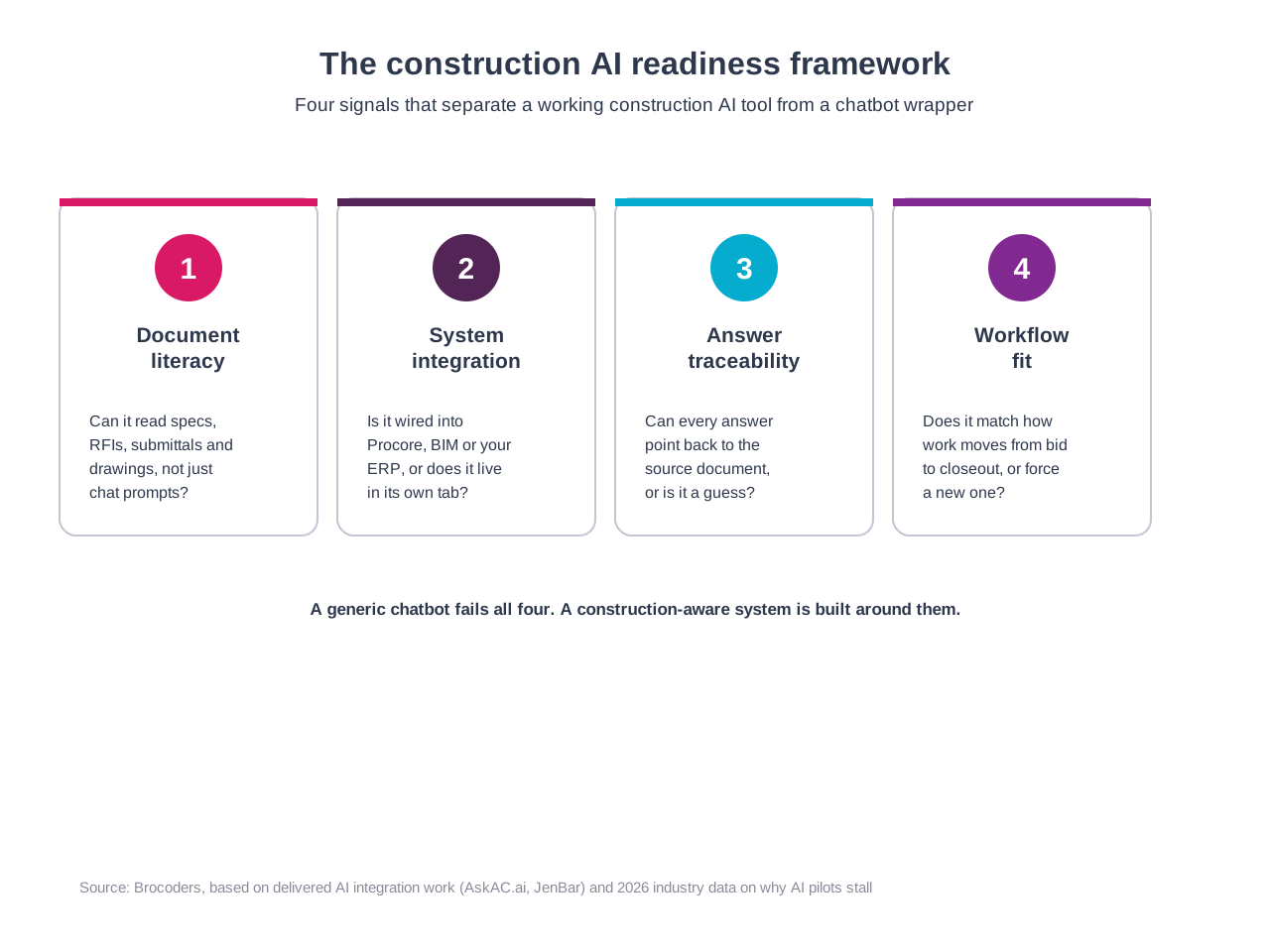
1. Document literacy. Can it actually read specs, RFIs, submittals, ITPs, and drawings, or does it only respond well to typed prompts? A tool that can't ingest your real document set is a chat interface, not a construction tool.
2. System integration. Is it wired into Procore, your BIM environment, or your ERP, so it reads and writes where your team already works? Or does it live in its own browser tab that nobody opens after week one?
3. Answer traceability. Can every answer point back to the source document it came from? This is the difference between a tool you can trust and a hallucination machine with good UX. It's also the exact model behind AskAC.ai, an AI assistant we built that answers from 4,000+ indexed product manuals with every answer traceable to a source, zero invented answers.
4. Workflow fit. Does it match how work actually moves, bid to preconstruction to build to closeout, or does it force your team into a new process on top of the one they already run?
A generic chatbot fails all four. That's not a knock on the model. It's a mismatch between a consumer tool and an industrial workflow.
Where AI actually pays off in construction today
According to the Associated General Contractors' 2026 Construction Hiring and Business Outlook, here's where the AI that does exist is actually being used.
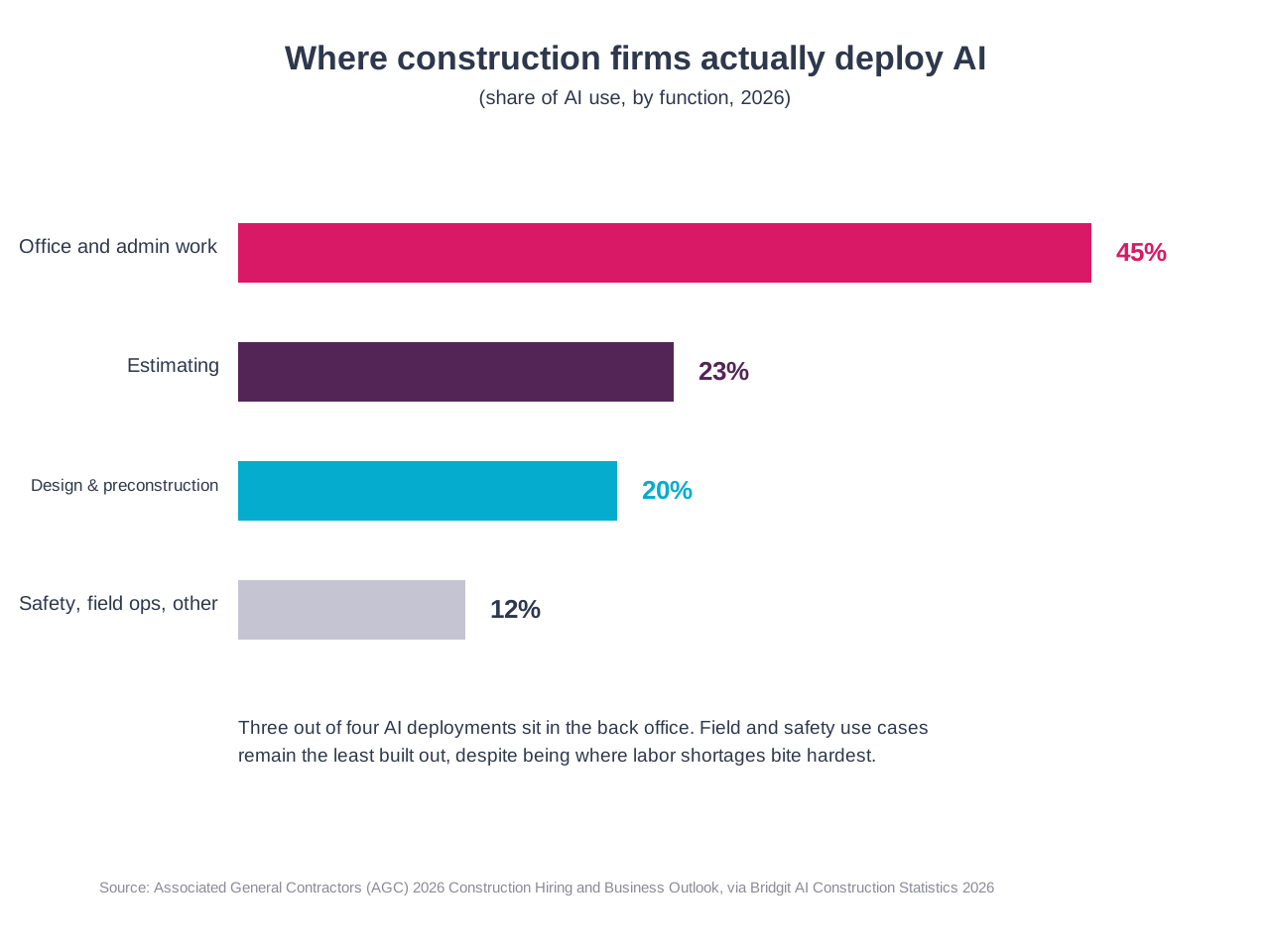
That's a telling split. Three out of four AI deployments sit in the back office. Field and safety, arguably where construction's labor shortage bites hardest, remain the least built out.
A few examples of what's shipping and working right now:
- Estimating and preconstruction. AI-assisted takeoffs and scenario generation, cutting the time to produce a first-pass estimate.
- Document and submittal processing. Automated ingestion, classification, and routing of RFIs and submittals, the exact pattern Crunch IS shipped, cutting document turnaround by 70 to 80% for one contractor.
- Progress verification. Computer vision from helmet cameras or drones cross-checked against BIM plans to catch discrepancies early, the approach Buildots uses with general contractors.
- Reconciliation and back-office accuracy. Automated matching of invoices, payments, and contract terms to catch errors humans miss at scale, the same pattern behind JBStarSight, a reconciliation engine we built for a logistics and trucking client that catches underpayments buried in complex freight contracts.
- Answer retrieval with a source trail. Point staff or customers at a searchable, source-linked answer instead of a support queue, the AskAC.ai pattern above.
None of these are "add a chatbot." All of them start with getting the underlying data structured enough for AI to be useful against it.
How we approach AI integration for operations-heavy businesses
We haven't shipped a dedicated construction platform yet. What we have done, repeatedly, is the exact problem construction firms are running into: taking a business that runs on documents, spreadsheets, and manual coordination, and building AI that's wired into the real data and systems instead of sitting beside them. That's the core of our AI development and integration work.
AskAC.ai is one example: source-traceable answers pulled from thousands of indexed manuals, not generated from memory. JBStarSight is another: a reconciliation engine that reads freight contracts and catches payment errors a person would miss. You can see more of this pattern across industries in our AI development case studies.
We also build fast. Our AI-native delivery approach recently produced a full field-operations platform, 82 database models, 343 API endpoints, roughly 454 automated tests, generated from a single requirements document in about 5.5 days. That's the same underlying method we bring to AI integration work: senior architects owning the structure, AI generating the implementation, everything inspectable, nothing hidden.
If your construction business is trying to figure out where AI would actually save time rather than just look impressive in a demo, that's the conversation worth having before you buy anything.
Sources: RICS 2025 AI in Construction survey, Bridgit AI Construction Statistics 2026, Construction Dive on construction data quality, Crunch IS AI in construction case study.
Frequently Asked Questions
It can help with drafting emails, summarizing notes, or brainstorming. It can't reliably read your spec book, connect to Procore or your ERP, or guarantee an answer traces back to a real document. For anything tied to safety, cost, or compliance, that gap matters.
A general chatbot answers from training data and whatever you paste into the prompt. Construction-aware AI is built around your actual documents and systems (specs, RFIs, Procore, BIM) and can show its source for every answer.
Mostly office and administrative work (45% of current deployments), estimating (23%), and design and preconstruction (20%), according to AGC's 2026 outlook. Field and safety use cases lag behind despite the clearest labor-shortage pressure.
Data quality, not the AI model. Industry-wide, up to 85% of AI project failures trace back to poor or unstructured data, and construction's document and process fragmentation makes that worse than most industries.
It depends on scope, but the pattern that works is starting narrow: one document type or one workflow, proven with real data, before expanding. A scoped integration project (document processing, a reconciliation engine, a source-traceable Q&A tool) is a very different budget than a platform build.
Pick one high-friction, well-defined process (submittal routing, estimate first-pass, invoice reconciliation), check it against the four readiness signals above, and pilot against real project data before it touches anything safety-critical.