C.I.A. Services manages more than 50,000 properties in Houston and San Antonio. In 2022 we built MyRedDog for its owners, residents, and board members: a progressive web app (PWA) that reads live data from the company's own management system, which we supported to June 2025. CondoGenie took a different route. A condo board member built the first version for his own building, and since 2018 we have rebuilt it and run it as a SaaS that over 550 condominium and HOA associations use. For Lake, a vacation rental marketplace, we built live sync with property managers' own systems, and its connected properties grew 80x.
- +1,282%
- active users on CondoGenie, 2019 to 2025, after we rebuilt it
- 9 years
- of CondoGenie data moved to the new platform while it stayed live
- 6 months
- to build C.I.A. Services' owner and board portal, July to December 2022
- 4
- access levels in one portal: owners, multi-lot owners, board members, and staff
5 situations property managers bring to us
Owners call the office for every balance and document
Only your staff can read the management system, so every owner question becomes a call, and answers live in spreadsheets next to the PMS. We build an owner and board portal on that system. Read the C.I.A. Services case

"Our objective is to develop an app which can be used by the owners and residents of our client communities to interact with their property owner's association."
Ralph Troiano, Founder and Chairman, C.I.A. Services, in his brief to us, June 2022
Our vendor takes months to make a small change
The vendor's roadmap serves its other customers, so your team works around it with multiple log-ins and double data entry. We add a custom layer on its platform or replace it, while the old system keeps running. Route: application modernization
"When I ask for functionality changes on something very simple, it can take 9 to 12 months."
Communications and Creative Services Manager at a US residential community
We built our own software, and now it needs maintenance or an audit
Your team, a freelancer, or an AI tool built the first version, and now everyone depends on it. A code audit shows what to fix first, then named engineers maintain it or take it over.

"Upon launching the project, we were able to increase client satisfaction and provide our clients what they were asking for, improve their workflow as well as make the software more powerful and easier to use than the previous software that was developed."
Rafal Dyrda, CEO and Founder, CondoGenie, after we rebuilt the platform he first wrote himself
Maintenance requests arrive without what staff need to act
On CondoGenie, 40% of resident requests are maintenance and repair. We add an AI layer that sorts them and routes them as work orders on the platform you run, after an audit checks your data. Route: AI development and integration
"If they are submitting a maintenance request and photo to let us know an irrigation head is broken, it would be great if we had the geocode to know where the break is located."
Ralph Troiano, Founder and Chairman, C.I.A. Services, in his brief to us, June 2022
We want to sell our software, or our service, to other property managers
A tool built for your own portfolio, or a service your team runs by hand, can become a SaaS other managers pay for. We build it with your internal team or as a senior engineering pod. Routes: SaaS development, proptech software development
"After being exposed to the problems first hand, I realized that the condo board and property manager didn't have the right tools to communicate with the residents."
Rafal Dyrda, CEO and Founder, CondoGenie, a condo board member who turned his own tool into a SaaS for over 550 associations
What our property management software development covers
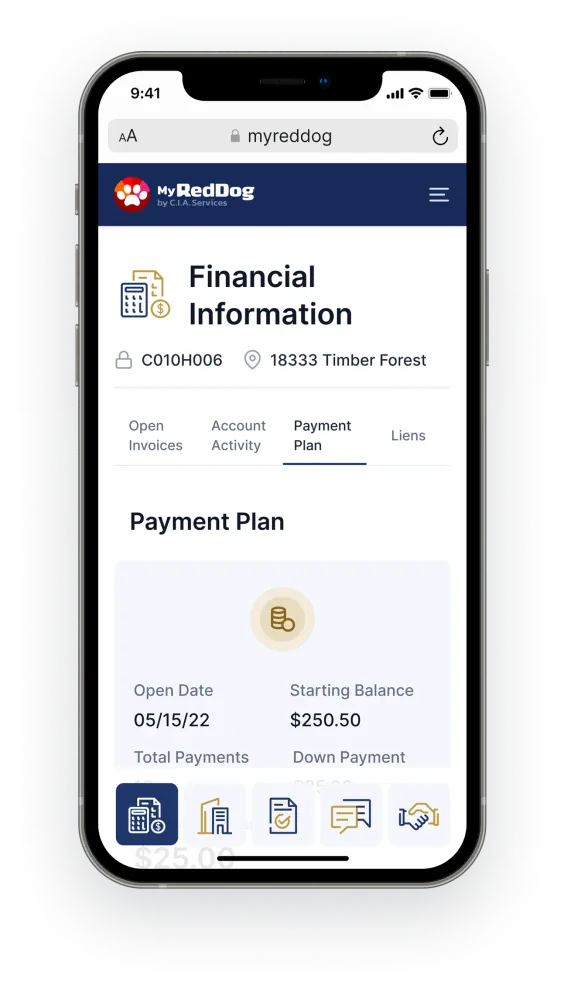
For owners and residents
Owners see their account and act on it from a phone, with nothing to install.
- Balances, invoices, online payments, and payment plan requests
- Maintenance requests
- Violations with their letters, and applications with their status
- Event registrations and board elections
- C.I.A. Services case
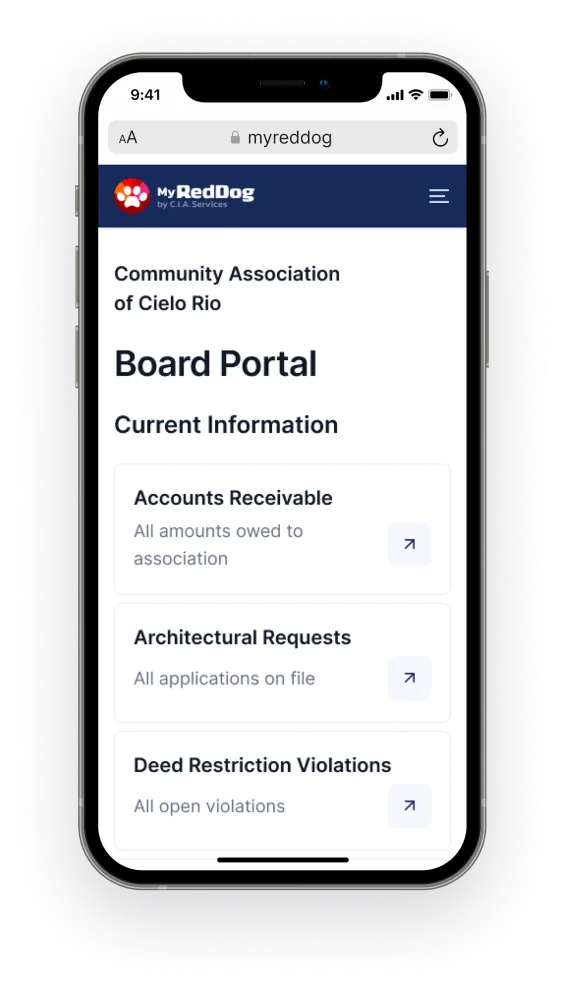
For boards and staff
Board members and staff get the reports and documents their work runs on, each role with its own access.
- Access by role for owners, multi-lot owners, board members, and employees
- Board reports and board-only documents
- Association and public documents in one place
- Staff view of any owner's account
- C.I.A. Services case
The 3 routes to the software your communities need
The US had about 373,000 community associations at the end of 2025, according to the Foundation for Community Association Research. They include homeowners associations (HOAs).
Off-the-shelf HOA or property management software
Right when your workflows match the vendor's roadmap. Public pricing starts at about $1 per unit a month (Yardi Breeze), so the bill grows with every door you add. Under about 100 units it's the better buy.
Custom work from your current vendor
Right when the vendor ships your changes in weeks. Time to look elsewhere when small requests wait for months.
A custom layer on your own system
Right when owners and boards need features the vendor won't build. You keep the system of record and own the new code, so you set the roadmap. MyRedDog for C.I.A. Services took this route.
When off-the-shelf software is the better buy:
- A portfolio under about 100 units: an off-the-shelf system costs less.
- A short-term rental business with about 20 villas: a ready-made property management system fits. We told that to a villa manager who asked us for a custom one.
- A community site that only shares information. A communications manager at a US residential community put it this way: "if our site was just basic, if it was information sharing only, I probably would just use a system and build something myself."
The risks we plan for on every property management build
Personal data for thousands of households
"That additional information is sensitive enough that we wouldn't want to try to automate this," Ralph Troiano wrote about board access in his brief. MyRedDog gives owners, multi-lot owners, board members, and employees 4 separate access levels, and we built a separate set of screens for each. We plan access before features on every build.
A migration residents notice
"At least the user data, because I own that." We start every migration from the data you own. Old and new systems run side by side while accounts move with their history. You switch on a date you choose.
A system of record you don't control
We read from that system through its API, and each write goes through the endpoints its owners define.
Payments and data rules you answer for
Card payments go through a payment provider, never through your app: MyRedDog sends owners to their bank's payment page, and CondoGenie bills through Stripe. Fair housing and local rules come from your counsel; we build the rules they set into the software.
AI that acts without a person
AI drafts, sorts and routes; a person approves anything that reaches an owner. Genie drafts CondoGenie announcements, and a manager publishes them. We keep a human in the loop and a log of who approved what.
A board that funds the project and wasn't in the room
We write proposals and progress reports for both readers: the team that runs the system and the board that pays for it.
How a property management software project runs
30 minutes with Rodion Salnik, our CTO, before any payment.
5 or 10 business days for software you run; about 2 months of fixed-price discovery for a new build.
Releases every iteration while your current system keeps running.
Accounts move with their history on a date you set.
Named engineers ship small changes in days.
Services and case studies for property management software


Tell us what your owners keep calling about
Pick a time for a 30-minute call. Bring the requests your staff answer most, and we'll tell you whether custom software pays off for your portfolio.

Rodion Salnik
CTO and Co-founder at Brocoders
Pick a date that works for you to see available times to meet with me and discuss your project needs. Looking forward to meeting you!